Preheat the oven to 200°C (390°F), or 180°C fan-forced. Line a large baking tray with baking paper.
Combine the ingredients. Place the sifted flour in a large bowl. Pour in the cream and the lemonade.
Mix gently. Use a butter knife or spoon to stir in a cutting motion until the flour is mostly combined and the dough just comes together. It should be soft and slightly sticky. A few dry patches are fine, because the dough will finish coming together on the bench.
Turn out onto a floured surface. Dust the bench with extra flour and scoop the dough onto it. Knead very gently, only 3 to 5 folds, just to bring it together.
Pat out the dough. Use floured hands to pat the dough into a round about 2.5 cm (1 inch) thick. Do not use a rolling pin, which presses out the air.
Cut the scones. Dip your cutter in flour and press straight down, without twisting. Lift the cutter straight up. Cut as many scones as you can from the first round.
Place on the tray. Arrange the scones so they are just touching each other, which helps them rise upwards rather than outwards.
Re-use the scraps. Gently bring the offcuts together, pat out again, and cut a few more. These last scones will be a little less tall, but still delicious.
Brush with milk. Lightly brush the tops (not the sides) with milk for a golden finish. This step is optional.
Bake. Bake for 14 to 16 minutes, until the tops are golden and the scones sound hollow when tapped on the base.
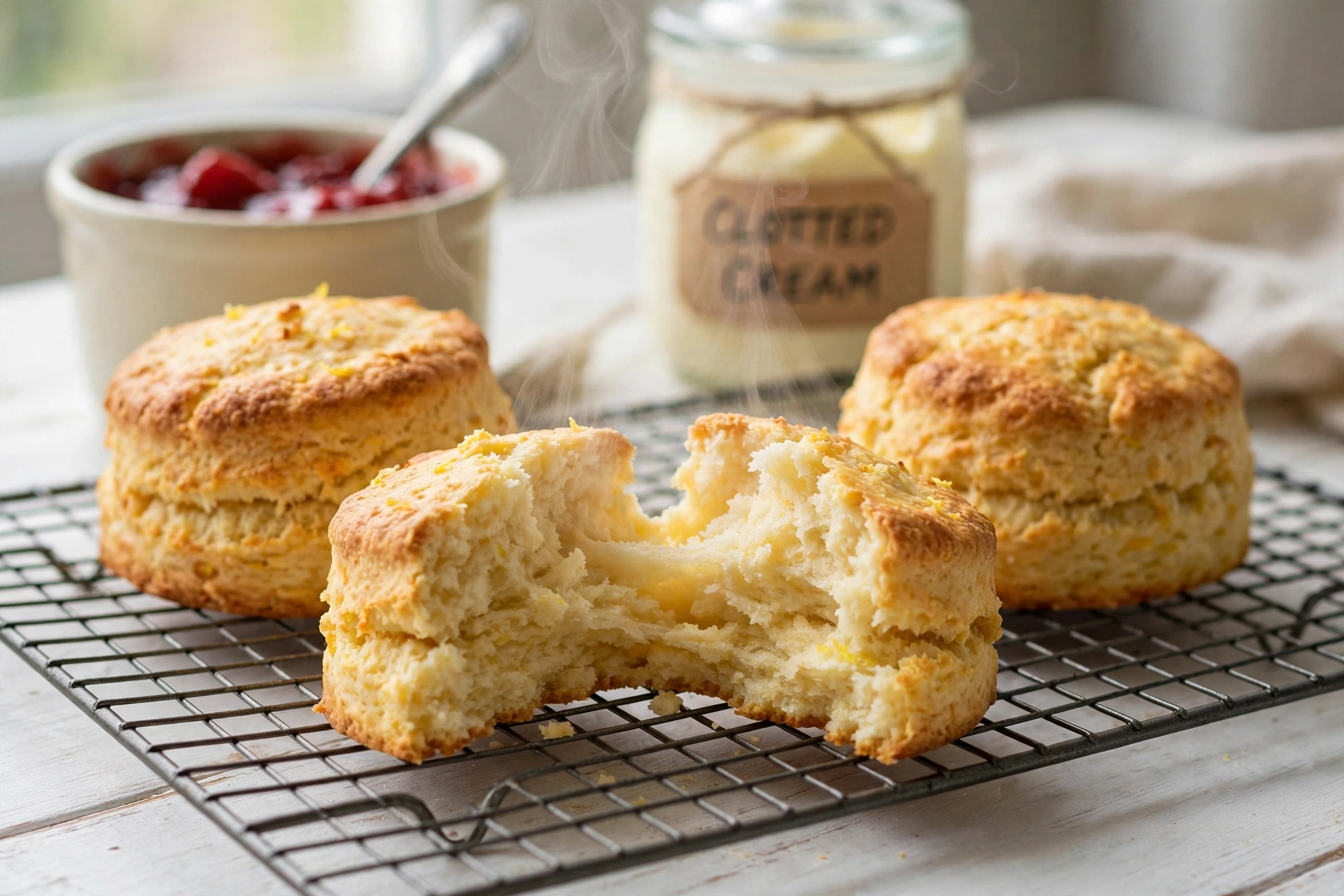
Cool briefly. Transfer to a wire rack and cover loosely with a clean tea towel for a few minutes. This traps steam and keeps the tops soft instead of crusty.
Serve warm with jam and whipped cream, and plenty of tea.