
This chicken tinga recipe is the workhorse the hero, the thing you make when you need dinner to be delicious with minimal thinking. In Mexican home cooking, that’s tinga: shredded chicken simmered in a smoky chipotle-tomato sauce, piled onto tostadas with all the fixings. It’s the answer to “what’s for dinner” at least twice a month in my house.
What makes tinga special is the chipotle in adobo — those little smoked jalapeños in tangy sauce that deliver smoke, heat, and depth all at once. Combined with sweet tomatoes and caramelized onions, they create a sauce that’s complex-tasting but weeknight-easy. The whole thing comes together in 35 minutes, most of it hands-off.
And the versatility! Tostadas are classic, but tinga also fills tacos, quesadillas, burritos, rice bowls, and nachos. One batch, five different dinners. This is meal-prep gold disguised as taco night.
Why You’ll Love This Chicken Tinga Recipe
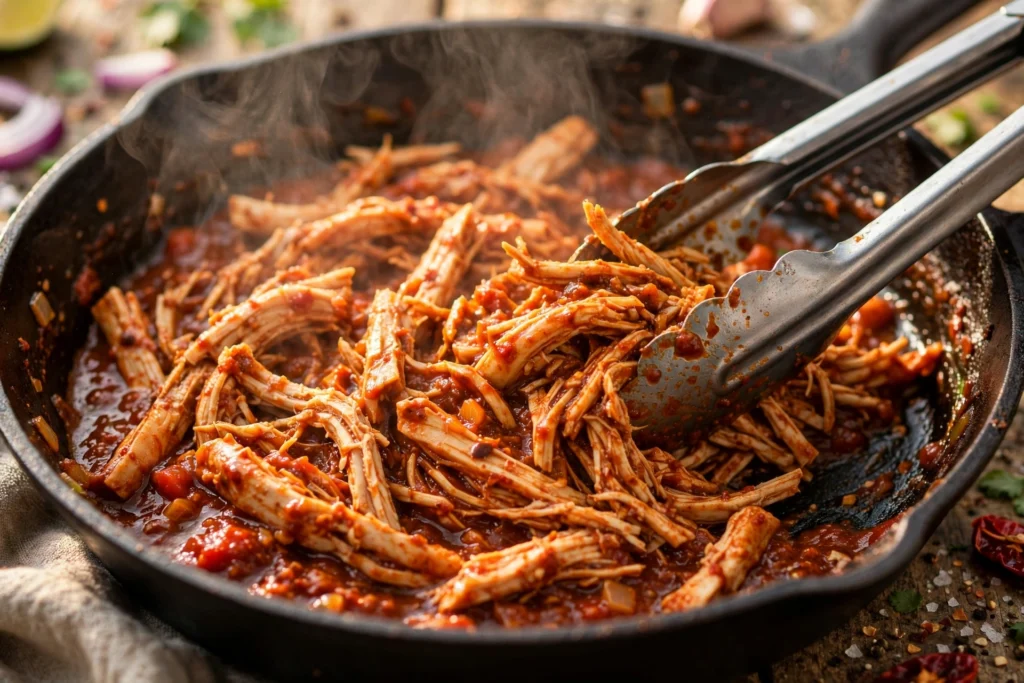
First, it’s fast without tasting fast. Thirty-five minutes start to finish, but the chipotle-tomato sauce tastes like it simmered all afternoon. That’s the magic of chipotles in adobo — instant depth.
Second, it’s a meal-prep superstar. Make a big batch Sunday and you’ve got protein for tacos, bowls, quesadillas, and salads all week. It reheats perfectly and the flavor actually improves overnight.
Third, it’s endlessly adaptable. Mild enough for kids (adjust the chipotles), exciting enough for adults, and it works in practically every Mexican-format meal you can think of.
Finally, it’s budget-friendly. Chicken breasts or thighs, canned tomatoes, onions — this is humble-ingredient cooking at its finest. Big flavor, small grocery bill.
What Is This Chicken Tinga Recipe, Exactly?
If you’ve eaten at a good taqueria, you’ve probably had tinga without knowing its name. The word comes from a Mexican cooking term for a shredded-meat stew, and the most famous version — tinga poblana, from the state of Puebla — is exactly what we’re making: chicken (or sometimes pork) shredded and simmered in a sauce of tomatoes, chipotle chiles, and sliced onion.
What separates tinga from just “shredded chicken in sauce” is the texture and the balance. The onions are sliced into long strands, not diced, so they melt into silky ribbons. The chipotles bring smoke and heat. The tomatoes bring sweetness and body. And everything simmers together just long enough for the chicken to drink up the sauce without falling apart into mush.
It’s peasant food in the best sense — born from making humble ingredients taste extraordinary. And once you understand the formula, you’ll start seeing tinga possibilities everywhere: that leftover rotisserie chicken, the pork shoulder in the freezer, even a pile of mushrooms for a vegetarian night.
Ingredients for Chicken Tinga
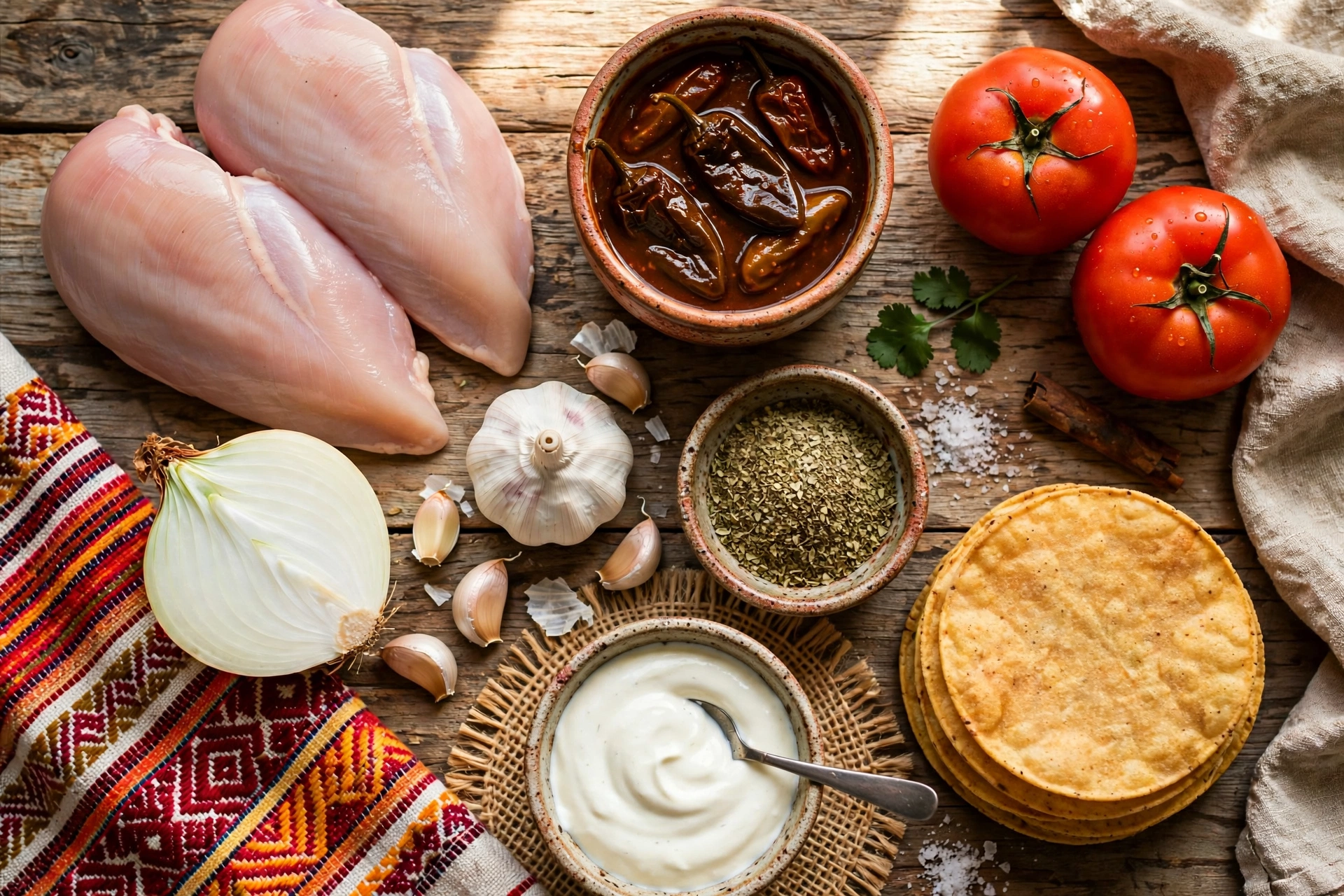
Chicken (2 lbs boneless, skinless breasts or thighs) — Thighs stay juicier and are more forgiving; breasts are leaner. I use thighs for the best texture, but either works. You can also use a rotisserie chicken to skip the poaching step entirely.
Here’s the thing about the chicken cut: thighs have more connective tissue and fat, which means they stay moist even if you overshoot the cooking time by a few minutes. Breasts are less forgiving — nail the temperature and they’re great, overshoot and they go dry. If you’re new to poaching chicken, thighs are the safer bet. If you’re confident with a thermometer, breasts give you that classic lean shred.
Chipotle peppers in adobo (3–4 peppers + 2 tablespoons sauce) — The heart of tinga. Smoky, spicy, tangy. Start with 3 if you’re heat-cautious; the adobo sauce itself adds lots of flavor with less heat.
Let’s talk about these little cans, because they confuse a lot of cooks. Chipotles in adobo are smoked, dried jalapeños packed in a tangy tomato-vinegar sauce. You’ll find them in the Latin or international aisle, usually in small 7-ounce cans. One can is more than you need for this recipe — and that’s fine, because the leftovers are gold. Scoop the remaining peppers and sauce into an ice cube tray, freeze, then bag the cubes. They keep for months, and you’ll reach for them constantly: in marinades, in chili, in a quick pan sauce.
Heat-wise, here’s your dial: the adobo sauce itself is mostly tangy and smoky with moderate heat. The peppers are where the real fire lives. For a mild tinga the kids will eat, use 2 tablespoons of sauce plus 1 pepper, minced fine. For medium (my default), 3 peppers. For “I mean business,” go to 4 or 5 and mince them. You can always add more heat at the end with extra adobo sauce, but you can’t take it away — so start conservative.
Crushed tomatoes (1 can, 28 oz) — Or whole tomatoes, crushed by hand. Fire-roasted tomatoes add an extra layer of smokiness that’s wonderful here.
Fire-roasted is worth seeking out for this recipe. Regular crushed tomatoes are fine, but fire-roasted brings a charred sweetness that layers beautifully with the chipotle smoke. If all you have is regular, add a pinch of smoked paprika to compensate. And if you only have whole tomatoes? Crush them by hand right in the can — you get a chunkier, more rustic sauce that some people prefer.
White onion (1 large, thinly sliced) — Sliced (not diced) — the long strands caramelize and melt into the sauce. This is traditional tinga texture.
Don’t rush the slicing here. You want thin, even half-moons — about an eighth of an inch. Thick chunks won’t melt properly; paper-thin slices disappear entirely. A sharp knife makes this easy. And yes, it must be sliced, not diced: diced onion gives you little cubes that stay distinct, while sliced onion collapses into those signature silky strands that make tinga feel like tinga.
Garlic (4 cloves, minced) — Fresh, added after the onions soften. Don’t add it with the onions at the start — garlic burns faster than onion, and burnt garlic turns bitter. Give the onions their head start, then stir in the garlic for just the last minute.
Chicken broth (1 cup) — For poaching the chicken and loosening the sauce. If you’re using rotisserie chicken and skipping the poach, use store-bought broth here. Low-sodium is best — you want to control the salt yourself, since the adobo sauce already brings some.
Mexican oregano (1 teaspoon) — Citrusy and earthy; distinct from Mediterranean oregano. They’re actually different plants. Mexican oregano has citrus and licorice notes that are made for this sauce. If you only have Mediterranean/Greek oregano, use it — the dish will still be delicious — but the Mexican variety is worth buying if you cook a lot of Mexican food.
Bay leaf (1) — Simmered in the sauce, removed before serving. It adds a subtle background depth you can’t quite name. Just don’t forget to fish it out.
Salt (1½ teaspoons) — Season in layers — some in the poaching liquid, the rest in the sauce. Layered seasoning means every component tastes right on its own, so the finished dish doesn’t need rescuing at the end.
Olive oil (2 tablespoons) — For sautéing the onions. Nothing fancy needed here; regular olive oil is fine.
For serving: tostadas, refried beans, shredded lettuce, Mexican crema, queso fresco, avocado, lime — The classic tostada build. Each element matters: the beans are the moisture barrier, the lettuce adds crunch, the crema cools the heat, the queso fresco adds salty crumbles, the avocado adds richness, and the lime wakes everything up. Skip one and you’ll notice.
Equipment You’ll Need
A large skillet or Dutch oven, a pot for poaching (or use the same skillet), two forks for shredding, and a blender (optional — for a smoother sauce). Tostada assembly requires zero equipment and maximum enthusiasm.
A note on the skillet: you want something wide with decent depth — a 12-inch skillet or a Dutch oven is ideal. The sauce needs surface area to reduce properly, and you’ll be tossing a lot of shredded chicken in there. A cramped pan means steaming instead of simmering, and nobody wants steamed tinga.
How to Make Chicken Tinga (Step by Step)
Step 1 — Poach the chicken. Place the chicken in a pot with the broth, a bay leaf, and a teaspoon of salt. Add water to cover. Bring to a gentle simmer (not a boil — boiling makes chicken rubbery) and cook 15–18 minutes until cooked through (165°F). Remove the chicken; reserve 1 cup of the poaching liquid.
The poaching liquid is liquid gold — don’t throw it out. It’s lightly flavored chicken broth now, and a cup of it goes into the sauce. The rest? Save it. Use it for rice, for soup, for cooking beans. It keeps 4 days in the fridge or months in the freezer.
Temperature matters more than time here. Chicken breasts hit 165°F at different times depending on thickness. If yours are very thick, butterfly them or pound to even thickness first. A $10 instant-read thermometer takes all the guesswork out — and it’s the single best investment for anyone who cooks chicken regularly.
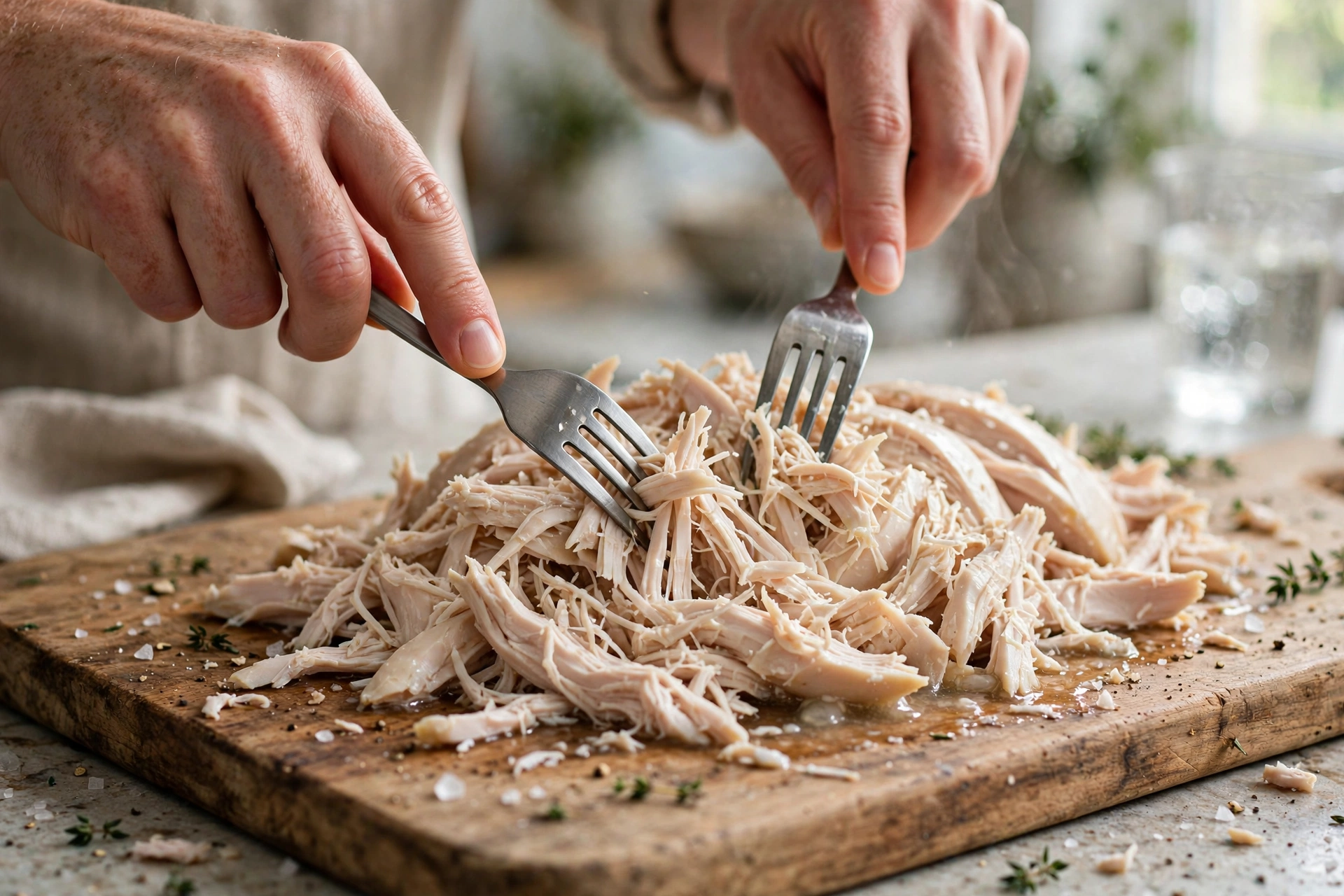
Step 2 — Shred. When cool enough to handle, shred the chicken with two forks into bite-sized strands. Don’t shred too fine — you want texture, not mush.
There’s a faster way if you’re doing a big batch: use a stand mixer with the paddle attachment on low for 20–30 seconds. It shreds chicken shockingly well. For this amount, though, two forks and two minutes is fine. Aim for strands roughly the thickness of a pencil — thick enough to have chew, thin enough to soak up sauce.
Step 3 — Caramelize the onions. In your skillet over medium heat, warm the olive oil. Add the sliced onions and cook 8–10 minutes, stirring occasionally, until soft, sweet, and golden at the edges. Add the garlic and cook 1 minute more.
You’re not looking for deep caramelization here — just soft, sweet, and golden at the edges. If the onions start browning too fast, drop the heat. Burnt onion edges will make the whole sauce bitter, and there’s no fixing that. Patience at this step pays off in sweetness.
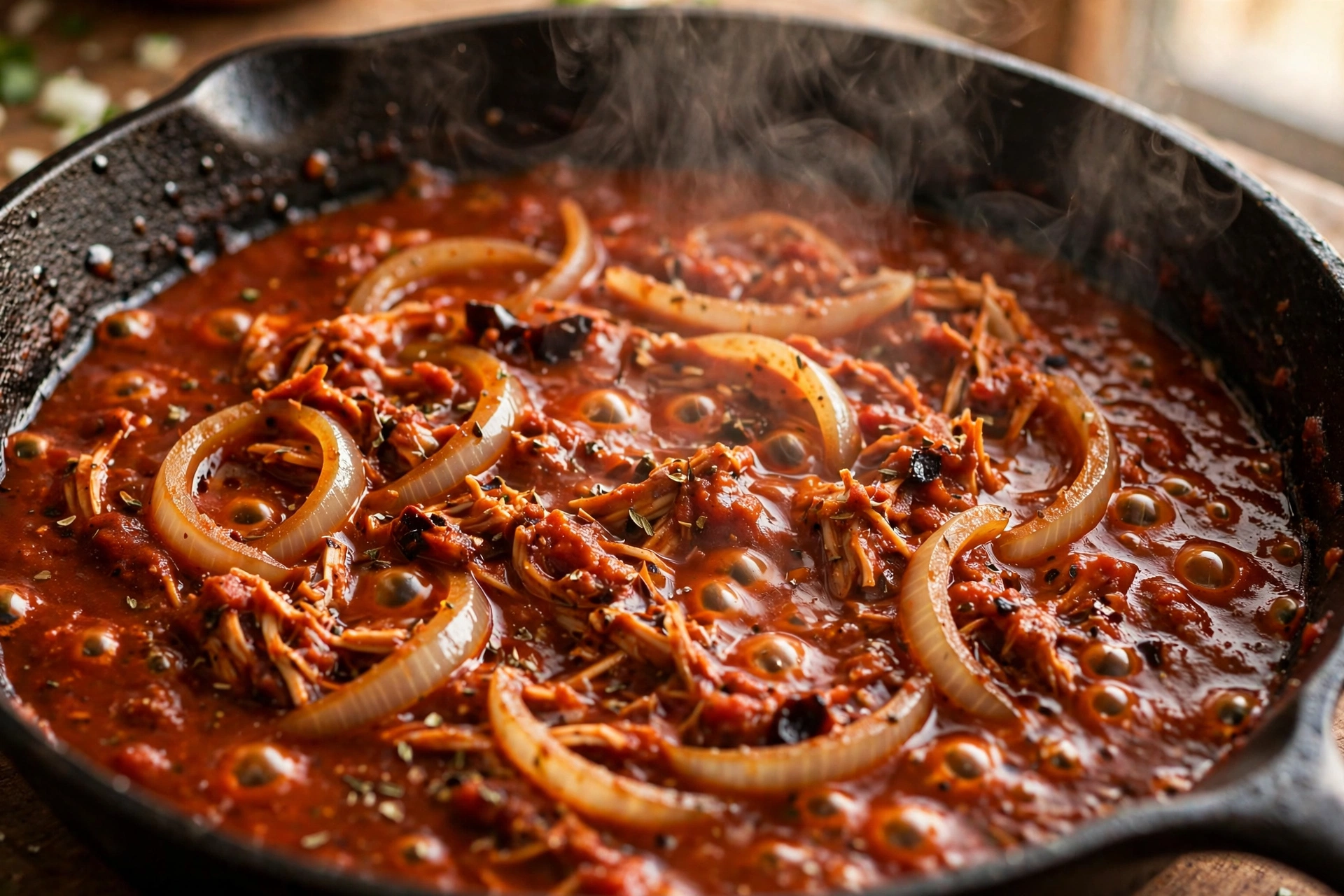
Step 4 — Build the sauce. Add the chipotles, adobo sauce, crushed tomatoes, oregano, and 1 cup of the reserved poaching liquid. (Optional: blend the chipotles with a cup of the tomato mixture first for a smoother sauce.) Simmer 10 minutes until slightly thickened. Remove the bay leaf.
Watch the consistency here. You’re looking for a sauce that coats a spoon but still flows — nappé, if you want the French term. It’ll thicken a bit more once the chicken goes in (the chicken absorbs liquid). If it looks too thin after 10 minutes, let it go another 5. If too thick, splash in more poaching liquid.
Step 5 — Combine. Add the shredded chicken to the sauce and toss to coat. Simmer 5 more minutes so the chicken absorbs the sauce. Taste and adjust — more salt, more adobo sauce for heat, a squeeze of lime for brightness.
This final simmer is where the magic happens. The chicken isn’t just getting coated — it’s drinking. Those shredded strands soak up the smoky tomato sauce, and the whole thing transforms from “chicken with sauce on it” to tinga. Don’t skip the tasting and adjusting. Every can of chipotles is a little different, every tomato a little sweeter or more acidic. Your palate is the final seasoning tool.
Step 6 — Build tostadas. Spread refried beans on tostadas, pile on the tinga, then top with lettuce, crema, queso fresco, and avocado. Serve immediately — tostadas wait for no one.
The order matters: beans first (moisture barrier), then tinga, then the cold toppings. If you put lettuce directly on the tostada and hot tinga on top, the lettuce wilts into sadness. Beans protect the crunch. And work fast once you start assembling — a tostada has about a 5-minute window before it starts softening.
My Best Tips for the Best Tinga
Don’t boil the chicken. A gentle simmer keeps it tender and juicy; a rolling boil squeezes out moisture and makes it rubbery. This applies to all poached chicken, always. Look for lazy bubbles breaking the surface, not a vigorous churn.
Slice (don’t dice) the onions. Those long, soft strands are signature tinga texture. They caramelize differently than diced onion — sweeter, silkier. This is one of those small details that separates good tinga from great tinga.
Control the heat with the peppers, not the sauce. The adobo sauce is mostly flavor; the peppers themselves carry the heat. Want mild? Use 2 tablespoons of sauce + 1 pepper. Want fire? Four peppers, minced. This gives you precise control instead of guessing.
Blend for smoothness (optional). Traditional tinga has texture, but blending the chipotles into the tomatoes gives a silkier, more restaurant-style sauce. Your call — both are authentic-ish. If you blend, do it before adding the chicken (obviously), and only blend the sauce portion.
Lime at the end. A squeeze of fresh lime over the finished tinga brightens everything. The acid cuts through the richness and makes the smoky flavors pop. This is not optional in my book — it’s the difference between good and memorable.
Toast your tostadas. If making your own, brush corn tortillas lightly with oil and bake at 400°F for 8–10 minutes until crisp. Infinitely better than bagged. They also stay crisp longer, which matters when you’re feeding a crowd.
Season the poaching liquid generously. The chicken absorbs flavor as it poaches. Bland poaching liquid means bland chicken that even great sauce can’t fully rescue. Salt it like you mean it.
Let it rest before serving. Five minutes off the heat lets the sauce settle into the chicken. It also brings it down to an eatable temperature — tinga straight from the simmer will scald the roof of your mouth, and then you can’t taste anything.
Troubleshooting: When Tinga Goes Wrong
Sauce too thin? Simmer it longer before adding the chicken, or mash a few tablespoons of the sauce with a fork to break down the tomatoes further. As a last resort, a teaspoon of tomato paste whisked in adds body fast.
Sauce too thick? Splash in poaching liquid or broth, a quarter cup at a time. Remember it’ll thicken slightly as it sits, so err on the side of a touch loose.
Chicken dry? You probably boiled instead of simmered, or overcooked. Next time, use thighs and a thermometer. This time? Extra sauce and a good squeeze of lime will help mask it. Nobody has to know.
Too spicy? Stir in a spoonful of Mexican crema or sour cream directly into the tinga — dairy tames heat. A pinch of sugar also helps balance excessive fire. And serve with plenty of avocado and crema on top.
Not spicy enough? Mince an extra chipotle and stir it in, or just spoon over more adobo sauce from the can. Heat is the easiest thing to fix.
Bland overall? Almost always needs more salt, more lime, or both. Add salt in quarter-teaspoon increments, tasting between additions. Then hit it with lime. Nine times out of ten, that’s the fix.
Delicious Variations to Try
Pork tinga: Swap chicken for pork shoulder (braise 2 hours until shreddable). Richer, deeper — amazing. The pork’s fat renders into the sauce and creates something truly special. This is the version for a lazy Sunday when time doesn’t matter.
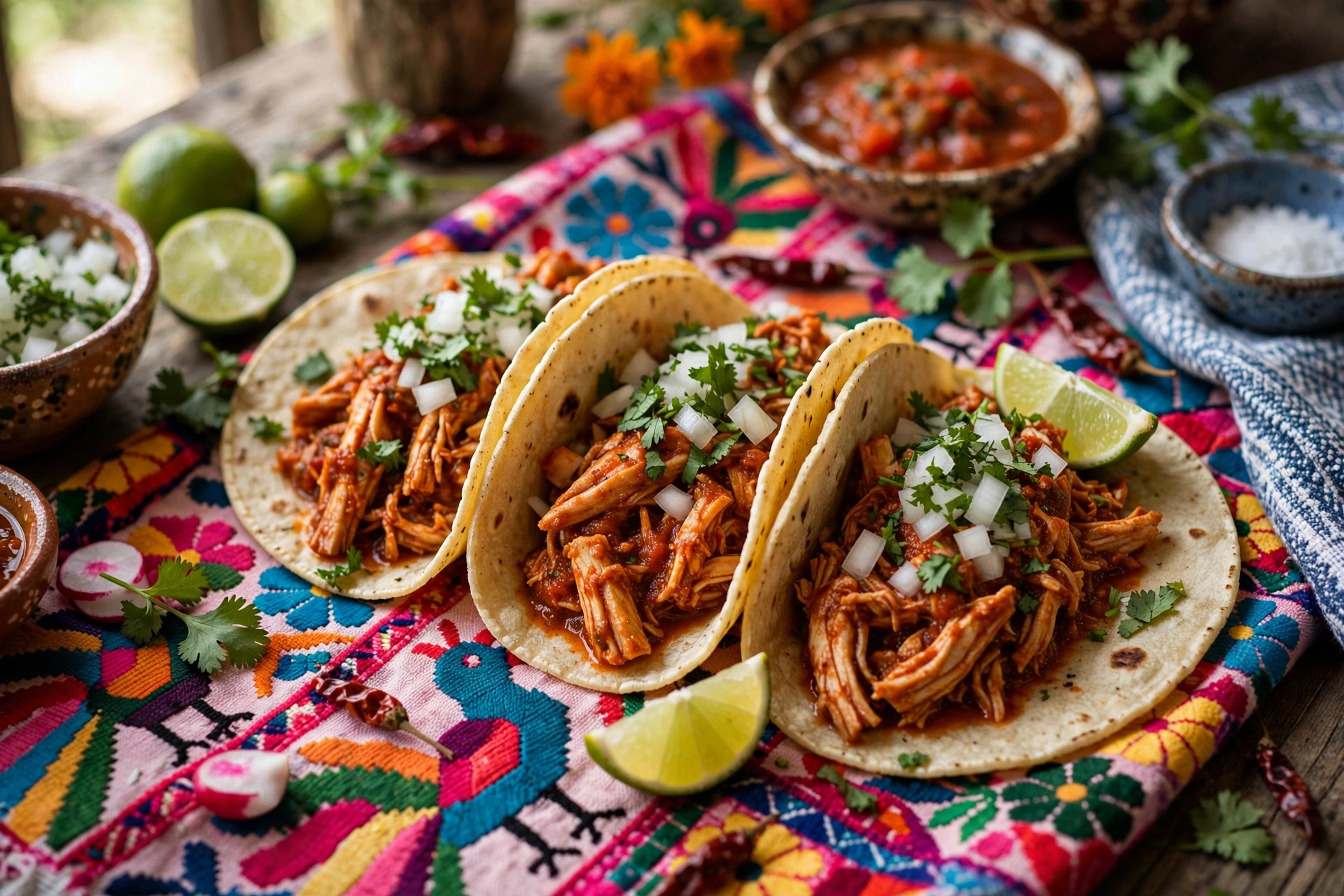
Tinga tacos: Warm corn tortillas instead of tostadas, with diced onion, cilantro, and lime. Simpler, equally delicious. Double up the tortillas (taqueria style) so they don’t fall apart.
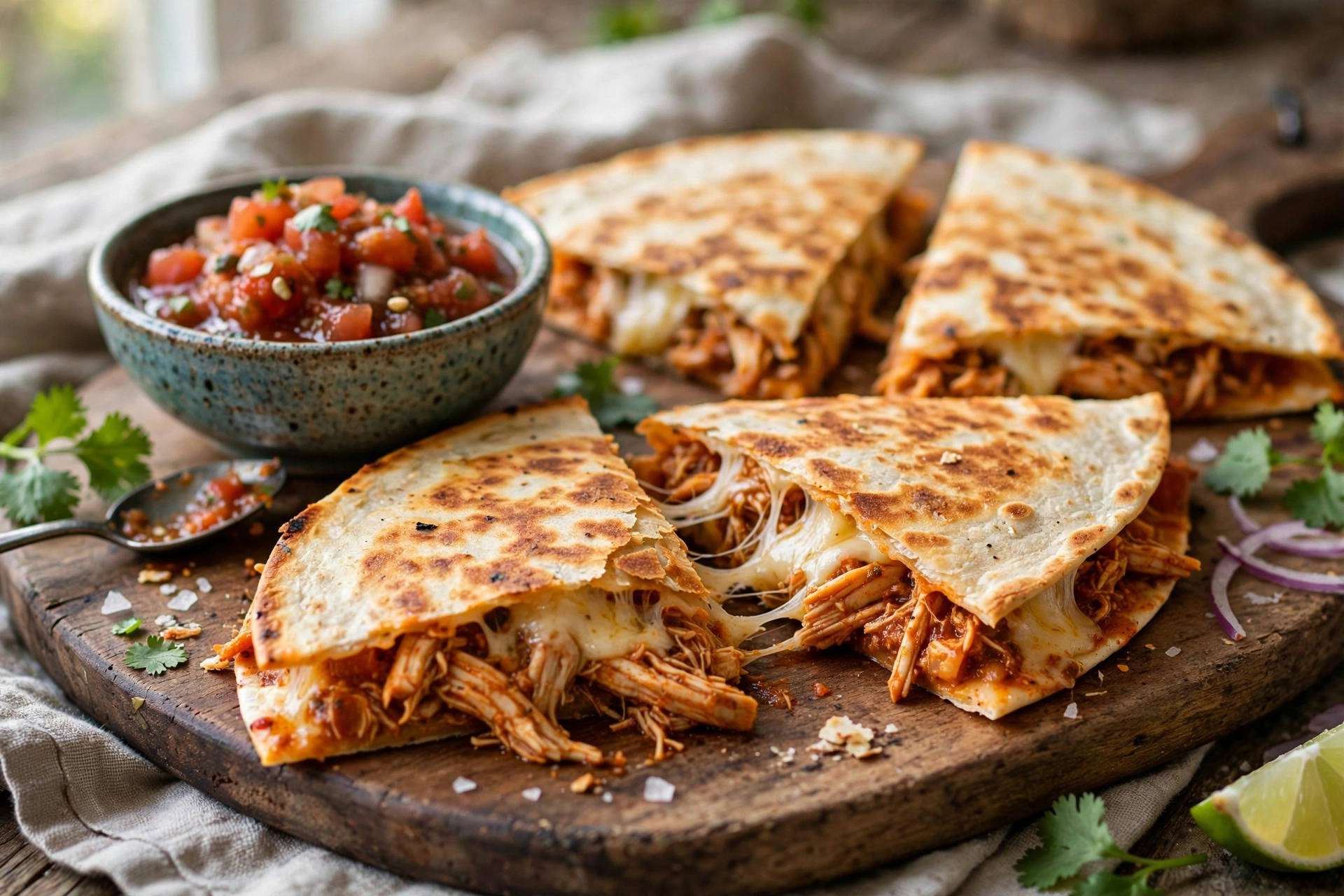
Tinga quesadillas: Tinga + Oaxaca cheese in flour tortillas, griddled until crispy and melty. The leftovers’ highest calling. Use a moderate amount of filling — overstuffed quesadillas don’t crisp properly.
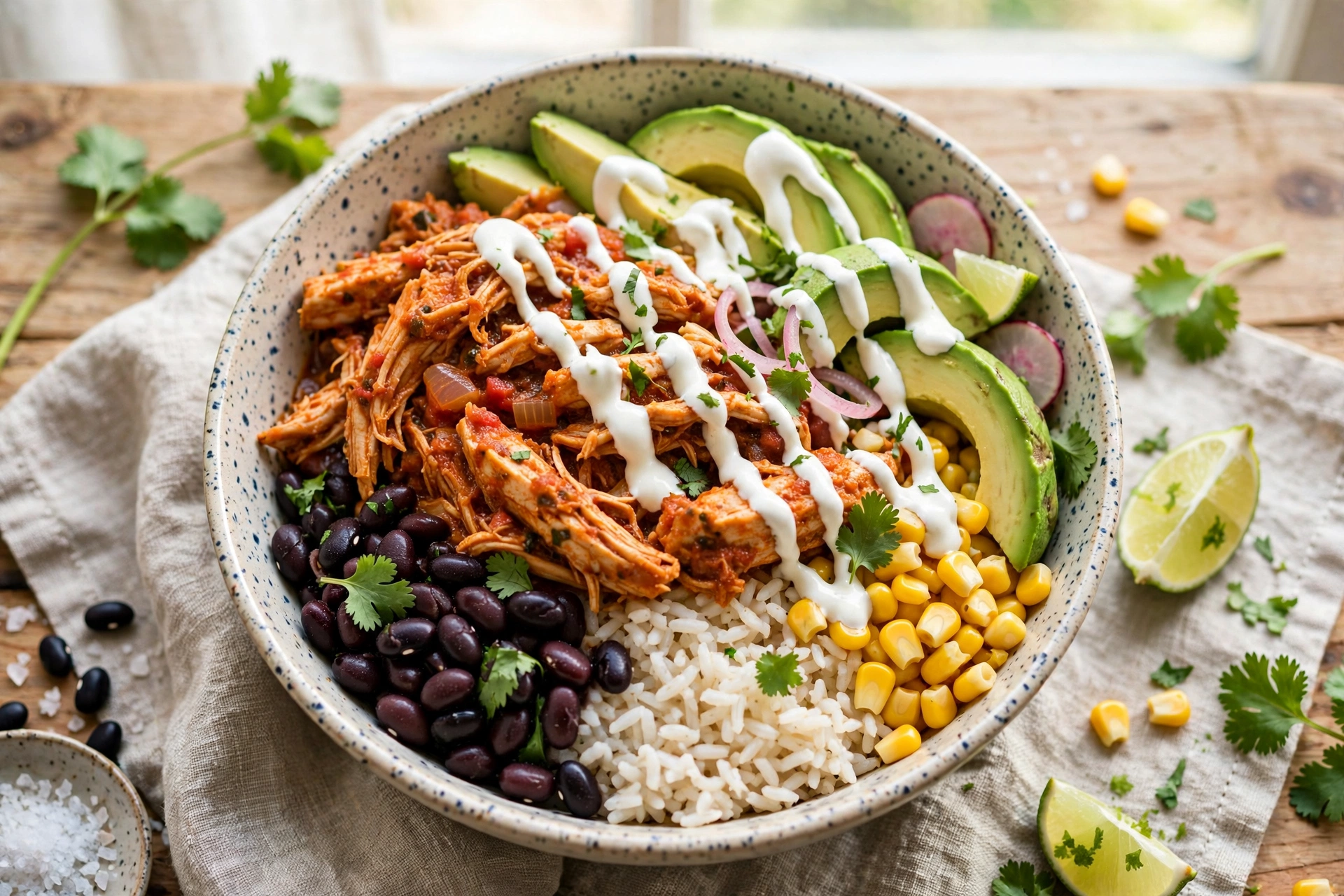
Tinga bowls: Over cilantro-lime rice with black beans, corn, and avocado. Meal-prep perfection. Pack the components separately and assemble at lunchtime for the best texture.
Tinga nachos: Over tortilla chips with queso, jalapeños, and all the toppings. Game-day legend. Broil for 2–3 minutes at the end to get everything bubbly.
Vegetarian tinga: Replace chicken with jackfruit (braised, shredded) or a mix of mushrooms and white beans. The chipotle-tomato sauce carries it. Young green jackfruit in brine (not syrup!) is the best substitute — it shreds remarkably like chicken.
Tinga-stuffed peppers: Hollow out poblanos, fill with tinga, top with cheese, and bake. A complete meal in a pepper.
Tinga empanadas: Use store-bought empanada discs, fill with cooled tinga, bake or fry. Excellent party food and freezer-friendly.
One Batch, Five Dinners: The Tinga Meal Plan
Here’s how a double batch of tinga feeds you all week without boredom:
Monday — Tostadas: The classic. Beans, tinga, all the toppings. Start strong.
Tuesday — Tacos: Different format, different toppings (diced onion, cilantro, lime only). Feels like a new meal.
Wednesday — Quesadillas: The crispy, cheesy pivot. Use up the last of the queso fresco.
Thursday — Rice bowls: Over cilantro-lime rice with black beans. The healthy-ish reset.
Friday — Nachos: The fun finale. Everything left over goes on chips under the broiler.
Store the tinga in portion-sized containers so you’re not reheating the whole batch every night. It keeps 4 days refrigerated, and the flavor genuinely improves through Wednesday.
Storing & Reheating
Refrigerator: 4 days. The flavor deepens overnight — day-2 tinga is arguably better. Store the tinga separately from toppings and tortillas/tostadas.
Freezer: 3 months. Freeze the tinga (without toppings) in portions. Thaw overnight in the fridge. It freezes beautifully — the sauce protects the chicken from freezer dryness.
Reheating: Stovetop over medium-low with a splash of broth or water to loosen. Stir occasionally until steaming. Microwave works in a pinch, but the stovetop gives you better texture and lets you adjust the sauce.
Tostada tip: Assemble just before eating. A tostada with wet toppings sits for 5 minutes and it’s a soggy tragedy. If you’re serving a crowd, set up a tostada bar and let people build their own — it stays crisp and it’s more fun.
What to Serve with Chicken Tinga
The full tostada bar: refried beans, shredded lettuce, crema, queso fresco, diced avocado, lime wedges, and pickled red onions. On the side: Mexican rice, elote (street corn), or a simple cucumber-jicama salad. Drinks: agua de jamaica, Mexican Coke, or a cold lager.
If you’re doing tacos instead, keep the sides simpler — the tacos are the star. A pot of borracho beans and a pitcher of agua fresca is plenty. For bowls night, add a quick pickled onion (sliced red onion in lime juice and salt for 20 minutes) — it cuts through the richness perfectly.
Chipotle Deep Dive: Understanding Your Most Important Ingredient
The chipotle in adobo is the engine of this entire recipe, so it’s worth understanding what you’re working with. “Chipotle” simply means smoked jalapeño — fresh jalapeños are smoked and dried, which transforms their flavor completely. The fresh pepper’s bright, grassy heat becomes deep, smoky, almost chocolatey. It’s one of the most dramatic flavor transformations in all of cooking.
What “in adobo” means: The dried chipotles are canned in adobo sauce — a tangy, slightly sweet puree of tomatoes, vinegar, garlic, and spices. The sauce itself is a flavor powerhouse, and you should use it, not just the peppers. When a recipe says “3 chipotles in adobo,” it means 3 peppers plus a spoonful of the sauce they’re packed in. The sauce adds tang and depth that the peppers alone don’t provide.
Heat levels: Not all chipotles are equal. The peppers vary in heat depending on the jalapeño crop, and the canning liquid dilutes things somewhat. As a rule of thumb: 2 peppers gives you mild warmth, 3-4 gives you solid medium heat, 5+ is genuinely spicy. But here’s the key insight — the adobo sauce contributes more smoky flavor per unit of heat than the peppers themselves. If you want maximum smoke with less fire, use 2 peppers plus 2 extra tablespoons of the adobo sauce.
Brands matter: La Costeña and San Marcos are the most widely available and both are excellent. Goya is fine. Avoid any brand where the sauce tastes predominantly of vinegar with little smoke — that’s a sign of a rushed process. Once opened, transfer leftover chipotles to a glass jar (the can’s lining degrades) and refrigerate for up to a month, or freeze them in ice cube trays for 6 months.
Substitutions in a pinch: If you can’t find chipotles in adobo, you have options. Chipotle powder (1 teaspoon per pepper) gives you smoke and heat but misses the tangy adobo depth — add a teaspoon of tomato paste and a splash of vinegar to compensate. Smoked paprika gives you smoke without heat. In a real emergency, a roasted poblano plus a dash of hot sauce approximates the flavor profile, though it won’t be quite the same.
The Tinga Meal Prep Blueprint: One Batch, Five Dinners
Tinga is one of the best meal-prep proteins in existence — it reheats perfectly, the flavor improves overnight, and it slots into completely different meals so you never feel like you’re eating leftovers. Here’s a full week built around one double batch (about 8 cups).
Sunday (cook day, 40 minutes): Make a double batch of tinga. While it simmers, prep your supporting players: cook a big pot of rice, warm and store tortillas, chop onion/cilantro/lime, make a quick cabbage slaw, portion out sour cream and cheese. Store everything separately in the fridge. Total active time: 40 minutes. Dinners secured: 5.
Monday — Tostadas (15 min): The classic. Crisp tostada shells in the oven (5 min at 400°F), refried beans as the moisture barrier, tinga, then toppings. This is the purest tinga experience — eat it first while the excitement is fresh.
Tuesday — Rice bowls (10 min): Rice, tinga, black beans, corn, diced avocado, pickled red onion, a squeeze of lime, and a drizzle of crema. The bowl format is the best vehicle for the sauce — every grain of rice gets coated. Packable for lunch, too.
Wednesday — Quesadillas (12 min): Flour tortillas, a layer of Oaxaca or Monterey Jack cheese, tinga, more cheese. Cook in a dry skillet until golden and melty. The cheese crisps against the pan (the “quesadilla crust”) and the tinga steams inside. Serve with sour cream and salsa.
Thursday — Tinga-stuffed sweet potatoes (25 min, mostly hands-off): Bake sweet potatoes at 400°F for 45-50 minutes (start them before you get home, or microwave 8 min then crisp in the oven). Split, fluff, pile with reheated tinga, top with slaw and crema. The sweet potato’s sweetness against the smoky tinga is one of the best flavor pairings in this whole plan.
Friday — Nachos (15 min): The victory lap. Thick tortilla chips on a sheet pan, tinga scattered over, cheese, jalapeños. Broil 3-4 minutes until bubbly. Top with everything fresh. This is the fun dinner — eat it on the couch, no plates required.
Storage notes: Tinga keeps 5 days refrigerated in a sealed container. Reheat portions in a skillet over medium-low with a splash of broth or water — the added liquid steams back into the chicken and prevents drying. Avoid microwaving on high, which toughens shredded meat. Freeze for up to 3 months in portion-sized bags, laid flat for quick thawing.
Tostada Architecture: Building the Perfect Bite
A great tostada is an engineering problem: how do you stack wet ingredients on a crisp corn tortilla without it collapsing into a soggy mess? The answer is layering strategy, and it makes the difference between a tostada you eat with your hands and one you eat with a fork (and sadness).
Layer 1 — The moisture barrier: Refried beans aren’t just traditional; they’re structural. A thin, even layer of warm refried beans (about 2 tablespoons) creates a waterproof seal between the crisp shell and everything above it. The beans’ starch and fat repel liquid. Don’t skip this, and don’t be stingy — gaps in the bean layer are where sogginess starts.
Layer 2 — The tinga (drained): Your tinga should be saucy but not soupy. If there’s a lot of liquid in the pan, use a slotted spoon to lift the chicken out, letting excess sauce drip back. You want the chicken moist and coated, not swimming. About 1/3 cup per tostada is the sweet spot — enough for full coverage without overwhelming the shell.
Layer 3 — The cool crunch: Shredded cabbage or lettuce goes on top of the hot tinga, not underneath. The heat wilts it slightly while it stays crisp — that temperature and texture contrast is essential. Cabbage holds up better than lettuce and adds a peppery bite. About 1/4 cup, loosely piled.
Layer 4 — The creamy and the fresh: Crema (or sour cream thinned with lime juice) in a zigzag, crumbled queso fresco or cotija, diced avocado, pickled red onions, fresh cilantro. These go last so they stay cool and distinct. The rule: hot things on the bottom, cold things on top.
The 5-minute rule: Assemble tostadas immediately before eating — no exceptions. A tostada has a structural half-life of about 5 minutes before the shell starts softening. Set up an assembly line and let everyone build their own; it’s more fun and everything stays crisp. If you’re serving a crowd, keep the tinga hot in a slow cooker and the shells warm in the oven, and assemble in batches.
Chipotle Heat Scale: Finding Your Perfect Level
One of the most common questions about tinga is “how spicy is it, really?” The honest answer is: it depends entirely on you, because you control the chipotles. Here’s a detailed heat guide so you can dial it in precisely.
Level 1 — Kid-friendly mild (1 chipotle): You’ll taste smoke and depth with just a whisper of warmth in the background. The adobo sauce does most of the work here. This is the version for families with young children or anyone who says “I don’t do spicy.” It still tastes like tinga — the chipotle flavor is there, just without the fire.
Level 2 — Gentle warmth (2 chipotles): Noticeable warmth that builds slowly and fades quickly. Most people would call this “flavorful, not spicy.” This is the crowd-pleaser level — safe for a dinner party where you don’t know everyone’s tolerance. The smokiness is prominent and satisfying.
Level 3 — Solid medium (3-4 chipotles): This is the recipe as written, and it’s where tinga shines brightest. Clear heat that makes itself known but doesn’t overwhelm, deep smoke, full complexity. Your mouth feels warm, not burning. This is the level that converts people who “don’t like spicy food” — because the flavor is so good, the heat feels like part of the experience rather than a challenge.
Level 4 — Properly spicy (5-6 chipotles): For heat lovers. The spice is forward and assertive, though still balanced by the tomato sweetness and onion. Have crema, avocado, and lime on hand — the cooling toppings aren’t optional at this level, they’re essential architecture. This is my personal preference for taco night with friends who can handle it.
Level 5 — Fire (7+ chipotles): Only for the brave. At this point you’re making a statement. The flavor is still there underneath, but the heat dominates. I don’t recommend this for a first batch — work your way up. And warn your guests.
The rescue plan: If you overshoot, don’t panic. Stir in a spoonful of tomato paste and an extra 1/2 cup of broth to dilute, then add a pinch of sugar — sweetness counteracts heat perception. A dollop of sour cream or crema on each serving also helps enormously. The tinga is never ruined; it’s just spicier than intended, and that’s fixable.
Pro tip for mixed crowds: Make the tinga at Level 2, then put out a small bowl of minced chipotles in adobo on the side. Heat lovers can add more to their own portions. Everyone’s happy, nobody’s suffering, and you only cooked once.
Final Thoughts on This Chicken Tinga Recipe
Tinga is proof that weeknight cooking doesn’t have to be boring cooking. It’s fast, it’s smoky, it’s saucy, and it makes the whole house smell like somewhere you want to be. It’s the kind of recipe that earns a permanent spot in the rotation — not because it’s fancy, but because it delivers every single time.
What I love most is how it shape-shifts through the week: tostadas Monday, tacos Wednesday, quesadillas Friday — same batch, zero boredom. That’s the real weeknight superpower: cook once, eat well all week.
So grab those chipotles, slice those onions, and make a double batch of this chicken tinga recipe. Future-you, staring into the fridge on Thursday night, will be very grateful.
Chicken Tinga (Smoky Chipotle Chicken)
Ingredients
Equipment
Method
-
- Poach the chicken: Place chicken in a pot with broth, bay leaf, and 1 tsp salt. Add water to cover. Bring to a gentle simmer (not a boil) and cook 15-20 minutes until 165°F. Remove chicken, reserve 1 cup poaching liquid, discard bay leaf.
- Shred: When cool enough to handle, shred chicken with two forks into bite-sized strands.
- Caramelize onions: In a large skillet over medium heat, warm olive oil. Add sliced onions and cook 8-10 minutes, stirring occasionally, until soft and golden at edges. Add garlic, cook 1 minute more.
- Build sauce: Add chipotles, adobo sauce, crushed tomatoes, oregano, and 1 cup reserved poaching liquid. Simmer 10 minutes, stirring occasionally, until slightly thickened.
- Combine: Add shredded chicken to sauce, toss to coat. Simmer 5 minutes. Season with remaining 1/2 tsp salt. Serve on tostadas with toppings.
How spicy is chicken tinga?
Medium. The heat comes from chipotle peppers in adobo. The recipe uses 3-4 peppers for solid medium heat. For mild, use 1-2 peppers. For extra spicy, use 5-6. The adobo sauce itself is mostly smoky and tangy with moderate heat.
Can I use rotisserie chicken?
Yes! Skip the poaching step and use about 4 cups shredded rotisserie chicken. Add it to the sauce and simmer 5 minutes to absorb the flavors. You’ll need 1 cup chicken broth for the sauce.
What are chipotles in adobo?
Smoked, dried jalapeños canned in tangy tomato-vinegar sauce. They give tinga its signature smoky heat. Find them in the Mexican aisle of most supermarkets.
Can I make tinga in a slow cooker?
Yes. Cook chicken, broth, bay leaf, salt on LOW 4-5 hours or HIGH 2-3 hours. Shred, then make sauce separately on stovetop and combine.
Is tinga gluten-free?
The tinga itself is naturally gluten-free. Use certified gluten-free corn tostadas or tortillas.
Can I make it less smoky?
Reduce chipotles to 1-2, add a roasted poblano. Or use 2 Tbsp adobo sauce (no peppers) for hint of smokiness.
What’s the difference between tinga and regular shredded chicken tacos?
Tinga is chicken simmered in chipotle-tomato sauce with caramelized onions — smoky, tangy, slightly sweet. Regular shredded chicken may just be seasoned without the signature sauce.
Can I use chicken thighs?
Absolutely! Thighs stay juicier and are more forgiving. Use 2 lbs boneless, skinless thighs. May need 2-3 extra minutes poaching.
How do I keep tostadas from getting soggy?
Assemble just before eating. Spread beans first (moisture barrier), then tinga (drained), then cold toppings. 5-minute rule!
Can I freeze the chipotle peppers?
Yes. Freeze in ice cube trays, then bag. Keeps 3 months. Thaw as needed.