
Introduction
Texas style barbecue sauce does not try to hide the meat under a thick, candy-sweet glaze. Instead, this sauce works the way great Texas barbecue works: boldly, honestly, and with balance. Tomato gives the base its body and colour, vinegar sharpens the flavour, brown sugar rounds off the edges without turning the sauce into dessert, and a careful layer of chilli, smoke, and spice adds warmth that builds slowly rather than burning straight away. The result is a sauce that is thinner than many bottled sauces, more savoury than sweet, and made to complement slow-cooked beef, pork ribs, and grilled chicken rather than overwhelm them.
That thinner consistency is one of the most important features of a true Texas style barbecue sauce. Brisket, in particular, already brings richness from hours of slow cooking, rendered fat, and a deeply seasoned bark. A heavy, sugary sauce poured over brisket can mask those qualities and make each bite feel sticky and one-dimensional. A thinner Texas sauce, by contrast, seeps lightly into sliced meat, adds a tangy, smoky brightness, and leaves the texture and flavour of the beef itself firmly in charge. The same logic applies to ribs. When ribs are cooked well, the meat should pull cleanly and carry its own smoky character. A Texas style sauce adds a glossy, flavourful finish without turning the ribs into a sugary coating that hides the rub and the smoke underneath.
The flavour profile here is deliberately layered. First comes tomato, rich and slightly sweet, followed by a clean vinegar tang that wakes up the palate. Then brown sugar and Worcestershire sauce add depth, savouriness, and a hint of molasses-like richness. Mustard brings a gentle sharpness, while chilli powder, smoked paprika, cumin, garlic, onion, black pepper, and cayenne build warmth in stages. Smoked paprika and a small amount of optional liquid smoke supply that unmistakable outdoor, wood-fired character, even when the sauce is made entirely on a stovetop. Finally, salt ties every element together, making the tomato taste more tomato-like, the vinegar brighter, and the spices more distinct.
This recipe is also practical for everyday cooking. The sauce comes together in one saucepan, simmers for 35 minutes, and makes about 2 cups, enough for 16 servings of 2 tablespoons each. That quantity is generous enough for a family barbecue, a brisket dinner with friends, or a week of burgers, grilled chicken, and dipping sauces, while still being small enough to make fresh without a huge commitment of time or ingredients. The ingredients are pantry staples in most kitchens, the method is forgiving, and the sauce keeps well in the fridge and freezer, so a single batch can support several meals.
Whether the plan is a slow-smoked brisket, oven-baked ribs, pulled pork sandwiches, or simply a better burger night, this Texas style barbecue sauce is designed to be the dependable sauce in the fridge. It brushes on smoothly, dips cleanly, pours easily, and tastes balanced straight from the pot and even better the next day, after the flavours have had time to settle and meld. Once the basic balance is understood, the recipe becomes easy to adjust: a little more heat for spice lovers, a touch more sweetness for a crowd-pleasing table sauce, or a mustard-forward twist for a different kind of barbecue spread. The base recipe below is the place to start, and the variations further down show how far that base can travel without losing its Texas character.
Why This Recipe Works
A great barbecue sauce is not a random collection of strong flavours thrown into a pot. It is a balance of five elements: tomato body, acidity, sweetness, savouriness, and heat, all held together by salt and spice. This Texas style barbecue sauce works because each of those elements has a clear job, and no single element is allowed to dominate the others.
Tomato sauce and tomato paste form the foundation. Tomato sauce provides volume, a smooth texture, and a mellow tomato flavour that carries the other ingredients. Tomato paste, used in a smaller amount, adds concentration and depth. Paste is cooked down tomato, so it brings a deeper, slightly caramelised richness that plain tomato sauce alone cannot provide. Together, the two create a base that is full-flavoured without being heavy, and smooth enough to brush, pour, and dip.
Vinegar is the ingredient that makes Texas style barbecue sauce feel bright rather than flat. Apple cider vinegar brings a fruity, rounded tang, while a small amount of distilled white vinegar adds a cleaner, sharper edge. Acidity cuts through the richness of brisket and pork, refreshes the palate between bites, and helps the spices taste more vivid. Without enough vinegar, a tomato sauce can taste dull and overly sweet. With the right amount, the sauce feels lively and balanced, even after a long simmer.
Brown sugar plays a supporting role rather than a starring one. In many commercial barbecue sauces, sugar is the dominant flavour, and the sauce ends up tasting like a sweet glaze. In this Texas version, brown sugar is used in moderation. Its job is to soften the vinegar, round out the tomato, and help the sauce develop a gentle gloss and a hint of caramel flavour during simmering. Brown sugar also contains molasses, which adds a subtle depth that white sugar cannot match. The result is a sauce that tastes balanced and savoury, with sweetness present but never overwhelming.
Chilli heat is built in layers rather than delivered in a single sharp hit. Chilli powder provides a warm, earthy base heat and a complex spice character. Smoked paprika adds smoky depth and colour with only mild warmth. Cumin contributes an earthy, slightly peppery note that is characteristic of Tex-Mex and Texas barbecue seasoning. Cayenne, used in a small amount, adds the clean, direct heat at the back of the throat that spice lovers recognise. Black pepper adds a different kind of warmth, more pungent and aromatic. When these spices are bloomed briefly in the pot before the liquids are added, their flavours open up and become rounder and more fragrant, rather than tasting raw or dusty.
Smoke flavour without a smoker is one of the most useful features of this recipe. Smoked paprika is made from peppers that are dried over wood smoke, so it carries a genuine smoky aroma into the sauce. Liquid smoke, used sparingly, reinforces that character. A little goes a long way, and the optional amount in this recipe is deliberately small, so the sauce tastes smoky rather than artificial or acrid. For cooks who prefer to skip liquid smoke entirely, the smoked paprika alone still gives a satisfying, wood-fired impression, especially when the sauce is served with grilled or smoked meat.
Simmering for 35 minutes is not an arbitrary step. During that time, several important things happen at once. Raw tomato flavour mellows and becomes rounder. Vinegar softens slightly and integrates with the sugar instead of sitting sharply on top of the sauce. Spices hydrate, release their aromatic oils, and blend into a unified flavour rather than tasting like separate additions. Excess water evaporates, so the sauce thickens gently to a pourable, brushable consistency. The sauce also darkens slightly and develops a glossier finish, which is a visual sign that the flavours have melded. A quick, un-simmered sauce can taste thin and disjointed by comparison, with sharp vinegar, raw spice, and flat tomato all competing. The 35-minute simmer turns those separate ingredients into one coherent sauce.
Salt deserves special attention because it affects every other flavour. The right amount of salt makes tomato taste richer, vinegar brighter, sugar more balanced, and spices more distinct. Too little salt leaves the sauce tasting muted, even when the ingredient list is correct. Too much salt makes the sauce harsh and difficult to fix. This recipe uses a measured amount of salt, with guidance in the tips section for tasting and adjusting at the end, when the sauce has reduced and the flavours are final. That end-of-cooking taste is the moment when balance is confirmed, because reduction concentrates salt, sugar, and spice together.
Finally, the recipe works because it is flexible without being vague. The core ratios are tested and balanced, so the sauce tastes right when made exactly as written. At the same time, the heat, sweetness, thickness, and smoke level can each be adjusted in small, controlled ways. That flexibility matters for a table sauce, because different meals call for slightly different emphasis. Brisket may want a tangier, less sweet sauce. Burgers may welcome a touch more sweetness. Grilled chicken may benefit from extra mustard sharpness. Starting from a balanced Texas base makes all of those adjustments easy and safe, without the risk of unbalancing the whole pot.
Ingredients Explained
Every ingredient in this Texas style barbecue sauce earns its place. Understanding what each one does makes shopping easier, substitutions safer, and adjustments more confident. The quantities below match the recipe card at the end of the article, so the explanations and the card agree exactly.
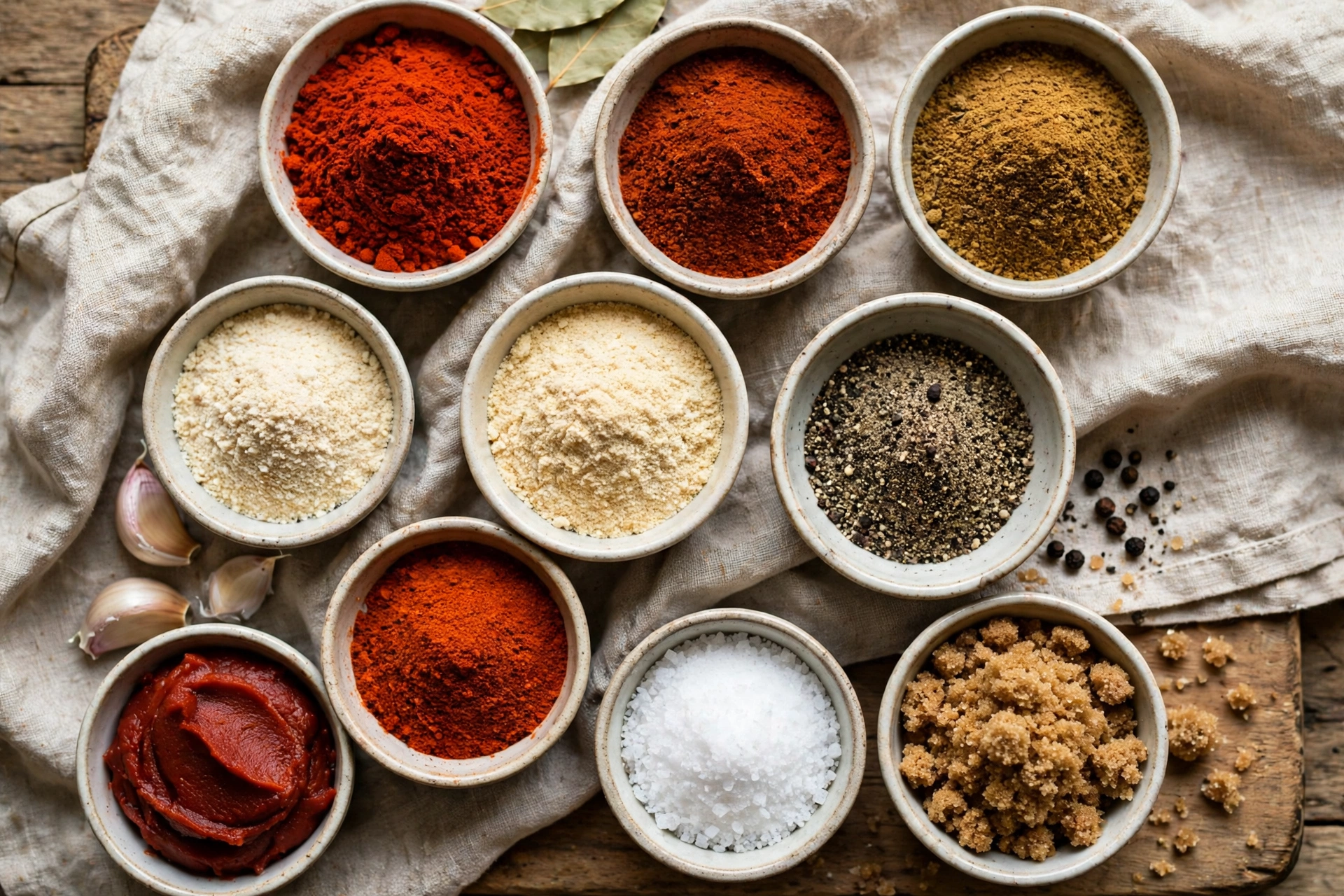
Tomato Sauce
Tomato sauce is the backbone of the recipe, providing 1 1/2 cups of smooth, pourable body. Choose a plain, unseasoned tomato sauce rather than a pasta sauce, marinara, or pizza sauce, because those products already contain herbs, cheese flavourings, or added sugar that would push the sauce off balance. A simple canned tomato sauce, with tomatoes as the main ingredient and little else, gives the cleanest starting point. Check the label for added sugar and salt, since brands vary, and remember that a sweeter or saltier base sauce may call for a small reduction in brown sugar or salt later. Tomato sauce should look smooth and deep red, with no large chunks, because a smooth base makes a smooth finished sauce that brushes evenly over meat.
Tomato Paste
Tomato paste is used at 3 tablespoons, and its role is concentration. Paste is tomato cooked down until much of the water has evaporated, leaving an intense, slightly sweet, deeply savoury tomato flavour. In this recipe, paste deepens the colour, thickens the sauce gently, and adds a cooked-tomato richness that makes the sauce taste simmered even before the pot has been on the heat for long. Use paste from a tube or a small can, and stir it well so no lumps remain. A double-concentrated paste is ideal, because it delivers more flavour per spoonful. Avoid sun-dried tomato paste or flavoured pastes, which introduce notes that do not belong in a classic Texas sauce.
Apple Cider Vinegar
Apple cider vinegar, at 1/4 cup, supplies the main tang of the sauce. Its flavour is fruity, slightly mellow, and rounder than white vinegar alone, which suits a tomato-based sauce very well. Apple cider vinegar cuts through fatty brisket and pork, brightens the tomato, and gives the sauce its characteristic Texas sharpness without harshness. Choose a standard, filtered apple cider vinegar for a clean flavour. Unfiltered vinegar with sediment can be used, but shake the bottle well and expect a slightly cloudier sauce. The vinegar in this recipe is not a background note; it is meant to be tasted clearly, balanced by sugar and tomato rather than hidden by them.
Distilled White Vinegar
Distilled white vinegar, at 2 tablespoons, adds a second, sharper layer of acidity. While apple cider vinegar provides fruity tang, white vinegar provides a clean, bright bite that lifts the whole sauce and keeps it from tasting heavy after simmering. Using two vinegars may seem like a small detail, but the combination creates a more interesting acidity than either vinegar alone. White vinegar is inexpensive, widely available, and neutral in flavour apart from its sharpness, which makes it a reliable tool for balance. Do not increase the white vinegar casually, because its sharpness becomes dominant quickly. The small amount here is deliberate.
Brown Sugar
Brown sugar, at 3 tablespoons packed, balances acidity and heat without making the sauce sweet in the Kansas City sense. Light brown sugar is recommended for this recipe, because it adds gentle molasses depth while keeping the sauce firmly on the savoury side of the spectrum. Dark brown sugar can be used for a deeper, more molasses-forward flavour, but it will darken the sauce and make it taste slightly richer and sweeter, so taste carefully if that swap is made. Pack the sugar firmly into the measuring spoon for an accurate amount, and level it off. Brown sugar also helps the sauce develop a subtle gloss and helps it cling lightly to meat when brushed on during the last minutes of cooking.
Worcestershire Sauce
Worcestershire sauce, at 2 tablespoons, is the savoury secret weapon of this recipe. It brings a complex, fermented depth with notes of tamarind, molasses, vinegar, anchovy, and spice, all in one bottle. In a Texas style barbecue sauce, Worcestershire sauce deepens the tomato, reinforces the meaty, umami character, and adds a background savouriness that salt alone cannot provide. It also contributes a little extra acidity and sweetness, which helps tie the sauce together. Use a standard Worcestershire sauce and measure carefully, because its flavour is strong. For a vegetarian table, look for a vegetarian or vegan Worcestershire-style sauce, and taste after simmering, since alternative brands vary in salt and sweetness.
Yellow Mustard
Yellow mustard, at 1 tablespoon, adds sharpness, a gentle tang, and a warm yellow colour to the sauce. Mustard acts as a flavour brightener, cutting through richness and adding a subtle pungency that makes the sauce taste more awake. It also helps emulsify the sauce very slightly, encouraging the ingredients to stay blended rather than separating. Standard American yellow mustard is the right choice here, because its flavour is straightforward and familiar. Dijon mustard can be used for a sharper, more wine-like note, but it will change the character of the sauce, so it is better saved for the mustard-forward variation described later in the article.
Chilli Powder
Chilli powder, at 2 teaspoons, provides the earthy, warm spice base of the sauce. Note that American-style chilli powder is a blend, typically containing ground chillies, cumin, oregano, garlic powder, and sometimes paprika, rather than pure ground chilli. That blend is exactly what this recipe wants, because it adds complexity in a single spoonful. Check the label to confirm the product is a chilli powder blend, not pure cayenne or pure ground chilli, which would be far hotter. Freshness matters with ground spices, so use chilli powder that smells fragrant when the jar is opened. Old, faded chilli powder will make the sauce taste flat, no matter how long it simmers.
Smoked Paprika
Smoked paprika, at 2 teaspoons, is the main source of smoke flavour in this sauce. Spanish smoked paprika, often labelled pimentón, is made from peppers dried over oak smoke, and it carries a genuine wood-smoke aroma that is essential for a Texas style barbecue sauce made without a smoker. Choose sweet smoked paprika rather than hot smoked paprika for the base recipe, so the smoke note stays smooth and the heat level stays controlled. Smoked paprika also gives the sauce a rich, reddish-brown colour. Store paprika away from heat and light, and replace it if it smells dusty rather than smoky, because faded paprika contributes colour without flavour.
Ground Cumin
Ground cumin, at 1 teaspoon, adds an earthy, warm, slightly peppery note that is closely associated with Texas and Tex-Mex seasoning. Cumin helps the sauce taste savoury and grounded, balancing the brighter notes of vinegar and mustard. A little cumin goes a long way, and too much can dominate, so the measured teaspoon is important. Toasting or blooming cumin briefly in the pot, as described in the method, releases its aromatic oils and prevents it from tasting raw or gritty. Ground cumin loses potency faster than whole cumin seed, so buy small quantities and store the jar tightly closed.
Garlic Powder
Garlic powder, at 1 teaspoon, provides a mellow, savoury garlic flavour that blends smoothly into a simmered sauce. Fresh garlic can be used in barbecue sauce, but it behaves differently: fresh garlic can taste sharp or bitter if it is not cooked carefully, and it can create uneven pockets of flavour in a smooth sauce. Garlic powder, by contrast, disperses evenly, tastes rounded after simmering, and gives a consistent savoury background. Use garlic powder, not garlic salt, because garlic salt would add unmeasured salt and throw off the seasoning balance. If garlic powder has clumped into hard lumps from moisture, break it up or replace it, because clumps will not dissolve evenly.
Onion Powder
Onion powder, at 1 teaspoon, works alongside garlic powder to build a savoury, rounded base. Onion powder tastes sweeter and mellower than fresh onion, and it dissolves smoothly into tomato sauce without adding texture or pieces. That smoothness matters for a sauce that should brush and pour evenly. Fresh onion would need to be cooked down completely and blended to achieve the same texture, which adds time and an extra step. Onion powder avoids that work while still contributing the gentle, savoury sweetness that makes tomato sauce taste more complete. As with garlic powder, use onion powder rather than onion salt, so salt remains fully under control.
Black Pepper
Black pepper, at 1 teaspoon freshly ground, adds pungent warmth and aromatic bite. Freshly ground pepper is noticeably more fragrant than pre-ground pepper, which loses volatile oils quickly once ground. If a pepper mill is available, grind the pepper just before cooking. Black pepper heat is different from chilli heat: it is more aromatic, sits at the front of the palate, and adds a subtle bite that complements the slower warmth of chilli powder and cayenne. Coarse or fine grind both work, but a medium grind disperses most evenly. Taste at the end of cooking before adding more pepper, because reduction concentrates pepper flavour along with everything else.
Cayenne Pepper
Cayenne pepper, at 1/4 teaspoon, supplies clean, direct heat. Cayenne has little flavour of its own beyond heat, which makes it a precise tool for adjusting spiciness without changing the overall spice character. The small amount in the base recipe gives a gentle warmth at the back of the throat, noticeable but not aggressive, which suits a sauce meant for a wide table including guests who prefer milder food. Heat lovers can increase cayenne in small increments, as explained in the variations section, but the increase should be made gradually, because cayenne heat intensifies as the sauce simmers and as it sits overnight. Always measure cayenne with a proper measuring spoon rather than shaking it freely from the jar.
Liquid Smoke (Optional)
Liquid smoke, at 1/2 teaspoon, is optional, and its role is reinforcement rather than foundation. Liquid smoke is made by condensing real wood smoke, so it carries genuine smoky flavour in concentrated form. In this recipe, it deepens the smoke note already provided by smoked paprika, making the sauce taste more like it came from a pit or grill. The amount is deliberately tiny, because liquid smoke becomes acrid and artificial-tasting very quickly when overused. Add it near the end of simmering rather than at the start, so the flavour stays clean. Cooks who prefer to avoid liquid smoke can omit it entirely and still enjoy a smoky sauce from the paprika alone, with no other adjustment needed.
Salt
Salt, at 3/4 teaspoon, is the ingredient that makes every other flavour legible. Salt enhances tomato sweetness, sharpens vinegar tang, balances sugar, and lifts spice aroma. Fine sea salt or kosher salt both work, but measure carefully, because kosher salt crystals are larger and a teaspoon of kosher salt contains less salt by weight than a teaspoon of fine salt. If kosher salt is used, taste at the end and adjust in small pinches. Salt should be added early enough to dissolve and integrate during simmering, and then checked again at the end, after reduction. That two-stage approach, season then taste, prevents both under-seasoning and over-salting, and it is one of the most reliable habits for sauce making in general.
Equipment Needed
The equipment list for this Texas style barbecue sauce is short, which is part of the appeal. A medium heavy-bottomed saucepan is the most important piece. A heavy base distributes heat evenly and reduces the risk of scorching, which matters because tomato and sugar can catch and burn quickly in a thin pan. A saucepan with a capacity of about 2 quarts is ideal, giving the sauce room to bubble gently without splattering excessively. A lid is useful for partial covering during simmering, though the sauce should not be fully sealed, because some evaporation is needed for thickening.
A wooden spoon or heatproof silicone spatula is needed for stirring. Tomato sauce can stain and can splatter when it bubbles, so a long-handled spoon keeps hands away from the surface. A spatula is particularly useful for scraping the bottom and corners of the pan, where sugar and tomato paste are most likely to stick and scorch. Stirring regularly, especially in the last 10 minutes, is easier with a tool that reaches every part of the pan.
Measuring cups and measuring spoons are essential for this recipe, because balance depends on accurate ratios. Vinegar, sugar, and cayenne in particular should be measured rather than estimated, since small errors in those ingredients change the flavour noticeably. A small whisk is helpful for blending the tomato paste smoothly into the sauce at the start, breaking up any lumps before simmering begins. A blender or immersion blender is optional, for cooks who want an extra-smooth finish, as explained in the method. A heatproof jug or ladle makes transferring the hot sauce to jars safer and cleaner. Finally, clean glass jars or airtight containers with lids are needed for storage, along with a label or masking tape for noting the date, so fridge life can be tracked accurately.
Step-by-Step Method
Step 1: Gather and Measure Everything First
Before the heat goes on, measure every ingredient and place the items within easy reach of the stove. This preparation step, often called mise en place, matters more for sauce making than it might seem, because the early stages move quickly once the pan is hot. Open the tomato sauce and tomato paste, measure the vinegars, sugar, Worcestershire sauce, and mustard, and combine the dry spices in a small bowl: chilli powder, smoked paprika, cumin, garlic powder, onion powder, black pepper, cayenne, and salt. Having the spice blend ready means the spices can be added all at once and bloomed evenly, without fumbling with jars over a hot pan. Time needed: about 10 minutes, which is the full prep time for the recipe.
Step 2: Bloom the Spices
Place the medium heavy-bottomed saucepan over medium heat. No oil is needed for this recipe, because the sauce is tomato-based rather than fat-based, and the spices will bloom in the moisture of the tomato paste. Add the tomato paste to the dry pan first, along with the combined spice blend, and stir constantly for 1 to 2 minutes. The paste will darken slightly, from bright red to a deeper brick red, and the spices will become noticeably fragrant, smelling warm, smoky, and earthy rather than dusty. This blooming step is the key to a sauce that tastes cooked and rounded rather than raw. Watch the pan closely during these 2 minutes, because dry spices and tomato paste can scorch quickly if left unattended. If the mixture starts to stick or darken too fast, lower the heat immediately and stir vigorously. The goal is fragrance and a slight darkening, not browning or burning.
Step 3: Add the Tomato Sauce and Vinegars
Pour in the tomato sauce, apple cider vinegar, and distilled white vinegar, and whisk or stir well to dissolve the bloomed paste and spice mixture completely. Scrape the bottom of the pan with the spatula to lift any paste or spice that has settled there, and continue stirring until the sauce looks uniform in colour, with no streaks of paste or dry spice visible. The sauce will look thin and quite sharp at this stage, and that is normal. The vinegar will smell strong when it first hits the warm pan, and the tomato will look bright rather than deep. Both qualities will mellow during simmering. Bring the mixture to a gentle simmer over medium heat, stirring occasionally, which should take about 3 to 4 minutes.
Step 4: Add Sugar, Worcestershire Sauce, and Mustard
Once the sauce is simmering gently, add the brown sugar, Worcestershire sauce, and yellow mustard. Stir until the sugar has dissolved completely, which takes about 1 minute. Taste is not needed yet, because the sauce has not simmered and the flavours have not melded, but a quick visual check is useful: the sauce should look smooth, glossy, and evenly coloured, with no sugar crystals visible at the bottom of the pan. The mustard will lighten the colour very slightly and add a warm, golden undertone. Reduce the heat to low as soon as the sugar has dissolved, so the sauce settles into a gentle, steady simmer rather than a vigorous boil. A vigorous boil will splatter, reduce too quickly, and increase the risk of scorching.
Step 5: Simmer for 35 Minutes
Simmer the sauce on low heat for 35 minutes, with the lid partially ajar to allow steam to escape while reducing splatter. Stir every 5 minutes or so, scraping the bottom and sides of the pan each time, and more frequently in the final 10 minutes as the sauce thickens. During simmering, several visual changes will signal progress. In the first 10 minutes, the sharp vinegar aroma softens, the colour deepens from bright red to a richer reddish-brown, and the surface develops small, lazy bubbles rather than rapid boiling. By 20 minutes, the sauce will coat the back of a spoon lightly and leave a clear trail when a finger is drawn through the coating, though the coating will still run back together fairly quickly. By 30 to 35 minutes, the sauce will be noticeably thicker, glossier, and darker, and it will coat the spoon more heavily, dripping slowly rather than running freely. The finished consistency should be pourable and brushable, similar to a thin bottled barbecue sauce, not thick like ketchup and not watery like tomato juice. If the sauce thickens too much, a splash of water, added a tablespoon at a time, will restore the right consistency. If the sauce is still too thin at 35 minutes, simmer for an additional 5 minutes, stirring constantly, and check again.
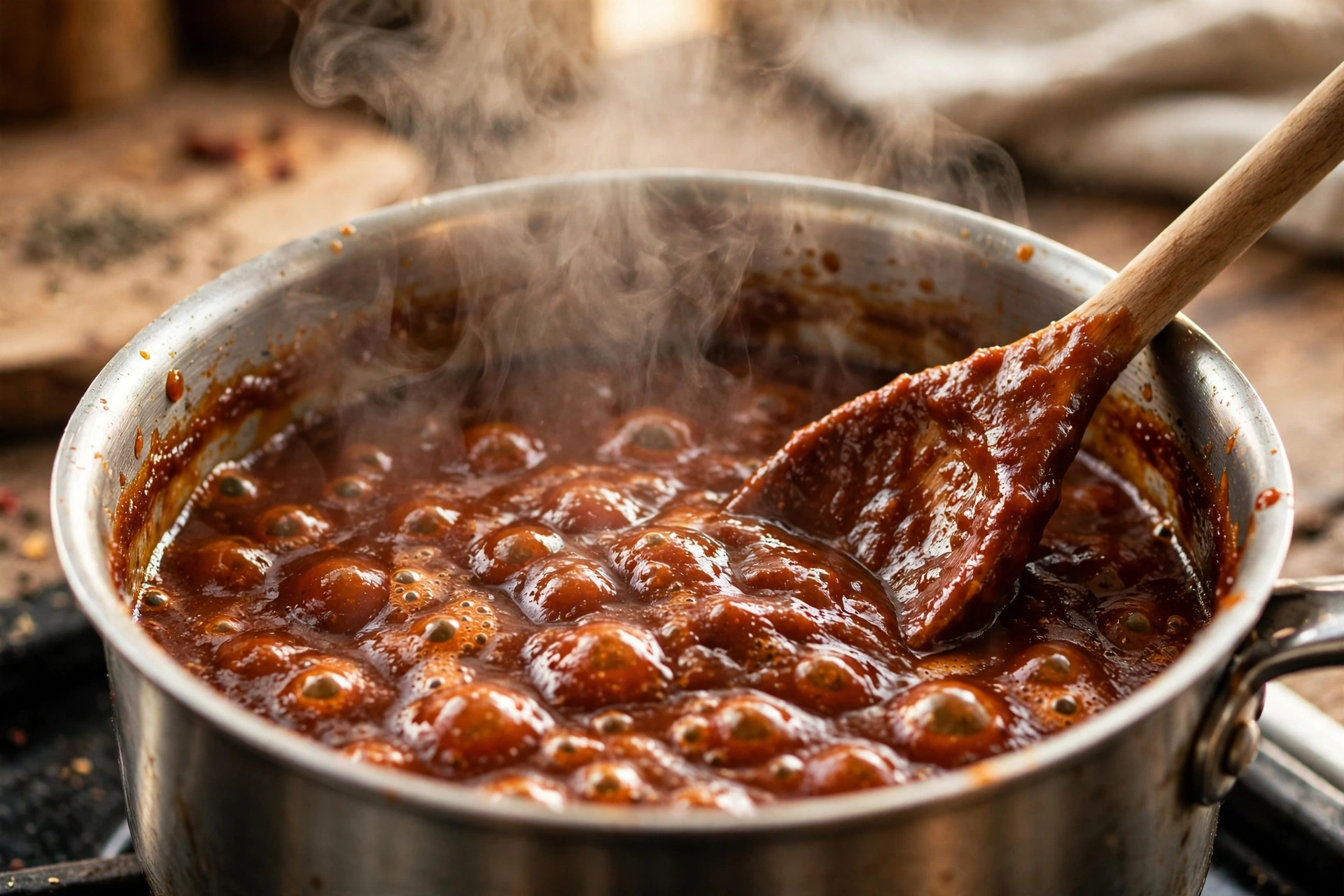
Step 6: Add Liquid Smoke and Adjust Seasoning
Remove the pan from the heat. If using liquid smoke, stir in the 1/2 teaspoon now, so its flavour stays clean and does not cook off or turn bitter during the long simmer. Then taste the sauce carefully, using a clean spoon and allowing the sauce to cool slightly on the spoon before tasting, because hot sauce can mask flavour and burn the tongue. Check the balance in order: first salt, then sweetness, then acidity, then heat. If the sauce tastes flat, add salt in small pinches, stirring and tasting after each addition. If the vinegar feels too sharp, add brown sugar by the teaspoon, stir, and wait a minute before tasting again, because sugar needs a moment to integrate. If the sauce tastes too sweet or dull, add apple cider vinegar by the teaspoon. If more heat is wanted, add cayenne in tiny pinches, remembering that heat will intensify slightly as the sauce cools and sits. Record any adjustment mentally for the next batch, because personal taste varies and a preferred balance is worth repeating.
Step 7: Blend for Extra Smoothness (Optional)
This step is optional, and the sauce is perfectly good without it. For an extra-smooth, professional finish, blend the sauce briefly. An immersion blender can be used directly in the saucepan, blending for 20 to 30 seconds until the texture is uniform. Alternatively, allow the sauce to cool for 10 minutes, transfer it carefully to a standard blender, blend on low speed for 20 to 30 seconds, and return it to the pan. Never blend very hot sauce in a sealed blender without venting, because steam pressure can force the lid off. If using a standard blender, remove the centre cap from the lid, cover the opening loosely with a folded kitchen towel, and blend in short pulses. Blending is particularly useful if the tomato sauce used was slightly chunky, or if a perfectly smooth brushing sauce is wanted for a polished brisket presentation. For a rustic, everyday table sauce, skipping this step saves time and washing up, with no loss of flavour.
Step 8: Adjust Consistency and Cool
After blending, if that step was taken, check the consistency one final time. The sauce should pour in a steady stream from a spoon, coat meat lightly without pooling heavily, and cling just enough to stay on a brush. If the sauce is thicker than wanted, stir in water a tablespoon at a time until the right flow is reached. If the sauce is thinner than wanted, return it to low heat for 3 to 5 minutes, stirring constantly, and check again. Then allow the sauce to cool in the pan for 15 to 20 minutes, stirring occasionally, before transferring it to jars or containers. Cooling in the pan lets the flavours settle and prevents condensation inside storage containers, which can shorten fridge life. The sauce will thicken slightly as it cools, so judge the final consistency at serving temperature rather than straight from the heat. Once cool enough to handle comfortably, transfer the sauce with a ladle or heatproof jug into clean jars, seal, label with the date, and refrigerate or freeze as described in the storage section.
Tips for Success
Balancing sweet, tang, and heat is the central skill of this recipe, and the most reliable approach is to taste at the end, not at the start. Early in cooking, vinegar tastes sharper, spices taste rawer, and sugar tastes less integrated than they will after 35 minutes of simmering. Judging the sauce too early can lead to unnecessary corrections that unbalance the finished product. Wait until the simmer is complete, the sauce has cooled slightly, and the flavours have melded, then adjust in small increments. Add salt by pinches, sugar and vinegar by teaspoons, and cayenne by tiny pinches, tasting after each addition. Small adjustments are almost always enough, and they are easy to reverse in spirit by balancing with a complementary ingredient, while large additions are difficult to undo.
Avoiding bitterness starts with heat control. The two most common causes of bitter barbecue sauce are scorched tomato paste or spices, and overcooked garlic or sugar. Blooming spices for only 1 to 2 minutes over medium heat, stirring constantly, prevents scorching at the start. Keeping the simmer gentle, on low heat, prevents sugar from catching on the bottom of the pan later. Stirring every few minutes, and more often near the end, keeps the thickening sauce moving and prevents hot spots. If a bitter note does appear, first check whether the bottom of the pan has caught. If it has, do not scrape the darkened layer into the sauce; instead, transfer the unburnt sauce to a clean pan and continue. A small pinch of extra brown sugar can soften mild bitterness, but it cannot rescue a badly scorched sauce, so prevention is far more effective than correction.
Thickness control is easier than many cooks expect, once the spoon test is understood. Dip a spoon into the sauce, lift it out, and draw a line through the coating on the back of the spoon. For this Texas style sauce, the line should hold briefly before the sauce slowly runs back together. If the line disappears immediately, the sauce is too thin and needs a few more minutes of simmering. If the sauce clings heavily and barely moves, it is too thick and needs water, added a tablespoon at a time. Remember that the sauce thickens as it cools, so a sauce that looks perfect when piping hot will be slightly thicker at the table. Aim for a consistency that looks just a touch thinner than the final target while still hot, and the cooled sauce will land exactly right.
Not scorching the sugar requires attention to pan choice and heat level. A heavy-bottomed pan is strongly recommended, because thin pans develop hot spots where sugar caramelises too fast and then burns. Low heat, regular stirring, and a partially covered pan all help. Never leave a simmering tomato-sugar sauce unattended for long stretches, especially in the last 10 minutes when water content is lower and the sauce is most vulnerable. If the kitchen needs attention elsewhere, lower the heat further or remove the pan from the heat temporarily; the sauce will wait patiently, while a scorched sauce will not recover.
Scaling up is straightforward, and this recipe doubles or triples well for large gatherings, freezer stocking, or barbecue events. Multiply every ingredient by the same factor, use a larger, wider pan so evaporation stays efficient, and allow a little extra simmering time, perhaps 5 to 10 minutes more for a double batch, because a larger volume takes longer to reduce. Stir more frequently with larger batches, since the greater depth of sauce increases the risk of sticking at the bottom. Taste and adjust seasoning at the end as usual, because scaling does not always scale flavour perception perfectly, especially for salt and heat. When scaling down to a half batch, use a smaller pan and check thickness from 25 minutes onward, because a small volume reduces faster.
Also Read: Braised Short Ribs Recipe (Fall-Off-the-Bone Tender)
A few additional habits make repeated batches more consistent. Use the same brands of tomato sauce and vinegar when possible, because brand variation in sweetness and acidity is the largest hidden variable in sauce making. Measure spices with level spoons, not heaped spoons, and replace ground spices that are more than a year old. Label stored jars with the date and any variation made, such as extra heat or extra sweetness, so the next batch can repeat a success or correct a preference. Finally, let the sauce rest overnight in the fridge before judging it for the first time, if time allows. Overnight rest softens the vinegar edge, deepens the spice blend, and gives a truer picture of the finished flavour than a taste straight from the pot.
Variations
Spicier Version
For a sauce with a serious kick, increase the cayenne pepper from 1/4 teaspoon to 1/2 teaspoon, and add 1/2 teaspoon of crushed red pepper flakes during the spice-blooming step. The flakes add both heat and tiny flecks of colour, and their warmth builds more slowly than cayenne, giving a layered burn rather than a single sharp hit. A finely chopped fresh jalapeño, seeds removed for moderate heat or left in for stronger heat, can also be simmered with the sauce and blended smooth at the end, though the sauce should then be tasted carefully, because fresh chilli heat varies widely by pepper. This spicier version pairs especially well with fatty pork and with grilled chicken, where heat cuts richness and adds excitement. Keep the sugar and vinegar at base levels, because extra sweetness would dull the heat, and extra vinegar would sharpen it beyond balance.
Sweeter Kansas-City-Leaning Twist
For guests who prefer a sweeter, thicker table sauce, increase the brown sugar from 3 tablespoons to 5 tablespoons, and add 1 tablespoon of molasses for a deeper, darker sweetness. Simmer for an additional 5 minutes to allow the extra sugar to integrate and the sauce to thicken slightly. The result will lean toward Kansas City style, which is traditionally sweeter, thicker, and richer than Texas style, while still keeping the tomato, vinegar, and smoke character of the base recipe. This twist is popular for burgers, pulled pork sandwiches, and ribs served to a mixed crowd, including children or guests who prefer milder flavours. It is still not a dessert sauce, because the vinegar and Worcestershire sauce remain present, but the balance shifts noticeably toward sweetness, so label the jar clearly if both versions are stored at once.
Mustard-Forward Version
For a sharper, tangier sauce with a golden colour, increase the yellow mustard from 1 tablespoon to 3 tablespoons, and reduce the tomato sauce slightly, from 1 1/2 cups to 1 1/4 cups, to keep the total volume close to 2 cups. The mustard-forward version tastes brighter, more pungent, and a little less tomato-heavy, with a flavour that recalls South Carolina mustard sauces while keeping the Texas spice blend intact. This version is excellent on pulled pork, grilled chicken, and sausages, where mustard sharpness complements the meat without competing with it. Because mustard can taste harsh if under-simmered, give this version the full 35 minutes, and taste at the end before adding any extra vinegar, since the mustard already contributes significant tang.
Bourbon Note Version
For an adult table sauce with a warm, oaky depth, add 2 tablespoons of bourbon along with the tomato sauce and vinegars in Step 3. The alcohol cooks off during the 35-minute simmer, leaving behind vanilla, caramel, and oak notes that complement brown sugar and smoked paprika beautifully. Bourbon should be added early, not at the end, so the raw alcohol flavour has time to mellow and integrate. Choose a straightforward bourbon rather than a flavoured whiskey, because flavoured products introduce sweetness or spice that can unbalance the sauce. This version is best reserved for adult gatherings, and it should be labelled clearly if stored alongside the base sauce, so there is no confusion about ingredients. The bourbon note version is particularly good brushed over ribs during the last minutes of cooking, where the sugars caramelise lightly and the oaky aroma intensifies.
No-Sugar Version
For a sauce without added sugar, omit the brown sugar entirely and add 1 tablespoon of tomato paste extra, bringing the total to 4 tablespoons, to compensate for lost body and depth. A sugar-free sauce will taste tangier and more savoury, with vinegar and spice more prominent, and that character suits brisket especially well, because brisket brings its own richness and does not need sweetness from the sauce. Some cooks add a small amount of a sugar alternative, such as a granulated monk fruit or stevia blend, but quantities vary by brand and sweetness strength, so any alternative should be added in tiny amounts, tasted, and adjusted gradually, rather than swapped spoon-for-spoon for brown sugar. The no-sugar version will be slightly thinner and less glossy than the base sauce, which is normal, and it still keeps and freezes just as well. Label the jar clearly, because the flavour difference is noticeable.
Chipotle Version
For a smoky, earthy heat with a distinctive Mexican-inspired depth, replace the cayenne pepper with 1 to 2 teaspoons of chipotle in adobo sauce, finely chopped, added with the tomato sauce in Step 3. Chipotle peppers are smoked jalapeños packed in a tangy adobo sauce, so they bring smoke, heat, and a rich, slightly sweet earthiness all at once. Start with 1 teaspoon for moderate warmth, taste after simmering, and add the second teaspoon only if more heat and smoke are wanted, because chipotle flavour intensifies as the sauce sits. If a smoother sauce is preferred, blend the finished sauce as described in the optional blending step, which will incorporate the chipotle completely. Reduce the smoked paprika slightly, from 2 teaspoons to 1 1/2 teaspoons, when using chipotle, to avoid over-smoking the sauce. This version is outstanding on brisket tacos, grilled chicken, and burgers, where its deep, smoky heat adds a memorable twist while staying firmly within barbecue territory.
Serving Ideas
Also Read: Chimichurri Sauce Recipe (Bright, Bold & 10 Minutes)
Brisket is the classic partner for Texas style barbecue sauce, and the serving approach matters as much as the sauce itself. Slice brisket against the grain, arrange the slices slightly overlapping on a warm platter, and spoon sauce lightly over the top or serve it in a jug alongside, so each guest can add the amount preferred. A light hand is better than a heavy pour, because brisket should remain the star. For chopped brisket sandwiches, toss the chopped meat lightly with sauce just before serving, so the meat is moist and glossy without becoming soggy. Warm the sauce gently before serving with brisket, because cold sauce on hot meat cools the plate and dulls the aroma.

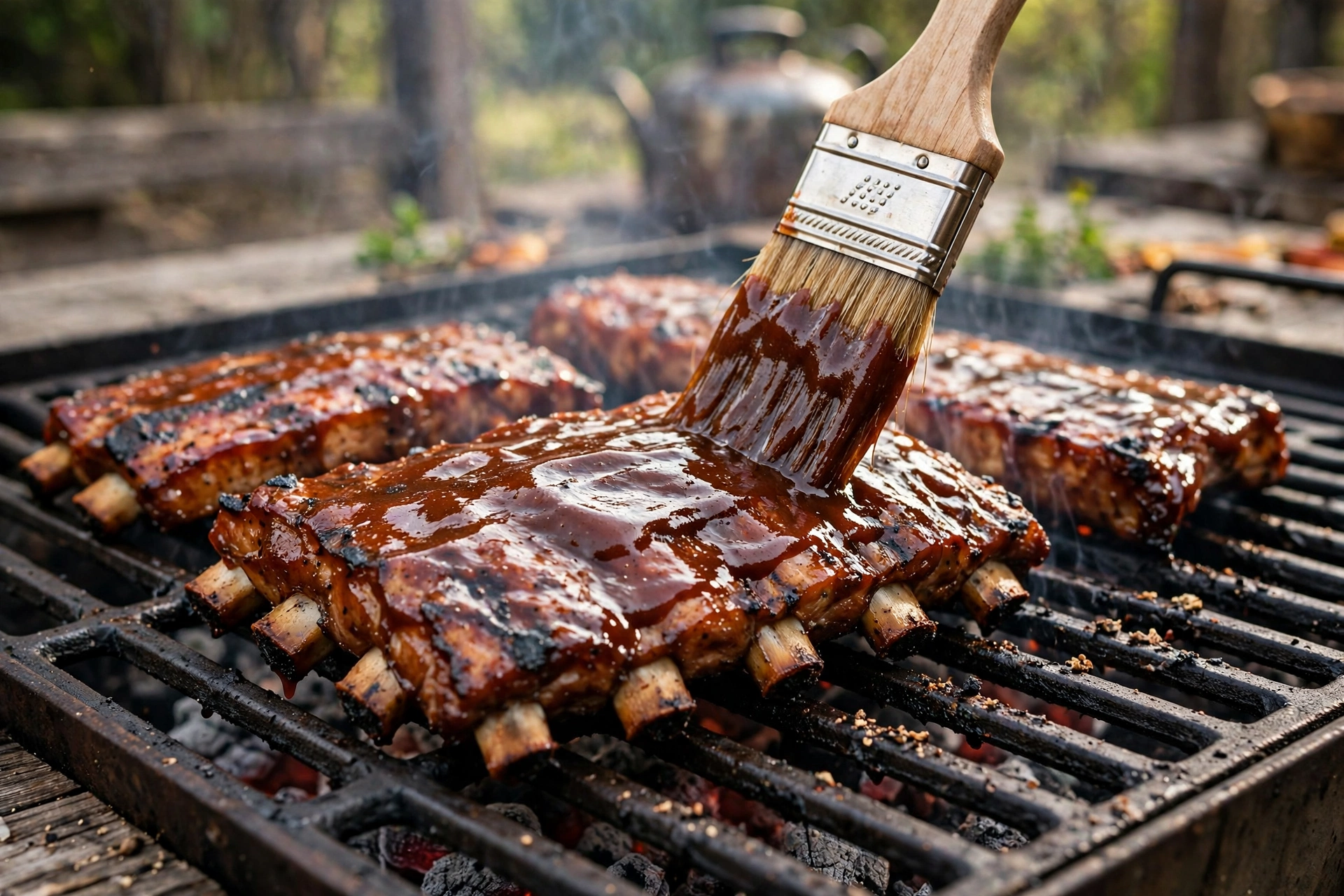
Ribs benefit from two serving styles. For ribs finished on the grill or in the oven, brush a thin layer of sauce over the ribs during the last 10 minutes of cooking, allowing the sauce to set and gloss without burning, then brush once more just before serving for shine. For ribs served with sauce on the side, cut the rack into individual bones or pairs of bones, pile them on a platter, and place a bowl of warm sauce in the centre for dipping. The thinner Texas consistency is ideal for dipping, because it coats each rib lightly and does not pool heavily on the plate.
Pulled pork is another natural match. Pile pulled pork onto soft buns, spoon sauce over the pork, and add a simple slaw for crunch and freshness. The vinegar tang in the sauce cuts through the richness of pork shoulder beautifully, and the thinner consistency soaks lightly into the meat rather than sitting on top. For a crowd, set up a pulled pork station with warm sauce, buns, slaw, pickles, and extra jalapeños, so guests can build sandwiches to taste. The sauce also works as a finishing drizzle over pulled pork nachos, tacos, or baked potatoes topped with pork, adding smoky tang without overwhelming the other toppings.
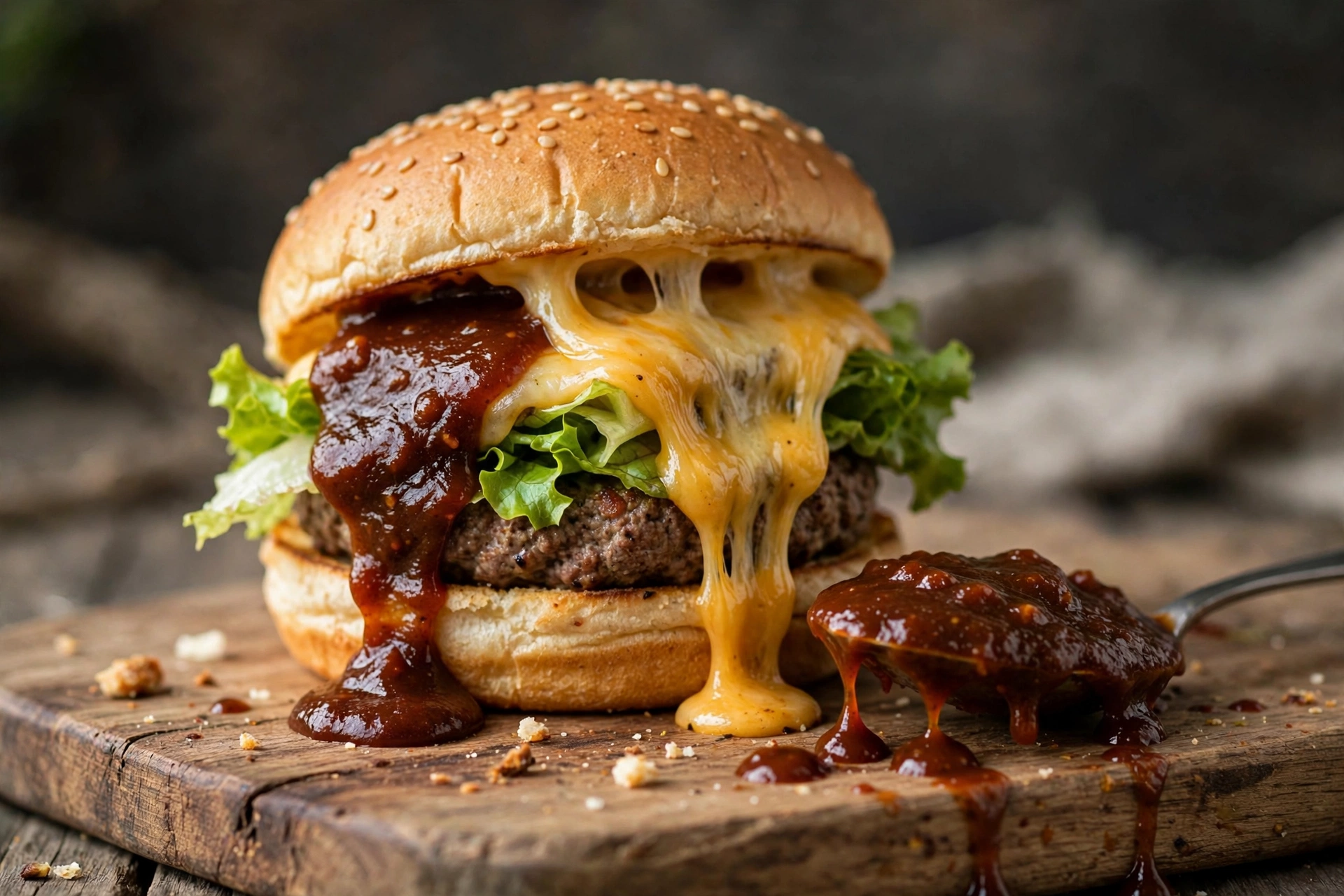
Burgers become noticeably better with a good Texas sauce. Spread sauce on the bun, or spoon it over the patty along with cheese, lettuce, tomato, and onion, for a barbecue burger that tastes homemade rather than bottled. Because this sauce is less sweet than many commercial sauces, it pairs well with sharp cheddar, smoked cheese, crispy bacon, and caramelised onions, without turning the burger into a sweet sandwich. For grilled chicken, brush sauce over chicken breasts or thighs during the last few minutes of grilling, taking care not to brush too early, because sugar in the sauce can burn over high heat. Serve extra warm sauce on the side for dipping, especially for chicken tenders, wings, or grilled chicken strips.
Also Read: Creamy Cheeseburger Soup Recipe (All the Flavor, One Pot)
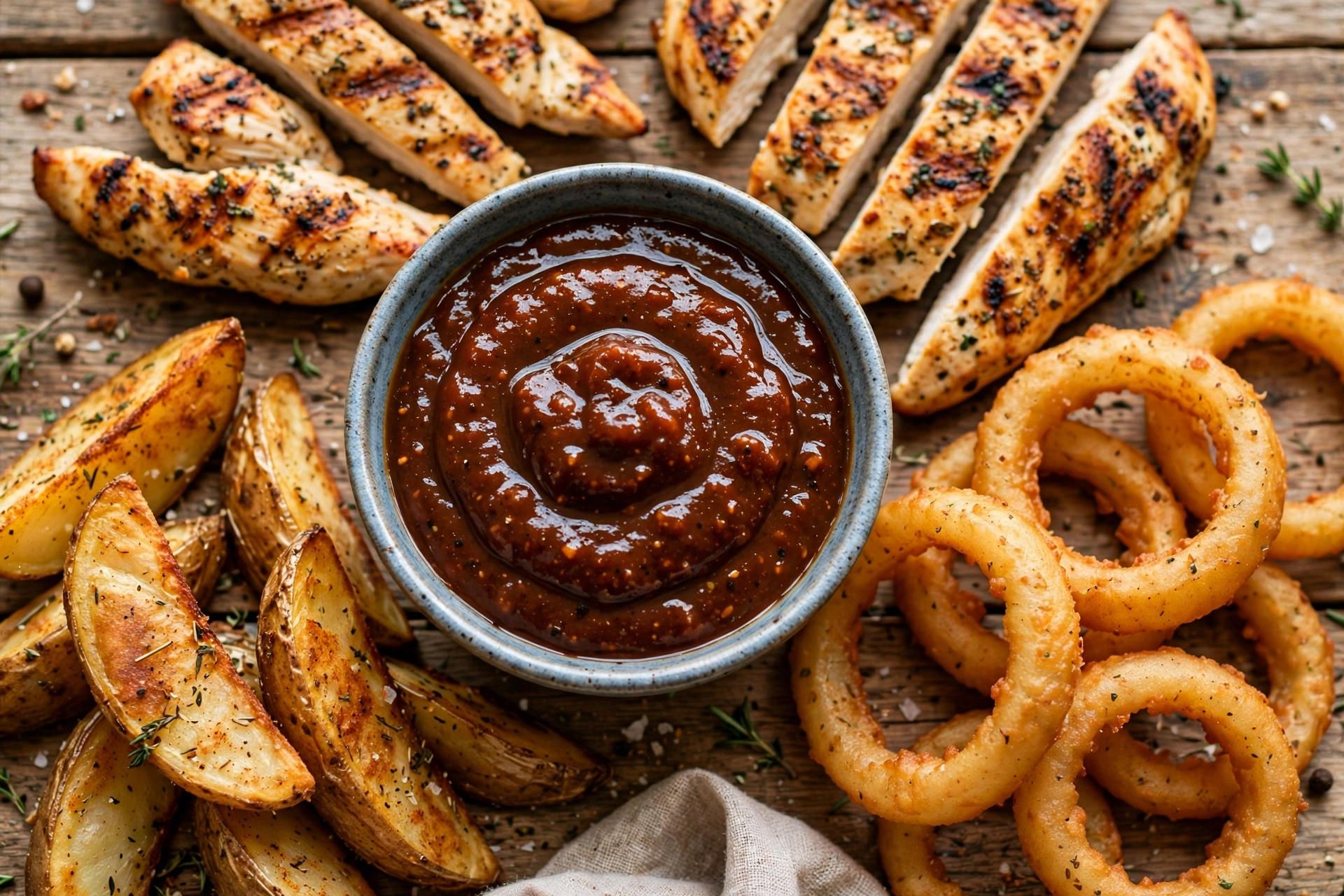
As a dipping sauce, Texas style barbecue sauce is versatile far beyond barbecue meats. Serve it warm or at room temperature with chicken nuggets, mozzarella sticks, onion rings, roasted potato wedges, sweet potato fries, and grilled vegetables. Its tangy, smoky profile complements fried foods particularly well, because acidity cuts through oil and refreshes the palate. The sauce also makes an excellent addition to baked beans: stir 1/2 cup of sauce into a pot of beans along with a little mustard and brown sugar, simmer gently, and serve as a smoky side dish alongside any barbecue spread. A spoonful stirred into a pot of chilli or a meatloaf glaze can also add depth, though the sauce should be used as a supporting flavour in those dishes, not as the dominant seasoning.
Storage and Make-Ahead
Proper storage keeps this Texas style barbecue sauce tasting fresh, safe, and flavourful, and makes it a genuinely useful make-ahead staple. Allow the sauce to cool completely before sealing containers, because sealing hot sauce traps steam, creates condensation, and can shorten fridge life. Transfer the cooled sauce to clean glass jars or airtight containers, leaving a small amount of headspace, seal tightly, and label each container with the contents and the date made. Glass is preferred over plastic for storage, because tomato sauce can stain plastic and can absorb odours from previous contents, while glass keeps flavour clean and makes it easy to see how much sauce remains.

In the fridge, Texas style barbecue sauce keeps well for up to 2 weeks. Store it on a middle shelf rather than in the door, where temperature fluctuates more each time the door opens. Always use a clean spoon when serving from the jar, because introducing crumbs, meat juices, or a used utensil can introduce bacteria and shorten the safe storage time. If the sauce develops an off smell, visible mould, or an unusually sour or fermented aroma, discard it, even if it is within the 2-week window. Trust the senses over the calendar when something seems wrong, because storage conditions vary by fridge and container.
For longer storage, freezing is excellent. Texas style barbecue sauce freezes very well, with minimal change to flavour or texture, because it contains no dairy or delicate emulsion that would split on thawing. Freeze the sauce in portions that match how it will be used, such as 1/2-cup containers for a family dinner or ice-cube trays for small amounts to stir into beans or chilli. If using ice-cube trays, freeze the cubes solid, transfer them to a labelled freezer bag, and remove the air before sealing. Frozen sauce keeps well for up to 3 months. Thaw frozen sauce overnight in the fridge, never at room temperature for extended periods, and stir well after thawing, because slight separation during freezing is normal and harmless. Reheat gently on low heat, stirring, until warm, and do not re-freeze sauce that has already been thawed and served.
Make-ahead planning is simple and rewarding with this recipe. The sauce can be made 1 to 2 days before a barbecue, refrigerated, and gently reheated on the day, and most cooks find the flavour actually improves after a night in the fridge, as vinegar softens and spices meld further. For a large event, make a double or triple batch up to 3 months ahead, freeze in portions, and thaw the needed amount the day before. Keep a small jar of the base sauce and a small jar of a variation, such as the spicier version, so guests with different heat preferences can both be served without making two full batches on the day.
A canning safety note is essential here. This recipe is designed for fridge and freezer storage only, and it is NOT a tested shelf-stable canning recipe. Home canning of tomato-based sauces requires tested procedures, specific acidity levels, verified processing times, and appropriate equipment, because low-acid or improperly processed jars can allow harmful bacteria to grow, with serious food safety risks. The vinegar level, sugar content, and cooking method in this recipe have not been validated for water-bath or pressure canning, and the sauce should never be stored at room temperature in sealed jars on the assumption that it is preserved. If shelf-stable canning is wanted, use only a recipe and procedure from a tested, authoritative source for that exact purpose, with a verified pH and processing time, and follow that procedure exactly. For this recipe, fridge for up to 2 weeks and freezer for up to 3 months are the safe, recommended storage methods, and they preserve flavour far better than an untested canning attempt.

Ingredients
Method
- Measure all ingredients and combine the dry spices in a small bowl: chilli powder, smoked paprika, cumin, garlic powder, onion powder, black pepper, cayenne, and salt.
- Place a medium heavy-bottomed saucepan over medium heat, add the tomato paste and spice blend, and stir constantly for 1 to 2 minutes until fragrant and slightly darkened, taking care not to scorch.
- Pour in the tomato sauce, apple cider vinegar, and distilled white vinegar, stir well to dissolve the paste and spices, and bring to a gentle simmer over medium heat, about 3 to 4 minutes.
- Add the brown sugar, Worcestershire sauce, and yellow mustard, stir until the sugar dissolves, about 1 minute, then reduce the heat to low.
- Simmer on low heat for 35 minutes with the lid partially ajar, stirring every 5 minutes and more often in the final 10 minutes, until the sauce is glossy, darker, and pourable.
- Remove from the heat, stir in the liquid smoke if using, and taste, adjusting salt, sugar, vinegar, or cayenne in small increments until balanced.
- Blend briefly for extra smoothness if desired, using an immersion blender for 20 to 30 seconds, or cooling for 10 minutes and blending carefully on low speed with the lid vented.
- Adjust consistency with water a tablespoon at a time if too thick, or simmer 3 to 5 minutes more if too thin, then cool for 15 to 20 minutes before transferring to clean, labelled jars or containers.
What makes Texas style barbecue sauce different from other barbecue sauces?
Texas style barbecue sauce is defined by balance and restraint. It is tomato-based, thinner than many bottled sauces, tangy from vinegar, savoury from Worcestershire sauce and spices, and only moderately sweet. Unlike Kansas City sauce, which is thick and sweet, Texas sauce is made to complement meat rather than coat it heavily. The spice blend leans earthy and smoky, with chilli powder, cumin, smoked paprika, and black pepper, and the heat builds gently rather than hitting sharply. The thinner consistency allows the sauce to seep into brisket and ribs, adding brightness and smoke without hiding the flavour of the meat itself. That meat-first philosophy is the heart of Texas style.
How sweet is Texas style barbecue sauce compared to Kansas City sauce?
Texas style barbecue sauce is noticeably less sweet than Kansas City sauce. Kansas City sauce typically uses a large amount of sugar, molasses, or honey, producing a thick, glossy, sweet glaze that dominates the palate. Texas sauce, by contrast, uses brown sugar only in moderation, just enough to balance vinegar tang and soften tomato acidity. The dominant flavours in Texas sauce are tomato, vinegar, spice, and smoke, with sweetness as a supporting note. Guests who expect a very sweet sauce may initially find Texas sauce tangier than expected, but that tang is intentional, because it cuts through fatty brisket and pork and keeps each bite feeling fresh rather than cloying.
Is liquid smoke safe to use in barbecue sauce?
Liquid smoke is safe when used in the small amounts typical for cooking, and it is made by condensing real wood smoke into liquid form, rather than by synthetic chemical flavouring alone. The key to good results is quantity: a little liquid smoke adds genuine smoky depth, while too much tastes acrid, bitter, and artificial. This recipe uses only 1/2 teaspoon for about 2 cups of sauce, which is a conservative amount that enhances the smoked paprika without dominating. Liquid smoke is also entirely optional. Cooks who prefer to avoid it can omit it with no other changes, and the sauce will still taste smoky from the smoked paprika. Always store liquid smoke tightly closed and away from heat.
How thick should Texas style barbecue sauce be?
Texas style barbecue sauce should be thinner than ketchup and thicker than tomato juice, with a pourable, brushable consistency that coats meat lightly. When a spoon is dipped into the finished sauce, the sauce should coat the back of the spoon and drip slowly, leaving a trail that holds briefly before running back together. The sauce should pour in a steady stream, brush smoothly over ribs or brisket, and dip cleanly without pooling heavily. If the sauce is too thick, stir in water a tablespoon at a time. If it is too thin, simmer for a few more minutes. Remember that the sauce thickens slightly as it cools, so judge the final consistency at serving temperature.
How spicy is this Texas style barbecue sauce, and can the heat be adjusted?
The base recipe is mildly to moderately spicy, with gentle warmth that most guests can enjoy. Chilli powder and smoked paprika provide earthy warmth, black pepper adds pungency, and 1/4 teaspoon of cayenne adds a mild heat at the back of the throat. The heat is present but not aggressive, and it does not overwhelm the tomato, vinegar, or smoke flavours. Heat can be adjusted easily: reduce or omit cayenne for a very mild sauce, or increase cayenne to 1/2 teaspoon and add crushed red pepper flakes for a spicier version. Adjust heat gradually and taste after simmering, because heat intensifies slightly as the sauce cools and sits overnight.
How long does homemade Texas style barbecue sauce last in the fridge?
Homemade Texas style barbecue sauce lasts up to 2 weeks in the fridge when stored correctly. Cool the sauce completely before sealing, transfer it to clean glass jars or airtight containers, label with the date, and store on a middle fridge shelf where temperature is stable. Always use a clean spoon for serving, because crumbs or meat juices introduced into the jar can shorten safe storage time. The flavour often improves after a day or two, as vinegar softens and spices meld. If the sauce develops mould, an off smell, or a fermented aroma at any point, discard it, even if it is within the 2-week window, because storage conditions vary.
Can Texas style barbecue sauce be frozen?
Yes, Texas style barbecue sauce freezes very well, and freezing is the best method for long-term storage. The sauce contains no dairy and no delicate emulsion, so it thaws with minimal change to flavour or texture. Freeze in portions that match future use, such as 1/2-cup containers for dinners or ice-cube trays for small amounts to stir into beans or chilli. Frozen sauce keeps well for up to 3 months. Thaw overnight in the fridge, stir well after thawing to recombine any slight separation, and reheat gently on low heat. Do not thaw at room temperature for extended periods, and do not re-freeze sauce that has been thawed and served.
Can this sauce be used on chicken as well as beef?
Yes, this sauce works beautifully on both chicken and beef, though the serving approach differs slightly. On beef, especially brisket and ribs, the sauce adds tang and smoke without hiding the meat, and a light hand is best. On chicken, the sauce adds moisture, colour, and flavour, and it works well brushed over grilled breasts or thighs during the last few minutes of cooking, as well as served warm on the side for dipping. Avoid brushing sauce onto chicken too early over high heat, because sugar in the sauce can burn before the chicken is cooked through. For pulled chicken sandwiches, toss the shredded chicken lightly with warm sauce just before serving.
Can tomato paste be replaced with ketchup in this recipe?
Tomato paste and ketchup are not interchangeable without flavour consequences, and tomato paste is strongly recommended for this recipe. Tomato paste is concentrated, unsweetened tomato with deep, savoury flavour, while ketchup already contains sugar, vinegar, salt, and spices in fixed proportions. Using ketchup would add extra sweetness and change the vinegar and spice balance, making the sauce taste more like a commercial product and less like a Texas style sauce. If ketchup is the only option available, reduce the brown sugar and vinegar in the recipe and taste carefully after simmering, but expect a sweeter, less authentic result. For the intended balance, plain tomato sauce plus tomato paste is the correct combination.
Can this Texas style barbecue sauce recipe be doubled or tripled?
Yes, this recipe scales very well, and doubling or tripling is straightforward for large gatherings or freezer stocking. Multiply every ingredient by the same factor, use a larger, wider pan so evaporation remains efficient, and allow an extra 5 to 10 minutes of simmering time for a double batch, because a larger volume takes longer to reduce. Stir more frequently with larger batches, since deeper sauce is more likely to stick at the bottom of the pan. Taste and adjust salt, sugar, vinegar, and heat at the end as usual, because flavour perception does not always scale perfectly. For a half batch, use a smaller pan and check thickness from 25 minutes onward, since a small volume reduces faster.
Why does this sauce need to simmer for 35 minutes?
Simmering for 35 minutes transforms separate ingredients into a unified sauce. During that time, raw tomato flavour mellows, vinegar softens and integrates with sugar, spices hydrate and release aromatic oils, and excess water evaporates so the sauce thickens to a pourable consistency. The sauce also darkens and becomes glossier, which signals that flavours have melded. A sauce simmered for only a few minutes can taste sharp, raw, and disjointed, with vinegar, spice, and tomato competing rather than cooperating. The 35-minute simmer is long enough to achieve melding and thickening without over-reducing the sauce or risking scorching, provided the heat stays low and stirring is regular.
How can this Texas style barbecue sauce be made without sugar?
To make a no-sugar version, omit the brown sugar entirely and increase the tomato paste from 3 tablespoons to 4 tablespoons, to add body and depth that compensate for the missing sugar. The resulting sauce will be tangier, more savoury, and slightly thinner and less glossy, which is normal and still delicious, especially on brisket, where the meat provides richness. A sugar alternative can be added in very small amounts and tasted gradually, but quantities vary by brand and sweetness strength, so a spoon-for-spoon swap is not reliable. Keep vinegar and spice levels at base amounts initially, taste after simmering, and adjust only in small increments. Label the jar clearly as the no-sugar version.

Hi, I’m Angela. I cook the way busy people actually cook — simple, tasty food with ingredients you already have. On CookBookBite I share easy recipes, honest kitchen tips, and dishes my family asks for again and again.
Pingback: Crispy French Fries Recipe (Golden & Crunchy)
Pingback: Best Christmas Recipes: Festive Ideas & Dinners
Pingback: Creamy BBQ Chicken Salad: Easy 15-Minute Recipe