

Let me tell you about the recipe that changed my weeknight game: flatbread with no yeast, no rising, no waiting. Just flour, yogurt, and a hot skillet — and 30 minutes later you have soft, pillowy flatbreads with those gorgeous charred bubbles, ready to scoop, wrap, or top with anything.
I stumbled onto this during a week when I wanted homemade bread but had zero patience for yeast timelines. Greek yogurt does the heavy lifting here — its acidity reacts with the baking powder for lift, and its fat keeps the bread impossibly soft. The result tastes like a cross between naan and pita, and it’s honestly better than most store-bought flatbreads I’ve had.
Once you realize fresh flatbread is 30 minutes away at all times, everything changes. Wraps, pizzas, breakfast sandwiches, emergency garlic bread — it’s all just a skillet away.
Also Read : Spiderweb Cupcakes — Halloween Cupcakes with Raspberry ‘Bloody’ Filling
Why You’ll Love This Flatbread Recipe

First, no yeast means no waiting. Mix, rest 10 minutes (not even required), roll, cook. From craving to eating in half an hour. It doesn’t get more weeknight-friendly than that. No proofing, no worrying about water temperature killing your yeast, no wondering if your yeast is even alive.
Second, the texture is perfect — soft and pliable with chewy charred spots, puffy in places, tender everywhere. The yogurt makes them stay soft even as they cool, unlike lean flatbreads (just flour and water) that go stiff and crackery within minutes. This is the difference between flatbread you eat immediately and flatbread you can actually serve to people.
Third, it’s endlessly useful. This one recipe becomes wraps, personal pizzas, naan-style bread for curries, breakfast flatbreads, garlic bread, quesadilla-style snacks, and dippers for every dip you own. It’s a kitchen multi-tool — learn this one dough and a dozen meals get easier.
Finally, it’s nearly foolproof. No yeast to kill, no kneading technique to master, no shaping skills needed, no special equipment. Rustic and irregular is the goal — every imperfection is charm. If you can stir and roll, you can make this.
How It Works: The Science of No-Yeast Flatbread
Traditional bread gets its lift from yeast — living organisms that consume sugars and release carbon dioxide over hours. This flatbread skips the biology entirely and uses chemistry instead.
Baking powder is a complete leavening system in a can: it contains both an acid and a base (baking soda). When it gets wet, they react and release carbon dioxide immediately. When it gets hot, a second reaction releases even more gas. That’s the “double-acting” on the label — one lift at mixing, another in the hot skillet.
The Greek yogurt amplifies this. Its acidity (lactic acid) gives the baking powder’s base component extra acid to react with, producing more lift. The yogurt’s fat coats the flour’s gluten strands, keeping them short and tender rather than long and chewy — that’s why these flatbreads stay soft instead of turning tough. And the yogurt’s moisture hydrates the flour evenly for a smooth, pliable dough.
The hot skillet does the rest. Intense, direct heat causes the gases in the dough to expand rapidly — that’s the dramatic puffing you see. The surface touching the hot metal browns via the Maillard reaction, creating those beautiful charred spots that taste as good as they look. The whole process takes 1–2 minutes per side because the breads are thin and the heat is intense.
Understanding this helps you troubleshoot: no puff? The pan wasn’t hot enough for rapid gas expansion. Tough texture? Too much gluten development (over-kneading) or not enough fat. Pale and flabby? Not enough heat. Every problem traces back to these principles.
Ingredients for Easy Flatbread

All-purpose flour (2 cups + extra for dusting) — Regular AP flour is perfect here. No bread flour needed — in fact, bread flour’s higher protein would make these chewier rather than tender. We’re not developing gluten for structure (like in a loaf); we want just enough for pliability. If you only have bread flour, it’ll still work, just knead even less. For dusting, keep extra flour handy — the dough is soft and can stick.
Greek yogurt (1 cup, full-fat plain) — The magic ingredient, and the one place where substitutions matter most. Full-fat gives the softest, richest result; the fat is doing structural work keeping the crumb tender. Don’t use nonfat — it’s too watery (throws off the dough hydration) and the breads come out tough and dry. Low-fat is acceptable in a pinch but noticeably less tender. The yogurt must be plain — vanilla or sweetened will make bizarre bread. Strained regular yogurt (not Greek) works if you strain it first to Greek-like thickness.
Baking powder (2 teaspoons) — The leavening. Reacts with the yogurt’s acid for puff and tenderness. Make sure yours is fresh — baking powder loses potency over time, especially once opened. Test: drop ½ teaspoon into hot water. If it fizzes vigorously, it’s good. If it barely bubbles, replace it. Old baking powder is the #1 cause of flat, dense flatbreads.
Salt (¾ teaspoon) — In the dough, not just on top. Flatbread without salt tastes like cardboard — the salt doesn’t just add saltiness, it enhances the wheat flavor and balances the yogurt’s tang. Don’t be shy; ¾ teaspoon for 2 cups of flour is the minimum for good flavor.
Olive oil (2 tablespoons, plus more for cooking) — In the dough for tenderness and pliability; in the skillet for golden color and to prevent sticking. A light olive oil or even vegetable oil works for cooking — save your good extra-virgin for finishing.
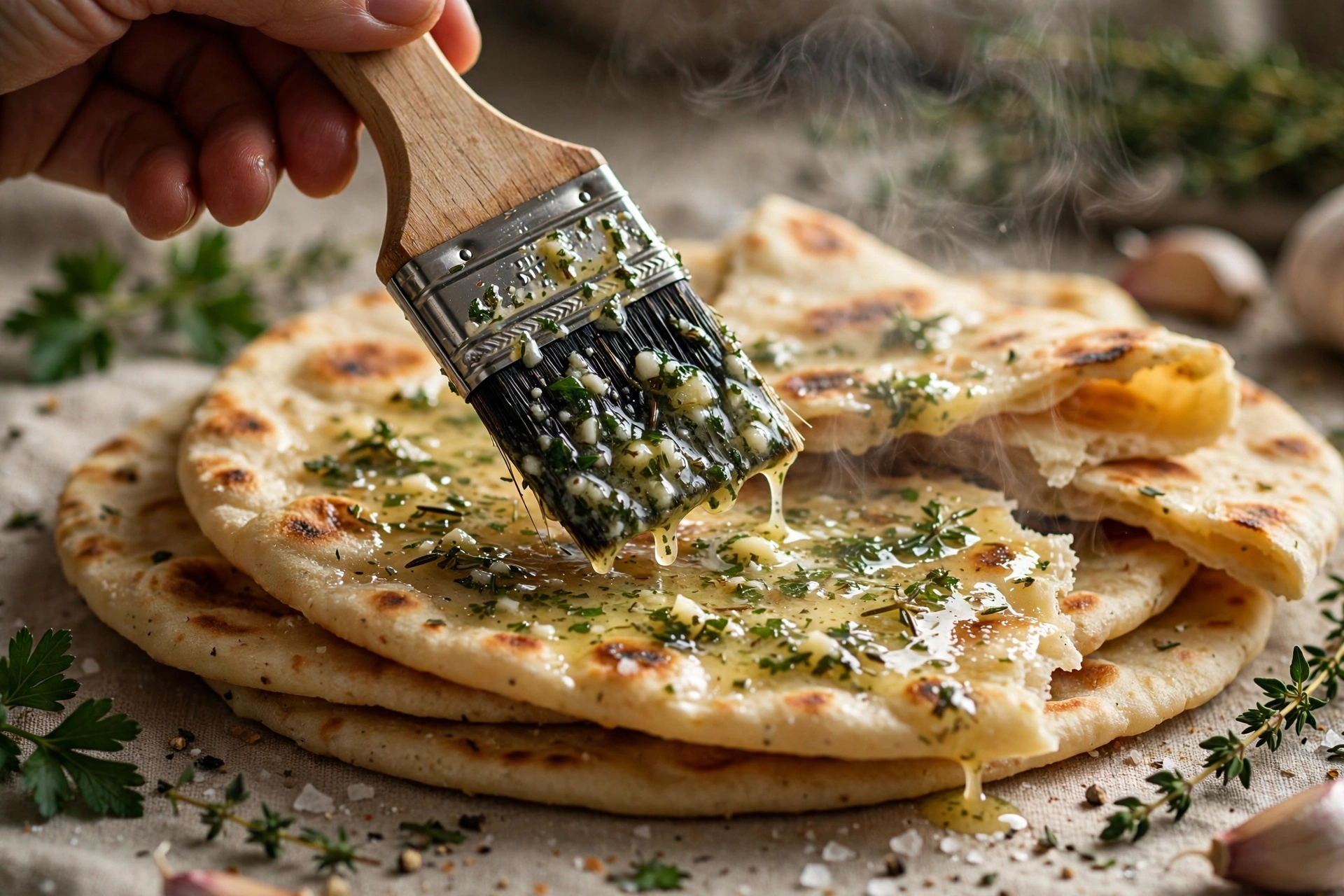
For the garlic-herb butter (optional but highly recommended): 4 tablespoons butter, 2 garlic cloves (minced), 2 tablespoons chopped parsley — Brushed on hot flatbreads straight from the skillet. The heat melts the butter, blooms the garlic, and wilts the parsley slightly. This is what makes people lose their minds — plain flatbread is good; garlic-herb flatbread is unforgettable. Make it.
Must Read : Braised Short Ribs Recipe (Fall-Off-the-Bone Tender)
Equipment You’ll Need
A mixing bowl, a rolling pin (or a wine bottle in a pinch — it works surprisingly well), and a large cast-iron skillet or heavy griddle. Cast iron is ideal because it holds heat evenly and gets properly hot, but any heavy skillet works. A pastry brush for the garlic butter. A clean kitchen towel for stacking (essential — don’t skip this). That’s the entire kit — no stand mixer, no proofing basket, no baking stone.
How to Make Flatbread (Step by Step)
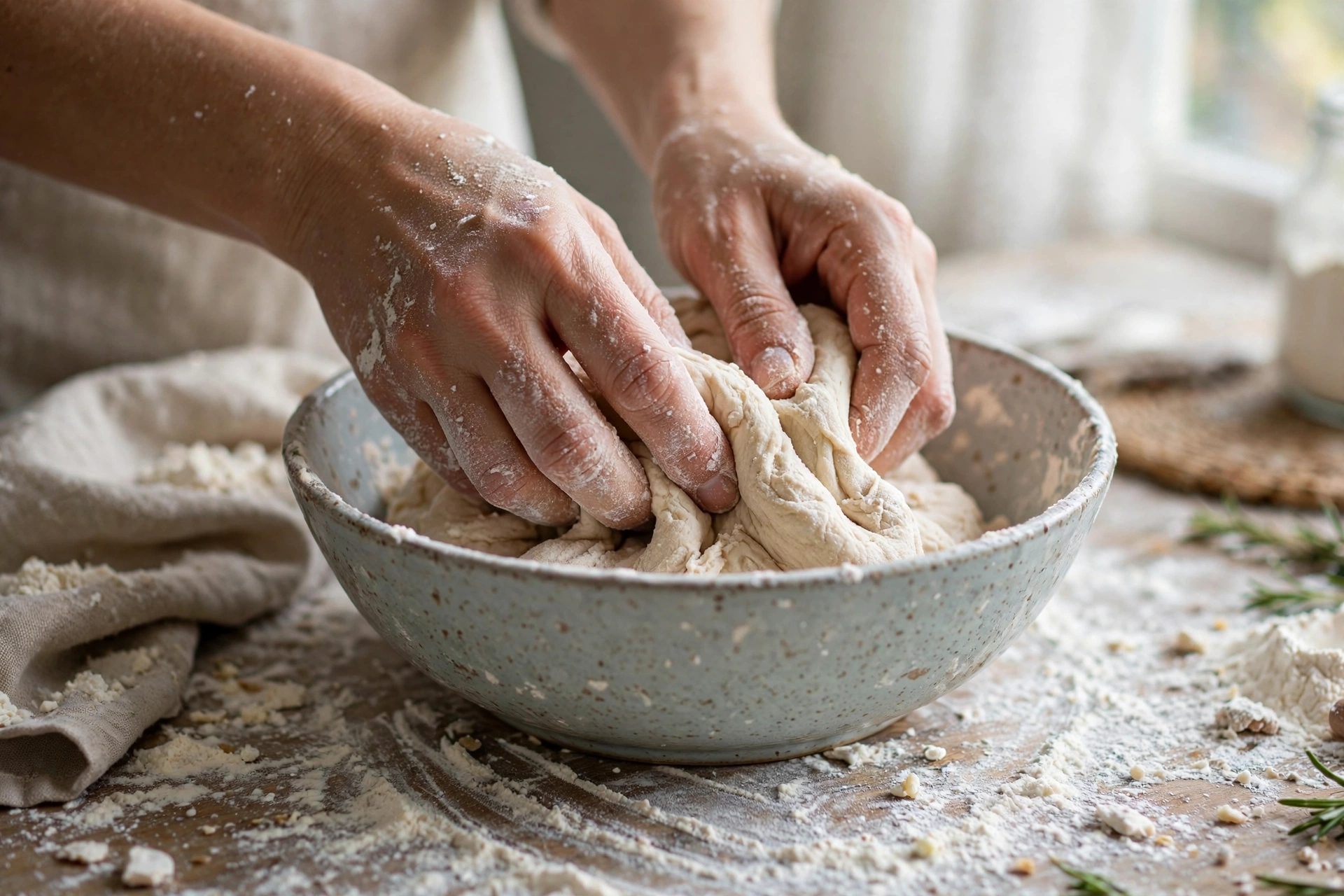
Step 1 — Mix the dough. In a large bowl, whisk the flour, baking powder, and salt together — this distributes the leavening evenly so you don’t get bitter pockets of baking powder. Add the yogurt and olive oil. Stir with a wooden spoon until a shaggy, rough dough forms, then knead by hand right in the bowl for 2–3 minutes until smooth and soft. It should be slightly tacky but not sticky — if it’s sticking to your hands, add flour a tablespoon at a time. If it’s dry and crumbly, add yogurt a teaspoon at a time. The dough should feel like a soft earlobe (the classic baker’s test).
Step 2 — Rest 10 minutes. Cover the dough with a towel or plastic wrap and let it rest. This does two things: it relaxes the gluten (making rolling dramatically easier — unrested dough springs back), and it hydrates the flour fully (better texture). It’s not strictly mandatory, but it really helps. Use the time to heat your skillet and make the garlic butter.
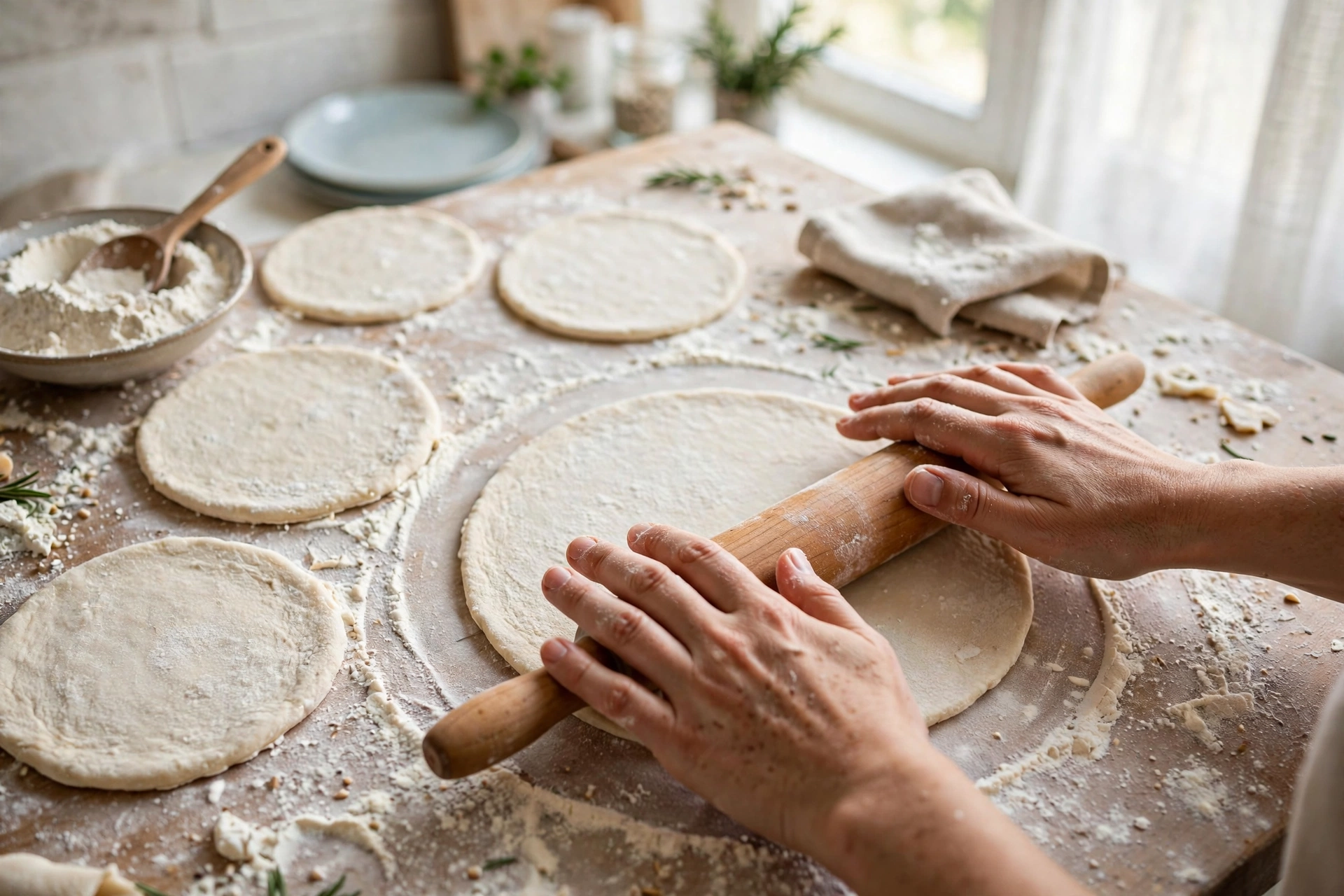
Step 3 — Divide and roll. Divide the dough into 8 equal pieces (a bench scraper helps; eyeballing is fine). On a well-floured surface, roll each piece into a thin round, about ⅛-inch thick and 7–8 inches across. They don’t need to be perfect circles — rustic and irregular is beautiful and authentic. If the dough resists rolling and springs back, let it rest 5 more minutes and try again. Roll from the center outward, rotating the dough, for the most even thickness.
Step 4 — Cook hot and fast. Heat your skillet over medium-high heat until very hot — properly hot, not just warm. Lightly oil it (a paper towel with a thin film of oil works). Cook each flatbread 1–2 minutes per side. You’ll see them puff in spots and develop golden-charred bubbles — that’s exactly what you want. Don’t walk away; they go from perfect to burnt in under a minute. Adjust the heat as you go — the skillet gets hotter with each bread, so you may need to reduce slightly.
Step 5 — Butter and stack. While each flatbread is still hot from the skillet, brush generously with garlic-herb butter (if using) and stack under a clean kitchen towel. The stacking is crucial — the trapped steam keeps them soft and pliable. A single flatbread left uncovered will stiffen within minutes; a stack under a towel stays soft for hours.
Step 6 — Serve immediately. Best warm, when they’re at peak softness. But they keep well (see storage below). Watch them disappear — this recipe has a way of vanishing faster than you expect.
Troubleshooting: Common Flatbread Problems
They didn’t puff up. The skillet wasn’t hot enough. The puff comes from rapid gas expansion, which requires intense heat. Next time, let the pan heat longer — test with a drop of water; it should sizzle violently and evaporate almost instantly. Also check your baking powder is fresh (see the fizz test above).
They’re tough and chewy. Three likely causes: over-kneaded dough (2–3 minutes max — you’re not making bagels), rolled too thick (thin = tender), or low-fat/nonfat yogurt (not enough fat to keep the crumb tender). Also, make sure you rested the dough — unrested dough is harder to roll thin.
They’re pale with no charred spots. Not enough heat, or too much oil in the pan (which fries rather than chars). You want a very hot, lightly oiled surface. Those charred bubbles aren’t just pretty — they’re flavor.
They stuck to the pan. The pan wasn’t hot enough when the dough went in (dough sticks to lukewarm metal but releases from screaming-hot metal), or there wasn’t enough oil. Make sure there’s a thin, even film of oil.
The dough is too sticky to roll. Add flour a tablespoon at a time until it’s manageable. Humidity, yogurt brand, and flour brand all affect hydration. The dough should be soft and slightly tacky, not glued to your hands.
They went stiff after cooling. You skipped the towel stacking. The steam trap is essential — it’s the difference between soft-for-hours and cardboard-in-minutes. If they’re already stiff, 20 seconds over a gas flame or 30 seconds in a hot skillet brings them right back.
My Best Tips for Perfect Flatbread
Full-fat yogurt or bust. I’ve tested nonfat, low-fat, and full-fat side by side. Full-fat wins by a mile — softer, richer, more pliable, better flavor. The fat isn’t just about taste; it’s structural, keeping the gluten tender. This is the one ingredient where quality directly determines outcome.
Roll them thin. Thick flatbreads are doughy and gummy inside; thin ones (⅛ inch) puff beautifully and cook through completely. When you think it’s thin enough, roll once more. You should almost be able to see light through the dough.
Hot skillet, no hesitation. The pan must be properly, seriously hot before the first flatbread goes in. A hot pan gives instant puff and charred spots. A lukewarm pan gives pale, tough discs. There’s no substitute for heat here.
Keep them covered. The towel trap is not optional — it’s essential. Uncovered flatbreads dry out and stiffen within minutes; stacked under a towel they stay soft and pliable for hours. This single habit separates good flatbread from great flatbread.
Don’t overwork the dough. Two to three minutes of gentle kneading is plenty. More develops too much gluten and makes them chewy-tough instead of tender-soft. When the dough looks smooth, stop. It doesn’t need to be perfect.
Re-roll scraps only once. You can gather the odd-shaped trimmings and re-roll them, but only once — after that the gluten is overworked and they get tough. Or just cook the scraps as-is; the cook deserves snacks.
Season the skillet between breads. Wipe out any burnt flour with a dry paper towel between flatbreads. Burnt bits create bitter spots on the next bread. A quick wipe takes 5 seconds and keeps every bread pristine.
Also Read : Bechamel Sauce Recipe (Silky, Lump-Free & Foolproof)
Delicious Variations to Try
Garlic naan style: Add 1 teaspoon of garlic powder to the dough and brush generously with garlic butter after cooking. Serve alongside curry — it’s remarkably close to restaurant naan without the tandoor.
Herb flatbread: Knead ¼ cup of chopped fresh herbs (rosemary, thyme, parsley, or a mix) directly into the dough. Amazing with dips, soups, or just warm with butter. The herbs create beautiful green flecks.
Cheese-stuffed: Roll two thin rounds, sandwich a handful of shredded mozzarella (or feta, or a mix) between them, seal the edges firmly by pressing, and cook as usual. Gooey melted center, crispy golden outside. Let them cool 2 minutes before cutting — the cheese is molten.
Za’atar flatbread: Brush cooked flatbreads with good olive oil and sprinkle generously with za’atar (the Middle Eastern herb-sesame-sumac blend). Simple, aromatic, addictive. Serve with labneh for the full experience.
Cinnamon sugar dessert: Brush hot flatbreads with melted butter and dust generously with cinnamon sugar. Dessert flatbread — warm, sweet, crispy-edged. You’re welcome. Add a drizzle of honey for extra indulgence.
Whole wheat: Swap half the all-purpose flour for whole wheat flour. Slightly denser and nuttier, with more fiber — still delicious. You may need an extra tablespoon of yogurt since whole wheat absorbs more liquid.
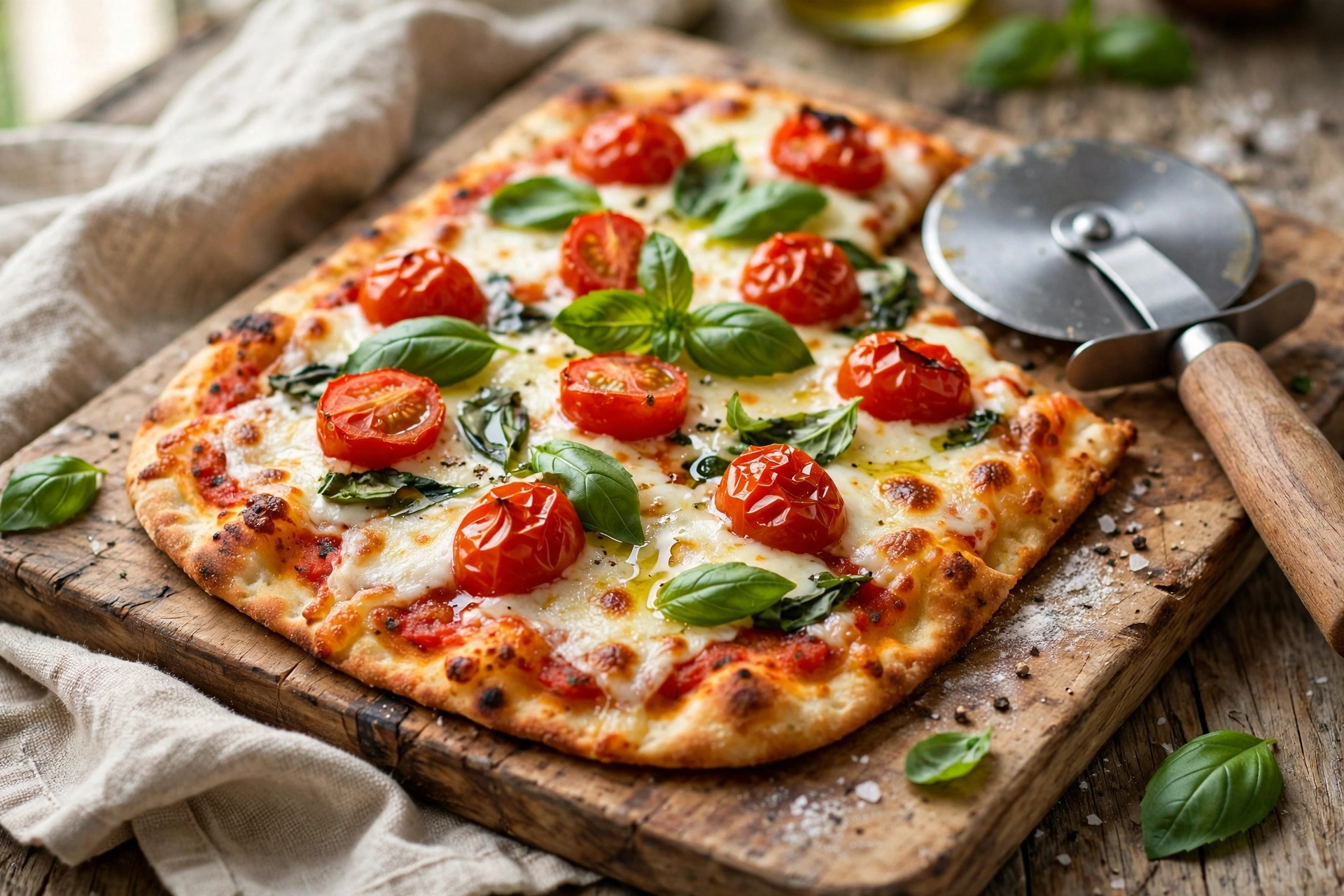
Flatbread pizzas: Use as pizza bases — add sauce and toppings, then bake at 450°F for 8–10 minutes, or cook topped in the skillet with a lid on (the lid traps heat and melts the cheese). Faster than delivery and infinitely better.
Scallion flatbread: Roll the dough thin, brush with sesame oil, scatter chopped scallions and a pinch of salt, roll up like a jelly roll, coil into a round, then roll flat again. Pan-fry for flaky, layered scallion bread.
Storing, Freezing & Reheating
Room temperature: 2 days in a zip-top bag with the air pressed out. The towel-then-bag method (cool under towel, then bag) keeps them softest. Don’t refrigerate unless you must — the fridge actually accelerates staling in bread.
Refrigerator: 5 days if needed. They’ll firm up when cold — that’s normal starch retrogradation, not spoilage. Reheat to restore softness (see below).
Freezer: 3 months, stacked with parchment or wax paper between each flatbread (so they don’t freeze together). Slip the stack into a freezer bag, press out air. Thaw at room temperature for 30 minutes, or reheat directly from frozen.
Reheating: 20 seconds directly over a gas flame (using tongs — they’ll puff right back up like fresh), or 30 seconds per side in a hot dry skillet. From frozen, add another 30 seconds. The microwave works in a pinch (15 seconds, covered with a damp paper towel) but the texture is better with dry heat.
Make-ahead strategy: The dough can be made up to 24 hours ahead and refrigerated (bring to room temperature 20 minutes before rolling — cold dough is hard to roll). Or cook a full batch, freeze, and reheat as needed. Fresh flatbread on demand, all week.
Flatbread Around the World: Inspiration from Every Continent
Almost every cuisine has a flatbread, and understanding the family helps you appreciate what makes this version special — and gives you ideas for where to take it next.
Naan (India): Traditionally made with yeast and yogurt, slapped against the blazing walls of a tandoor oven. Characteristically pillowy with charred bubbles. Our no-yeast version with garlic butter is a weeknight-friendly approximation — not identical, but recognizably in the family.
Pita (Middle East): The pocket bread. Pita uses yeast and high oven heat to create steam that inflates the dough into two layers. Our flatbread doesn’t form a pocket (no yeast, skillet instead of oven), but it’s equally good for wrapping.
Tortilla (Mexico): Corn or flour, pressed thin and cooked on a comal (flat griddle). Flour tortillas are the closest cousin to our flatbread — the technique is nearly identical, just without yogurt. If you can make this flatbread, you can make flour tortillas.
Lavash (Armenia/Middle East): Paper-thin, soft, flexible — traditionally baked in a tonir (clay oven). Our flatbread rolled extra-thin approaches lavash territory. Great for wraps.
Focaccia (Italy): Thicker, dimpled, olive-oil-rich. A different branch of the family, but the principle is the same: simple dough, hot surface, delicious bread. Try pressing our dough thicker (½ inch) and dimpling it for a focaccia-flatbread hybrid.
Socca (France): Chickpea flour, olive oil, water — naturally gluten-free, cooked like a pancake. A completely different dough that proves flatbread is a universal concept, not a specific recipe.
The takeaway: flatbread is humanity’s oldest and most universal bread form. Every culture figured out that flour + liquid + heat = delicious. This recipe is your entry point into that worldwide tradition — master it, and you have the foundation for exploring all the others.
What to Serve with Flatbread: A Meal Guide
Everything. Seriously — this is one of the most versatile breads in existence. Here’s how to deploy it across the week:
Dips and spreads: Hummus, tzatziki, baba ganoush, whipped feta, muhammara, spinach-artichoke dip. Warm flatbread triangles are the ideal delivery vehicle — better than pita chips, better than crackers.
Curries and stews: Any curry (Indian, Thai, Japanese), hearty stews, chili, dal. Tear off pieces and scoop. The soft flatbread soaks up sauce beautifully.
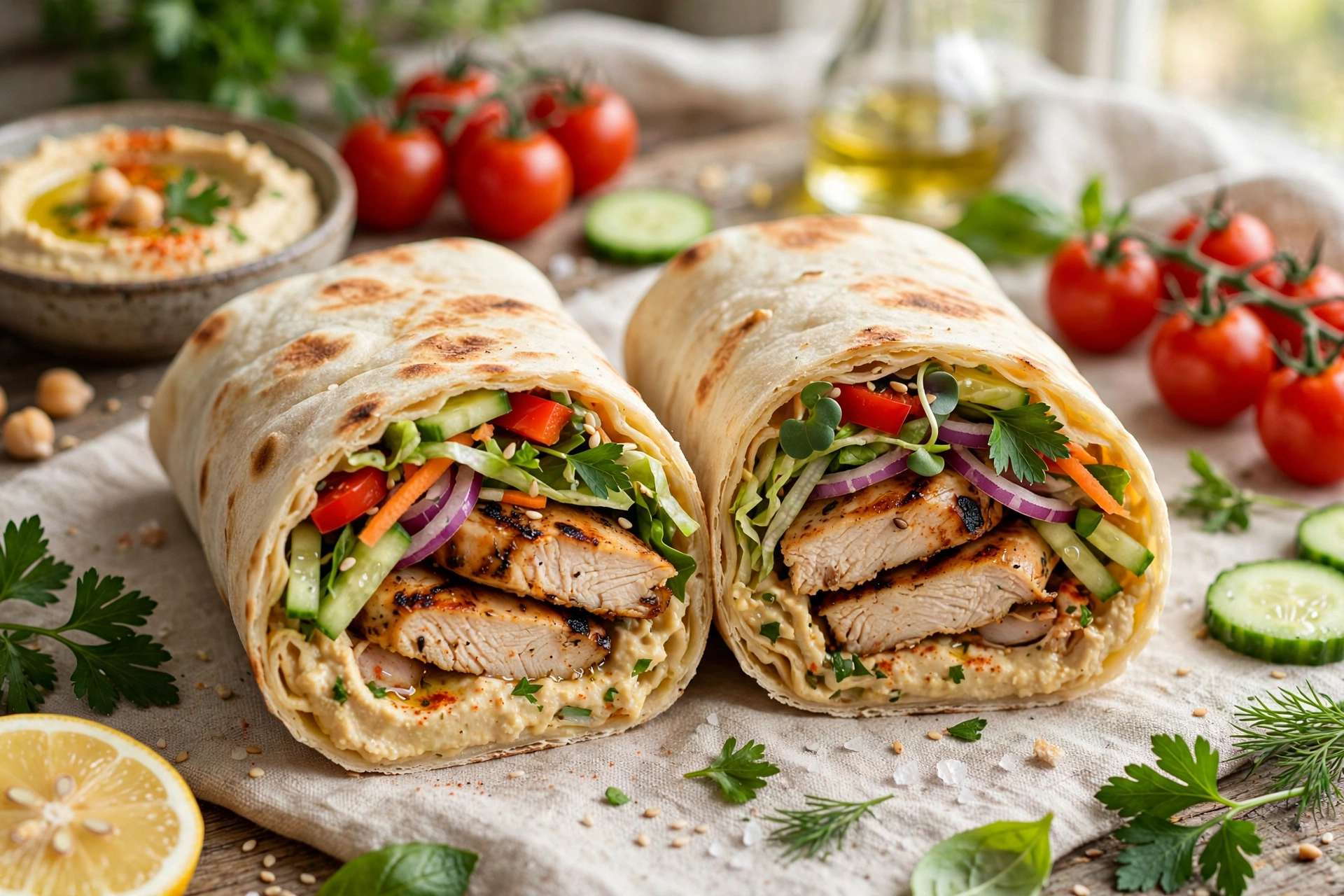
Wraps and sandwiches: Chicken tinga or falafel wraps, breakfast wraps with scrambled eggs, gyro-style with tzatziki and tomatoes, or simple butter-and-jam for kids. The pliability when warm makes them ideal wrappers.
Pizzas: Personal pizzas with any toppings — faster than delivery, endlessly customizable. Kids love making their own.
Breakfast: Top with fried eggs, avocado, and hot sauce. Or go sweet: Nutella and bananas, or peanut butter and honey. Flatbread doesn’t judge.
Alongside soup: Tomato soup, lentil soup, potato soup — flatbread for dunking is superior to crackers in every way.
My favorite dead-simple lunch: one warm flatbread + a smear of hummus + sliced cucumbers + tomatoes + a drizzle of olive oil + flaky salt. Five minutes, deeply satisfying, actually healthy.
Ingredient Substitutions: What Works and What Doesn’t
Running low on something? Here’s the honest guide to what you can swap and what you can’t.
Yogurt substitutions: Full-fat Greek yogurt is ideal, but you have options. Regular plain yogurt (not Greek) works if you strain it first — line a sieve with cheesecloth or a coffee filter, dump in the yogurt, and let it drain for 2–3 hours until it’s thick like Greek yogurt. Sour cream is a decent substitute in a pinch — use the same amount, though the flatbreads will be slightly richer and tangier. Buttermilk does NOT work as a direct substitute (too thin — the dough won’t come together). Kefir is too thin as well. If all you have is nonfat yogurt, add 2 tablespoons of melted butter or oil to compensate for the missing fat — it won’t be perfect, but it’ll be edible.
Flour substitutions: All-purpose is the standard, but whole wheat works (see variations — use half and half for best results). Bread flour works but makes chewier flatbreads; reduce kneading to 1–2 minutes max. Gluten-free all-purpose blends (like King Arthur’s or Bob’s Red Mill 1:1) actually work surprisingly well here since there’s no yeast and minimal gluten development needed — the texture will be slightly more crumbly but still good. Add an extra tablespoon of yogurt if the GF dough seems dry. Almond flour or coconut flour do NOT work — they have no gluten and completely different absorption rates. Don’t try it.
Baking powder substitutions: There is no good substitute for baking powder in this recipe. Baking soda alone won’t work (it needs an acid to activate, and while yogurt provides some acid, the balance will be off). If your baking powder is dead, the flatbreads will be flat and dense — test it first with the hot water fizz test. Double-acting baking powder is standard; single-acting works but gives less lift.
Oil substitutions: Any neutral oil works — vegetable, canola, avocado, or light olive oil. Extra-virgin olive oil adds flavor (good if you want it, noticeable if you don’t). Melted butter can replace the oil in the dough for richer flavor. Coconut oil works but adds a faint coconut taste. For cooking the flatbreads, any high-heat oil is fine.
Dairy-free version: Use thick, unsweetened coconut yogurt (the Greek-style kind, not the thin drinkable kind) and replace the butter in the garlic-herb topping with olive oil or vegan butter. The texture will be slightly different — a bit less tender — but still very good. Make sure your coconut yogurt is truly thick; watery coconut yogurt will make a sticky, unmanageable dough.
Read Also: Juicy Turkey Meatballs Recipe (Never Dry, Always Tender)
Batch Cooking: Flatbread for the Whole Week
Once you realize how fast these are, you’ll want them on standby. Here’s the system.
The Sunday batch: Double the recipe (16 flatbreads) on Sunday afternoon. It takes about 45 minutes total — mix, rest, roll, and cook in assembly-line fashion. While one flatbread cooks, roll the next. You’ll develop a rhythm quickly. Stack them under towels as you go, then bag them once completely cool.
Storage for the week: Keep 3–4 days’ worth in a zip-top bag at room temperature (with air pressed out). Freeze the rest with parchment between each flatbread. Label the freezer bag with the date. You’ll thank yourself on Wednesday when dinner needs a vehicle and you have perfect flatbreads ready.
The 5-minute refresh: Cold flatbreads are fine, but 30 seconds in a hot skillet (or 20 seconds over a gas flame with tongs) brings them back to just-made softness. They puff up again like magic. This works even for week-old refrigerated flatbreads — the heat reactivates the moisture.
Meal prep pairings: Batch-cook flatbreads alongside a big pot of curry, a batch of hummus, or grilled chicken strips. Portion into containers: 2 flatbreads + protein + veggies = grab-and-go lunches for days. The flatbreads stay soft in the container (the enclosed moisture helps).
Freezer inventory tip: Freeze flatbreads in stacks of 4 (a typical meal’s worth) rather than one giant stack. That way you can thaw just what you need. A stack of 4 thaws in 20 minutes at room temperature, or 1 minute in the microwave (covered with a damp paper towel).
Flatbread for Special Diets
Gluten-free: Use a 1:1 gluten-free all-purpose blend. The dough will be slightly more fragile — handle gently and roll between two sheets of parchment to prevent sticking. They won’t puff quite as dramatically, but they’ll be tender and delicious. Make sure your baking powder is certified gluten-free (most are, but check).
Dairy-free: Thick coconut yogurt (Greek-style) replaces the dairy yogurt; olive oil replaces butter in the topping. The flavor is slightly different but the technique is identical. Avoid thin, watery plant yogurts — they won’t work.
Lower-carb: This is a bread recipe — there’s no truly low-carb version. But you can reduce the serving impact by making smaller flatbreads (divide into 12 instead of 8) and using them as vehicles for protein-rich fillings. Honesty over hacks here.
Vegan: The dairy-free version above is also vegan (coconut yogurt + olive oil). The base dough is already egg-free, so this is an easy adaptation.
Lower-sodium: Reduce salt to ½ teaspoon. The flatbreads will be blander — compensate with flavorful toppings (garlic butter, za’atar, herbed oils). Don’t eliminate salt entirely; some is needed for the baking powder to work properly.
More Ways to Use Leftover Flatbread
Stale or leftover flatbreads are an ingredient, not a problem.
Flatbread chips: Cut into triangles, brush with olive oil, sprinkle with salt (and za’atar, parmesan, or everything bagel seasoning). Bake at 375°F for 8–10 minutes until crisp. Better than store-bought pita chips, and they take 10 minutes.
Breakfast strata: Tear flatbreads into pieces, layer in a baking dish with beaten eggs, cheese, and vegetables. Refrigerate overnight, bake in the morning. The flatbread absorbs the custard beautifully.
Soup thickener: Tear a flatbread into a simmering soup and let it dissolve — it thickens the broth naturally while adding body. This is an old peasant technique that works brilliantly.
Flatbread breadcrumbs: Dry leftover flatbreads in a low oven (200°F for 30 minutes), then blitz in a food processor. Use as breadcrumbs for coating chicken, topping gratins, or binding meatballs. They have more flavor than plain breadcrumbs.
Quick fattoush: The Middle Eastern bread salad. Toast flatbread pieces until crisp, then toss with chopped tomatoes, cucumbers, radishes, parsley, and a lemon-sumac dressing. The crispy bread soaks up the dressing — it’s transformative.
Read Must: Chicken Tinga Recipe (Smoky, Saucy & Weeknight-Fast
Flatbread in Lunchboxes: Kid-Friendly Ideas
Kids love flatbread because it’s soft, mild, and fun to eat. For lunchboxes, roll flatbreads with cream cheese and turkey, or peanut butter and banana. Cut into strips for dipping in hummus or yogurt. The soft texture is perfect for little hands and the mild flavor pairs with everything. Make mini flatbreads (divide dough into 12) for kid-sized portions. They’ll actually eat the whole thing.
Final Thoughts
There’s a special satisfaction in making bread without the bread-making commitment. No planning, no yeast anxiety, no four-hour timeline, no wondering if your starter is alive — just a bowl, a skillet, and half an hour between you and something warm, soft, and homemade.
This flatbread has become one of my most-made recipes because it solves so many daily problems: what to serve with curry, what to wrap lunch in, what to bring to the potluck, what to eat when the bread box is empty and the store is closed. The answer is almost always flatbread.
And there’s something quietly empowering about it. Bread feels like it should be complicated — something for bakeries and experts. But this proves it doesn’t have to be. Flour, yogurt, heat. That’s it. Once you internalize that fresh bread is always 30 minutes away, your whole approach to meals shifts.
So the next time you think “I wish I had some bread,” remember: you do. It’s 30 minutes away, and you already have everything you need. Go make it.
And once you’ve made it a few times, start experimenting. Add herbs. Stuff it with cheese. Top it like a pizza. The basic formula is endlessly adaptable, and every variation teaches you something new about how dough, heat, and time work together. That’s how a simple recipe becomes a lifelong skill — one delicious flatbread at a time.
Easy No-Yeast Flatbread
Ingredients
Equipment
Method
- Whisk flour, baking powder, salt. Add yogurt and olive oil; stir to shaggy dough, then knead 2-3 min until smooth and soft.
- Cover and rest 10 minutes.
- Divide into 8 pieces; roll each 1/8-inch thin (7-8 inches across).
- Cook in very hot lightly-oiled skillet 1-2 min per side until puffed with charred spots.
- Brush with garlic-herb butter while hot; stack under a clean kitchen towel.
- Serve warm.
Frequently Asked Questions
Can I use regular yogurt instead of Greek?
Yes, but strain it first — regular yogurt is thinner and the extra liquid makes sticky, hard-to-handle dough. Strain 30 minutes through a coffee filter or cheesecloth, or reduce to ¾ cup. The goal is Greek-like thickness.
Why are my flatbreads tough?
Three usual causes: over-kneaded dough (2–3 minutes max), rolled too thick (thin = tender), or cooked on a not-hot-enough skillet. Also — full-fat yogurt makes a real, measurable difference in tenderness.
Can I make the dough ahead of time?
Yes. Refrigerate the dough up to 24 hours (bring to room temperature 20 minutes before rolling — cold dough resists rolling). The baking powder loses a little power overnight, but they still puff nicely.
Do I need a cast iron skillet?
It’s ideal for heat retention and getting properly hot, but any heavy skillet or griddle works. Nonstick is fine too — just don’t use oil on nonstick at very high heat (it breaks down the coating).
Can I make these gluten-free?
A 1:1 gluten-free flour blend works reasonably well. The texture is a bit more delicate (no gluten for structure), so roll slightly thicker than ⅛ inch and handle gently. They won’t puff quite as dramatically but still taste good.
Why didn’t mine puff up?
Usually the skillet wasn’t hot enough — the puff requires rapid gas expansion from intense heat. Or they were rolled too thick. Also check your baking powder is fresh with the fizz test (½ teaspoon in hot water should bubble vigorously).
How thin should I roll them?
About ⅛ inch — thin enough that you can almost see light through the dough. Thinner means puffier and less doughy. When you think it’s thin enough, give it one more roll.
Can I cook flatbread on a grill?
Absolutely — fantastic, in fact. Medium-high heat, 1–2 minutes per side directly on clean grates. You get smoky char that’s incredible. Brush lightly with oil first to prevent sticking.
What’s the difference between flatbread, naan, and pita?
Naan traditionally uses yeast and is slapped against the walls of a super-hot tandoor oven; pita uses yeast and puffs into a pocket via steam. This no-yeast flatbread is its own (much easier) thing — soft like naan, versatile like pita, ready in 30 minutes.
Can I double the recipe?
Yes — it scales perfectly with no adjustments. The only limit is your patience for rolling and cooking batches. For a crowd, keep finished breads warm in a low oven (200°F) wrapped in a towel.

Hi, I’m Angela. I cook the way busy people actually cook — simple, tasty food with ingredients you already have. On CookBookBite I share easy recipes, honest kitchen tips, and dishes my family asks for again and again.
Pingback: Sourdough Pizza Crust Recipe: Chewy, Blistered & Easy