
Every Thanksgiving table has the same problem. By the time the turkey comes out, everyone has eaten three dinner rolls, a pile of stuffing, and most of the cheese from the appetizer board. The one dish people reach for when they need something fresh is usually the fruit.
A good Thanksgiving fruit platter does two jobs at once. It gives hungry guests something to nibble while you finish the gravy, and it gives the heavy meal a bright, juicy counterpoint. It also looks wonderful. Pomegranate arils glowing like rubies, sliced Fuyu persimmons the color of a sunset, and green grapes fanned across a board are as festive as any centerpiece.
Also Read : How to make Zucchini Cake with Cream Cheese Frosting
This guide is everything I wish I’d had the first time I was handed the fruit assignment. You’ll find how to pick the right fall fruits, how much to buy, eight platter designs from beginner to showpiece, dips that actually taste good, ways to stop apples from browning, and the food safety rules that keep a cut-fruit tray from becoming a problem. Let’s build something worth photographing.
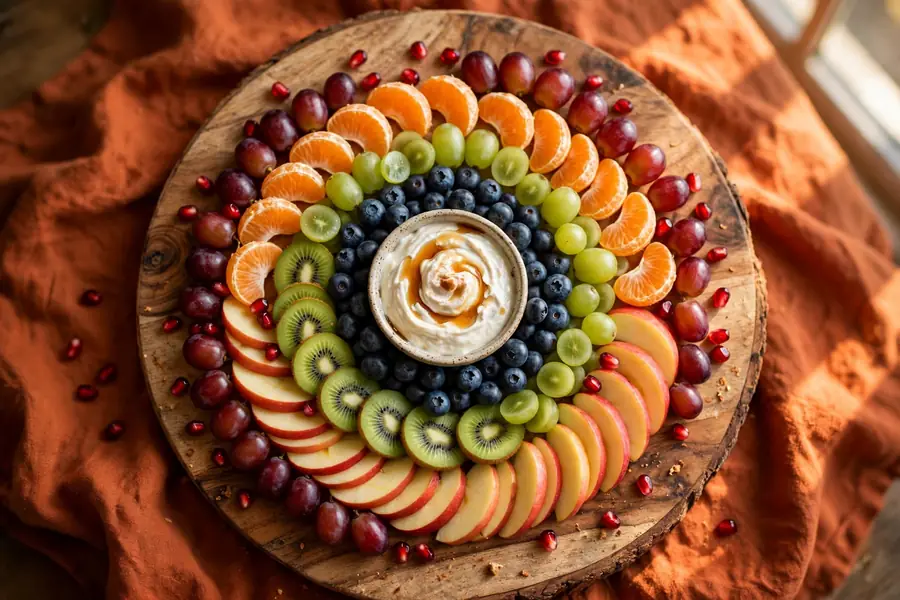
Why a Fruit Platter Belongs on Your Thanksgiving Table
The classic Thanksgiving spread leans rich: turkey, mashed potatoes, sweet potato casserole, green bean casserole, cranberry sauce, pumpkin pie. Delicious, but heavy. A fruit platter adds acidity, juiciness and crunch, which are exactly what a plate of beige food is missing.
There are practical reasons too.
It buys you time. One blogger serves hers on Thanksgiving afternoon, before dinner, while the rest of the food is cooking. That’s a smart move. A platter on the counter at 2 p.m. keeps relatives from hovering around the oven.
It works for almost everyone. Fresh fruit is naturally dairy-free, nut-free, gluten-free and vegan before you add anything extra. That matters when your guest list includes a vegetarian cousin, a gluten-free aunt and a toddler who only eats grapes.
It’s inexpensive and low-stress. There’s no oven time, no tricky technique and no fragile baking. Most platters take 20 to 30 minutes of cutting.
It does double duty. Serve it as an appetizer, move it to the dessert table next to the pies, or offer it at breakfast the next day alongside leftover cinnamon rolls.
Searching “Thanksgiving fruit platter” mostly turns up turkey-shaped trays, and those are adorable, and I’ll show you how to make one. But the turkey is only one design. There are better options for adults, big crowds and elegant tables, and I’ll cover those too.
Thanksgiving Fruit Platter at a Glance
| Prep time | 20–40 minutes |
| Best serving window | Within 2 hours of setting out |
| Make-ahead | Cut and store the night before; assemble the day of |
| Serves | 8–12 as an appetizer (about 1 lb fruit per 3 guests, see below) |
| Difficulty | Easy to moderate |
| Dietary | Naturally vegan and gluten-free without cheese or dips |
How Much Fruit Do You Actually Need?
This is the question nobody answers well, and it’s the one that causes the most stress. Running out looks bad. Throwing away three pounds of honeydew feels worse.
Here’s my rule of thumb, built on how fruit gets eaten at a heavy holiday meal. People take smaller portions of fruit on Thanksgiving than at a summer barbecue, because they’re saving room.
- As an appetizer or snack: about ½ cup of cut fruit per person (roughly 3 to 4 ounces)
- As part of a large buffet: ¾ cup per person
- As the dessert alternative: 1 cup per person
Translate that to a shopping list for a typical gathering:
| Guests | Total cut fruit | Roughly this many whole fruits |
|---|---|---|
| 6 | 3–4 cups | 1 lb grapes, 2 apples, 2 pears, 4 clementines, 1 pomegranate |
| 12 | 6–8 cups | 2 lb grapes, 4 apples, 3 pears, 8 clementines, 2 pomegranates, 1 small melon |
| 20 | 10–14 cups | 3–4 lb grapes, 6 apples, 5 pears, 12 clementines, 3 pomegranates, 1 melon, 1 pineapple |
Remember that grapes are your volume workhorse. They need no cutting, they hold up for hours, and they fill space on a board cheaply. Berries are your color accent, not your base, because they cost more per cup.
If you’re also putting out a cheese board, a veggie tray and a full dessert table, drop everything by about a third.
The Best Fruits for a Thanksgiving Platter
You can make a platter from any fruit. A great Thanksgiving platter leans on what’s in season and what matches the palette: deep red, burnt orange, golden yellow, rich green and purple.
Fall Stars
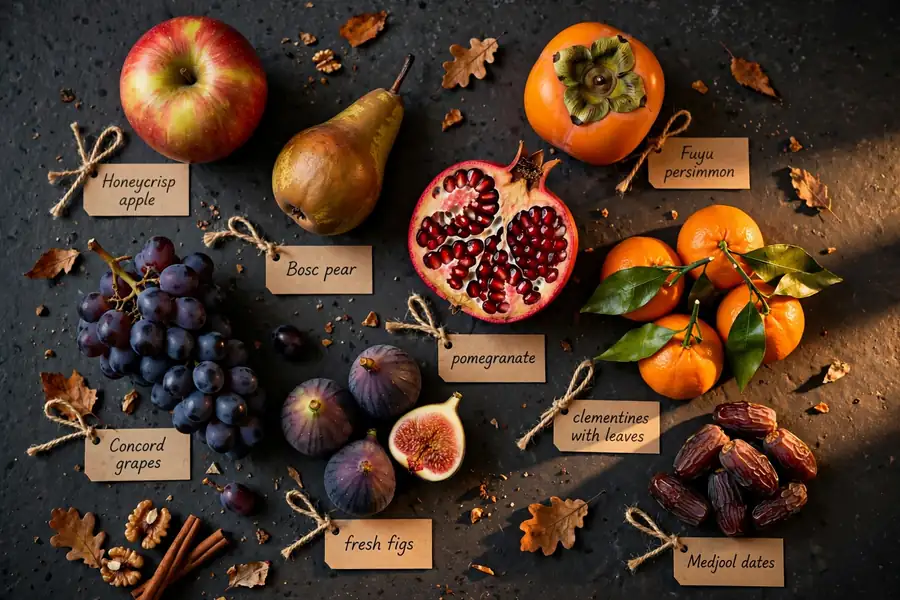
Apples. Honeycrisp is the crowd favorite for good reason: crisp, juicy and slow to brown. Fuji and Ambrosia are sweet and firm. Granny Smith adds tartness and a bright green that pops against red fruit. Slice them thin, just before serving or after a citrus dip.
Pears. Bosc has a russet, cinnamon-colored skin and holds its shape beautifully. Anjou and Bartlett are juicier and need to be ripe but not mushy. Pears also make good “turkey heads” and decorative accents (more on that below).
Pomegranate. The single best decoration on any fall platter. The arils look like tiny jewels and add a burst of tartness. Seed them ahead and keep them in a covered bowl.
Fuyu persimmons. Look for the flat, tomato-shaped variety. Fuyus are crisp and sweet like an apple when firm, and slices look stunning in orange. Avoid the pointed Hachiya persimmon unless it’s fully soft and jelly-like; underripe Hachiyas are astringent and will make your mouth feel fuzzy.
Grapes. Red, green and Concord (deep purple) all work. Frozen grapes are a neat trick: they act like tiny ice cubes and keep the nearby fruit cool.
Fresh figs. Late-season figs are a luxury touch for boards that include cheese. Halve them so the pink interior shows.
Cranberries. Raw cranberries are too tart to snack on, but sugared cranberries add a frosted, festive look. Use them as a garnish, not a main fruit.
Citrus. Clementines, mandarins and Cara Cara oranges bring juicy color. Peel clementines and separate the segments, or leave a few whole with the leaves still attached for a more natural look.
Medjool dates. Technically a dried fruit, but a few pitted dates add chewy sweetness. Stuff them with a bit of goat cheese or a toasted pecan if you want to get fancy.
Reliable Fillers and Color Boosters
- Kiwi for a bright green accent
- Cantaloupe and honeydew for volume (watch the timing; melons need good refrigeration, as covered below)
- Strawberries for red, though they’re less seasonal in November
- Blueberries and blackberries for deep purple
- Pineapple for sweetness and structure
- Dried apricots and dried cranberries for texture contrast
Fruits to Skip
Bananas brown within an hour and turn mushy. Peaches and nectarines are out of season and often mealy in November. Avocado is delicious but not a fruit platter item. If you really want banana on a turkey design, add it at the last minute.
What You’ll Need Besides Fruit
The right tools make assembly faster and the result prettier.
- A big board or platter. Round platters suit turkey and wreath designs. A long rectangular board suits cornucopia and cheese-board styles. Marble, acacia wood, slate and white ceramic all look good.
- A sharp paring knife and a chef’s knife. Dull knives bruise fruit.
- A melon baller for neat spheres of cantaloupe and honeydew.
- Small cookie cutters in leaf, star or acorn shapes for cutting melon and apple slices.
- Small bowls for dips, pomegranate arils and berries.
- Toothpicks or short bamboo skewers for turkey features and for guests who dislike sticky fingers.
- Lemon or pineapple juice to prevent browning.
- Paper towels to pat fruit dry. Wet fruit slides around and makes the board soggy.
- Plastic wrap or a clean lid for keeping the platter covered before serving.
A tip from experience: build on a platter that fits in your refrigerator. It sounds obvious. It isn’t, until Thanksgiving morning, when the fridge is stuffed with a brined turkey, three pies and a vat of gravy.
8 Thanksgiving Fruit Platter Ideas
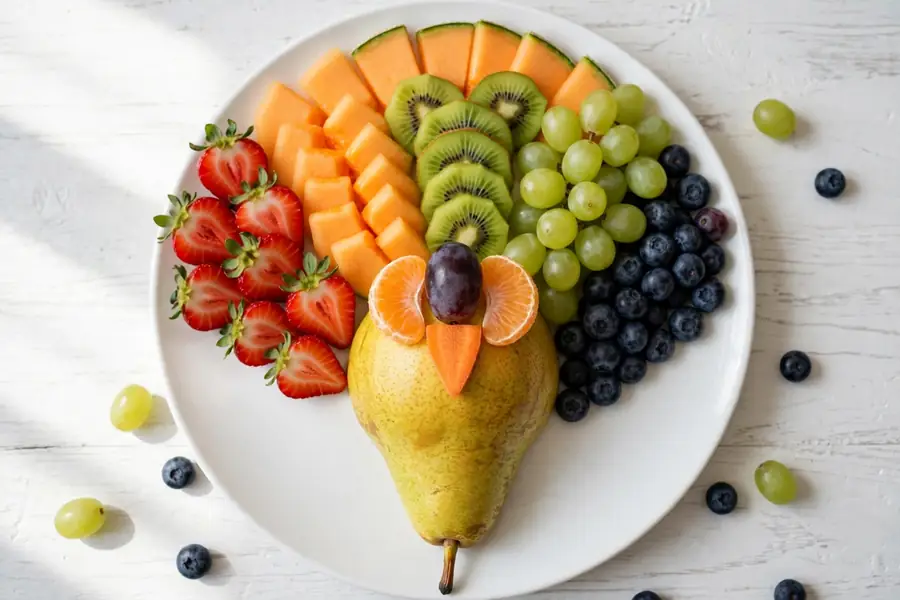
1. The Classic Turkey Fruit Platter
This is the one everyone searches for, and for good reason. It’s cheerful, simple and a conversation starter, and kids love helping with it.
Mississippi State Extension suggests it’s something you can build in minutes, and they note kids can build it, snacking while they work. That’s accurate. Here’s how to do it well.
What you’ll need:
- 1 large round platter (at least 14 inches)
- 1 firm pear (the body)
- 2 clementine segments or mini marshmallows (eyes)
- 1 small piece of carrot or dried apricot (beak)
- 1 strawberry or a bit of red apple peel (wattle)
- Strawberries, cantaloupe, green grapes, red grapes, kiwi slices, blueberries (the feathers)
- Optional: a handful of blackberries for a deep purple ring
How to build it:
- Place the body first. Set the pear at the bottom center of the platter, narrow end pointing up. A pear is perfect because its shape reads instantly as a bird.
- Add the head. Place a large green grape or a small round fruit at the top of the pear for the head. Attach the eyes and beak with tiny dabs of cream cheese or a small piece of toothpick (remove the toothpick before serving to small children).
- Build the feathers in arcs. Starting with the outer edge, fan out rows of fruit behind the body in a half circle: strawberries, then cantaloupe, then kiwi, then green grapes, then blueberries. Think rainbow, with the warmest colors on the outside.
- Fill gaps. Tuck in extra berries so no plate shows through.
- Chill. Cover loosely and refrigerate until serving.
Pro tip: Draw a faint half circle with your finger on the platter as a guide before you start. Wipe it away. The feathers will look much more even.
Many versions mix in cheeses or veggies for a similar look, so if you want a savory crossover, use cheddar cubes or snap pea pods as one of the “feather” rows.
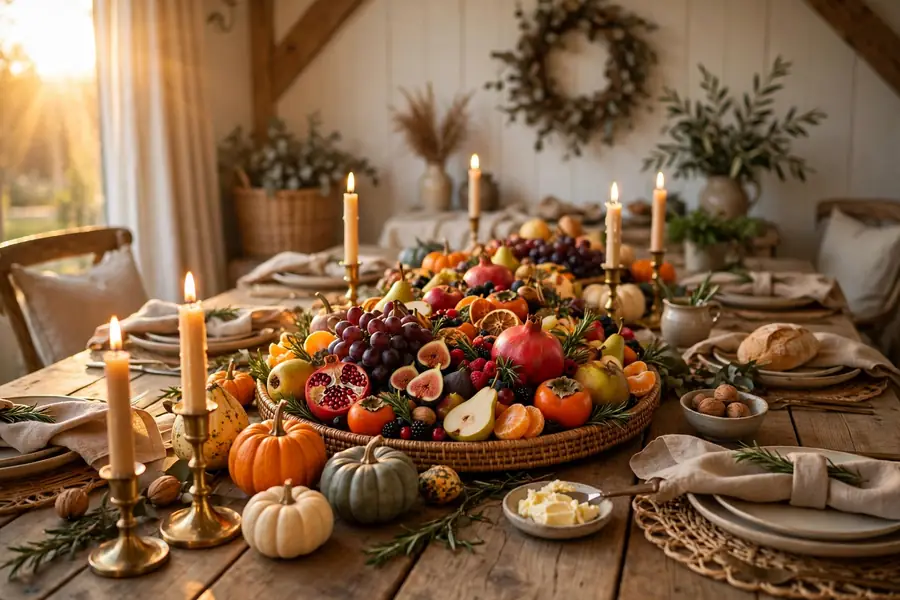
2. The Cornucopia Fruit Platter
The cornucopia, or “horn of plenty,” is the traditional emblem of harvest abundance and one of the oldest Thanksgiving symbols. Turning it into a platter feels both classic and clever.
The idea is simple: fruit spilling from an imaginary basket across a long board. Food Network has shown a playful version of the cornucopia, using stacked cake plates piled with grapes, shelled nuts, pluots, and pears. You can borrow that vertical idea even if you don’t use cake plates.
How to build it:
- Use a long board or a large rectangular tray.
- At one end, place a small basket, a cone-shaped bread, or a bundle of whole pears to anchor the “horn.”
- Pile large items first: whole pomegranates, apples, pears, persimmons.
- Let grapes, clementines and figs cascade outward in a diagonal line, gradually shrinking in size toward the far end.
- Fill with smaller fruit and fresh herbs like rosemary or sage sprigs for a woodsy touch.
This design is the most dramatic and requires the least cutting. Most of the fruit is whole. For eating, set a small knife and cutting board nearby, or put out already-sliced companions.
3. The Harvest Wreath Platter
A round platter with an empty center looks like a wreath, and it holds a dip bowl beautifully.
Place a bowl of cinnamon cream cheese dip in the middle. Work around the bowl in a circle, repeating a pattern: apple slice, grape cluster, clementine, kiwi slice, pomegranate aril spoonful. Tuck rosemary sprigs between sections like evergreen. Finish with a few sugared cranberries on top.
A wreath works well for a mid-table spot because guests can reach it from all sides.
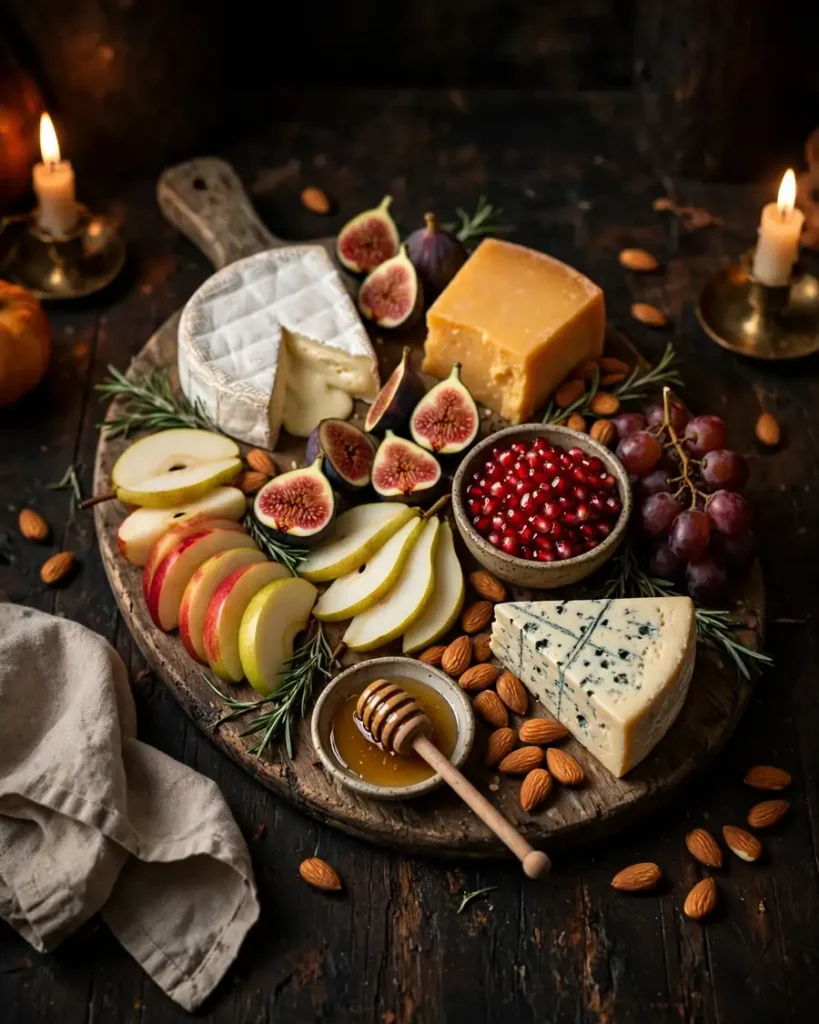
4. The Fruit and Cheese Board
This is the grown-up version, and it’s where fruit really sings. Cheese and fruit are a natural pair: salty with sweet, creamy with crisp.
Dinner-party boards in the “charcuterie” family typically combine cured meat, cheese, nuts, crackers and seasonal fruit. One recipe suggests assembling the board up to 8 hours before serving. That’s helpful if you’re juggling timing, though remember the fruit-specific rules below.
If you’d rather keep it vegetarian and fruit-led, here’s a pairing map:
| Fruit | Best cheese | Why it works |
|---|---|---|
| Honeycrisp apple | Aged white cheddar | Sharp and crisp contrast |
| Bosc pear | Gorgonzola or blue cheese | Sweet and funky |
| Fresh fig | Goat cheese or Brie | Creamy and jammy |
| Grapes | Manchego | Salty and nutty |
| Pomegranate | Brie or triple-crème | Tart brightness on richness |
| Persimmon | Aged Gouda | Caramelly depth |
| Clementine | Mascarpone | Light and citrusy |
Add Marcona almonds, candied pecans, a drizzle of honey, and a small jar of fig jam. Serve with crackers and thin slices of baguette.
A note on cheese and cold: take hard cheeses out of the fridge 30 minutes before serving. They taste better closer to room temperature. But keep the whole board’s timing in mind, as covered in the food safety section.
5. The Pumpkin Fruit Platter
A pumpkin shape is easy to create and suits both kids and adults.
Arrange orange fruits in a round, slightly oval cluster: clementine segments, cantaloupe balls, orange bell pepper (if you want a veggie crossover) or mango chunks in rows. Add faint vertical “ribs” by alternating fruit with thin slices of orange or cantaloupe. For a stem, use a short strip of green apple or a celery piece. For a curly vine, a long strip of kiwi peel or a green grape stem looks charming.
The pumpkin design is perfect for classroom parties because it avoids the “turkey” theme if there are sensitive eaters or vegetarians at the table.
6. Fruit Skewers and Individual Cups for Kids
When little hands are involved, individual portions beat communal platters. Nobody has to share tongs, and nobody dumps the whole tray.
Fruit skewers: Thread grapes, strawberries, cantaloupe cubes and pineapple chunks onto short bamboo skewers. Cut the pointed end off for kids under five or use a straw instead.
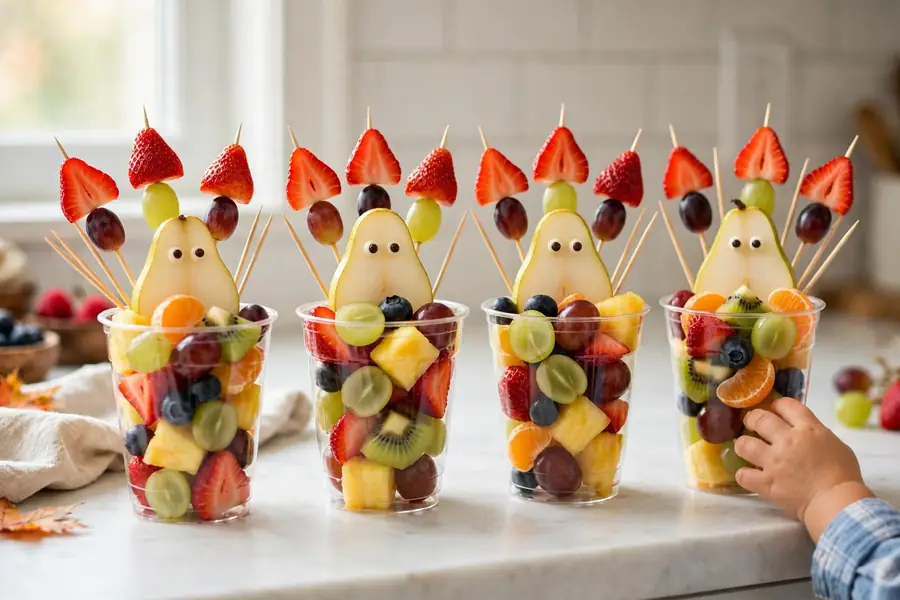
Turkey cups: Fill clear plastic cups with fruit salad. Push a few toothpicks with small pieces of fruit in the back like feathers, and stick a pear slice and candy eyes on the front. It sounds fussy but takes about a minute per cup.
Charcuterie cups: A tiny version of a board in a single cup: a few grapes, a cheese cube, a pretzel stick and a few berries.
Revolution Foods describes a turkey-shaped platter as a fun and healthy kids’ project, and the instinct is right. Letting children build their own cup gets them eating the fruit they made.
7. The Dessert-Style Dipping Platter
If your family expects dessert and you want something lighter alongside the pies, build a dipping platter.
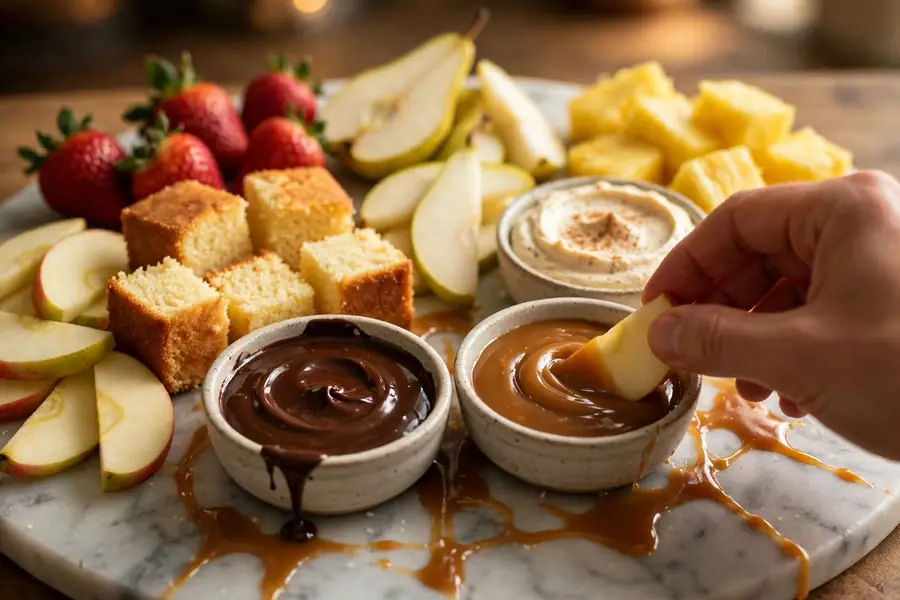
Surround a large bowl or two with: strawberries, apple slices, pear slices, pineapple chunks, banana slices (added at the last minute), marshmallows and pound-cake cubes. For the dips, offer melted dark chocolate, caramel sauce and a whipped cream cheese dip with cinnamon.
This platter walks the line between fruit tray and dessert. It’s the one most likely to disappear first.
Also Read: Lemon Cheesecake Yoghurt Bars
8. The Allergy-Friendly and Vegan Platter
You can serve a gorgeous platter that is free of the top allergens, and it’s worth doing, especially if you’re hosting a mixed group. One Thanksgiving fruit platter recipe is labeled naturally gluten-free, vegan and paleo. Fresh fruit alone ticks all of those boxes.
For an allergen-friendly version:
- Skip nuts and nut-based dips.
- Use coconut yogurt or sunflower seed butter instead of cream cheese or almond butter.
- Keep it clear of cross-contact by using a dedicated knife and board.
- Label the dips. A small card saying “dairy-free” saves guests from awkward questions.
A fun detail: write small labels with chalk pens or kraft-paper tags so guests know what they’re eating.
Dips That Make a Fruit Platter Better
A bowl of dip transforms fruit from a healthy obligation into something people actually linger over. Here are five that work.
1. Maple cinnamon yogurt dip. Stir 1 cup of full-fat Greek yogurt with 2 tablespoons of real maple syrup, ½ teaspoon of cinnamon and a pinch of salt. Tangy, lightly sweet and simple.
2. Cinnamon cream cheese dip. Beat 8 ounces of softened cream cheese with ¼ cup of powdered sugar, ½ teaspoon of cinnamon and a splash of vanilla. Loosen with a spoonful of milk. It tastes like cheesecake and spreads onto apples beautifully.
3. Honey ricotta dip. Whip 1 cup of whole-milk ricotta with 2 tablespoons of honey and a bit of orange zest. Light and fluffy, and it pairs especially well with figs and pears.
4. Salted caramel. Store-bought is fine. Warm it slightly so it pours, and add a pinch of flaky sea salt on top.
5. Dark chocolate dip. Melt 4 ounces of dark chocolate with a tablespoon of coconut oil. Dip strawberries, dried apricots and clementine segments.
Make dips the day before when you can. They taste better after the flavors settle, and it takes one more task off Thanksgiving morning.
Also Read: Spinach Dip Toast Recipe (Creamy, Cheesy, and Golden from the Oven)
How to Stop Cut Fruit From Browning
Few things ruin a platter faster than gray-brown apple slices. Browning happens because cutting damages the fruit’s cells and exposes enzymes to oxygen. You can’t stop it entirely, but you can slow it down a lot.
Citrus juice. Toss apple and pear slices in a mixture of 1 tablespoon of lemon juice to 1 cup of cold water. The citric acid and vitamin C slow oxidation. Pat dry before arranging.
Pineapple or orange juice. A sweeter option that doesn’t change the flavor much, and kids like it better than lemon.
Commercial ascorbic acid powder. Sold under brands like Fruit-Fresh, it’s strong, flavorless and cheap. A little goes a long way.
Choose slow-browning varieties. Honeycrisp, Fuji, Ambrosia and Granny Smith brown more slowly than Red Delicious or McIntosh.
Cut last. Apples, pears and bananas go on the platter at the very end, ideally within an hour of serving.
Place near citrus. On the board, set apple slices next to clementine segments or pineapple. A little juice on the board helps too.
Food Safety: What Most Recipe Blogs Don’t Mention
I’ll be direct. Most pages about fruit platters skip this, and it matters. A big board of cut fruit sitting on the counter for hours, with warm bodies and ovens running all afternoon, is the perfect environment for bacteria.
The two-hour rule. The USDA advises eating or refrigerating prepared food, including cut produce, within two hours. That window shrinks to one hour when it’s above 90°F outside. Thanksgiving kitchens run warm, so I’d treat one to one and a half hours as the safe habit.
The danger zone. The temperature danger zone runs from 40°F to 140°F, and cut produce, dips and dairy-based dishes should only stay unrefrigerated for two hours. Bacteria multiply fastest in that range. Some experts note that harmful bacteria can double in as little as 20 minutes.
Wash before you cut. Cutting through the peel or rind of apples or melons can carry bacteria into the flesh, so wash produce before cutting it, even if you won’t eat the skin. Scrub melon rinds and wipe them dry. Rinse berries just before serving, not days ahead.
Serve in smaller batches. The Daily Meal suggests splitting food across two or three smaller platters and keeping the extras in the fridge until needed. That’s exactly the approach I use. One big gorgeous platter goes on the table, a backup tray waits in the refrigerator, and I swap when the first one is half gone. The table never looks picked over, and nothing sits too long.
Keep it cold. If you can, set the platter over a shallow tray of ice, or use a chilled marble board. Nest a smaller platter inside a bigger one filled with crushed ice. At a long dinner with people grazing for hours, this matters.
Discard what’s been out. If a tray has been sitting out beyond the window, toss it. Looks and smell won’t tell you. Many bacteria that cause illness don’t change the smell, texture or appearance of food.
This isn’t meant to scare anyone. A fruit platter is one of the safest, healthiest things you’ll serve. It’s just a matter of timing and a bit of ice.
Your Thanksgiving Day Timeline
Here’s a schedule that keeps the fruit fresh and your morning calm.
Two days before (Tuesday)
- Buy fruit. Choose slightly firm pears and persimmons that will ripen on the counter.
- Make dips and refrigerate.
The day before (Wednesday)
- Wash and dry sturdy fruit: grapes, citrus, whole apples.
- Seed the pomegranate and store arils in a covered container.
- Peel and segment clementines.
- Prepare the board’s non-fruit items: toast nuts, slice cheese, portion crackers.
- Clear fridge space for the platter.
Thanksgiving morning
- Cut melon and pineapple; store in airtight containers.
- Assemble the platter’s base layers: grapes, berries, melon, citrus.
- Cover and refrigerate.
One hour before serving
- Slice apples and pears, dip in lemon water, pat dry.
- Add them with final garnishes: pomegranate arils, herb sprigs, sugared cranberries.
- Put the platter on the table with the dip.
During the meal
- Check the platter after about an hour. Replace with the backup tray if needed.
After the meal
- Refrigerate any unserved fruit within two hours.
Taking a Fruit Platter to Someone Else’s House
If you’re a guest, transporting is half the battle. Here’s what works.
- Assemble on arrival if you can. Bring the fruit in containers and the board separately. Putting it together at the host’s house takes 10 minutes and avoids a sliding mess.
- If you must assemble first, use a platter with a snap-on lid. Place paper towels between layers to absorb moisture.
- Keep it cold. A cooler bag with ice packs is ideal for a drive longer than 20 minutes.
- Bring the dip separately in a sealed jar.
- Ask about fridge space before you arrive. Hosts appreciate it.
Styling Tricks That Make It Look Expensive
You don’t need pro skills. A few small moves lift an ordinary platter.
Work in color blocks. Place groups of the same fruit together instead of mixing everything randomly. Rows and clusters look intentional.
Use odd numbers. Three small piles look more natural than four.
Vary height. Stack some pieces, set a small bowl on a riser, and tilt slices against each other. Flat boards look boring.
Add greenery. Rosemary sprigs, sage leaves, thyme and bay leaves bring a woodsy look, and they’re edible garnish that smells wonderful.
Add shine. A drizzle of honey over figs and a few pomegranate arils sparkling on top make the board look wet and fresh.
Cut some fruit in different ways. Slice apples into thin half-moons, fan pears, halve figs and cut kiwi into rounds. Variety in shape adds visual interest.
Fill all gaps. Empty patches of board make a platter look unfinished. Tuck in berries, nuts or herbs.
Match the table. A neutral linen runner, small pumpkins, a few candles and some autumn leaves make the platter feel part of the setting.
Common Mistakes to Avoid
- Cutting everything too early. Fruit loses moisture and freshness. Keep apples, pears and berries for the last stretch.
- Washing berries too soon. Moisture speeds mold. Rinse just before you assemble.
- Overcrowding the board. It sounds counterintuitive, but too much fruit makes it hard to pick up a piece without wrecking the display.
- Ignoring ripeness. A rock-hard pear or a mushy persimmon spoils the whole look. Buy a day or two ahead and check.
- Skipping a dip. Without a dip, a fruit platter feels incomplete to many guests.
- Using only one color. A platter of all red or all green looks flat. Aim for at least four colors.
- Forgetting serving tools. Provide tongs, toothpicks or small forks. Nobody wants to reach with their hands into a communal tray.
- Letting it sit out too long. See the food safety section. Set a timer.
What to Do With Leftover Fruit
Leftover fruit doesn’t have to go to waste.
- Fruit salad. Dice everything, add a squeeze of lime and a little honey, and refrigerate for the next day.
- Smoothies. One recipe suggests freezing leftover fruit for smoothies or baking. Grapes, berries and pineapple freeze well.
- Oatmeal or yogurt toppings. Diced apple and pear are great with cinnamon.
- Baked apple or pear crumble. Slightly soft fruit is ideal for baking.
- Sangria or spiced cider. Add citrus and apples to a pitcher of cider for a warm drink.
Only save fruit that stayed refrigerated and was out for less than the recommended window. When in doubt, throw it out.
Final Thoughts
A Thanksgiving fruit platter is one of those dishes that seems almost too simple to matter, and then it turns out to be the thing people mention afterward. It’s bright when everything else is rich, it’s easy when everything else is complicated, and it looks like a celebration of the season even if it takes less than half an hour.
Start with the idea that fits your crowd. For kids, build the turkey or the cups. For friends, build the fruit and cheese board. For a showpiece, go with the cornucopia. Buy fall fruit at its peak, make a dip ahead, cut apples last, and keep an eye on the clock. Do those four things and you’ll have a platter that looks beautiful, tastes fresh and holds up through dinner.
And if someone asks how you did it, tell them it was nothing. That’s half the fun.
Also Read: Juicy Turkey Meatballs Recipe (Never Dry, Always Tender)
Thanksgiving Fruit Platter
Ingredients
Method
- Wash and dry all the fruit.
- Cut the apples and pears last and toss them in lemon water.
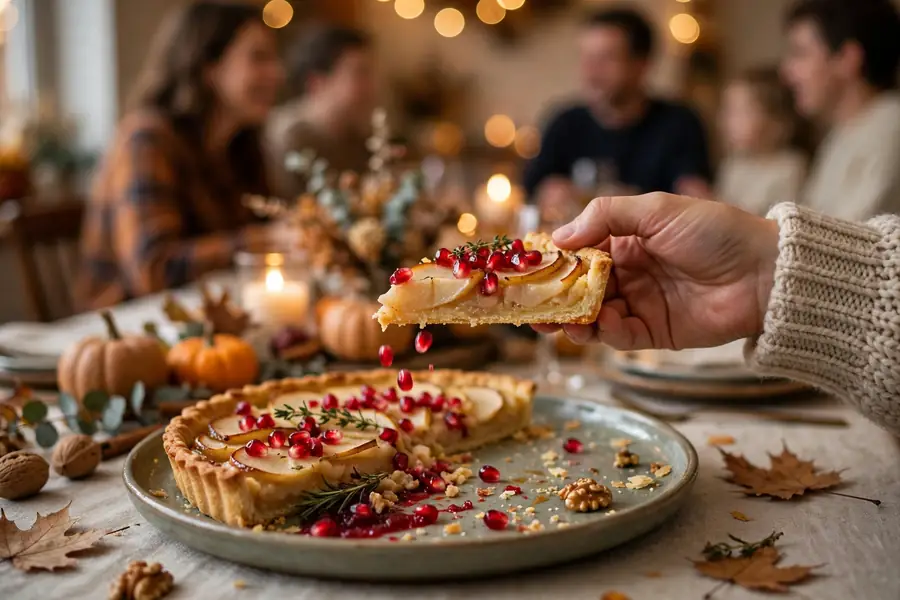
- Arrange the fruit in color blocks and rainbow arcs, starting with the largest pieces.
- Set the dip bowl in the centre and fill the gaps with berries and pomegranate arils.
- Serve within 2 hours.
Frequently Asked Questions About Thanksgiving Fruit Platters
What fruits go best on a Thanksgiving fruit platter?
Choose fall fruits and festive colors: apples (Honeycrisp, Fuji), pears (Bosc, Anjou), pomegranate arils, Fuyu persimmons, red and green grapes, clementines, kiwi, figs and berries. Add pineapple or melon for volume.
How far ahead can I make a Thanksgiving fruit platter?
You can prep most components a day ahead, such as washing grapes, seeding pomegranates and peeling citrus. Assemble the platter the morning of Thanksgiving, and add apples and pears within an hour of serving. Don’t assemble the entire tray more than a few hours before serving.
How do I keep apples and pears from turning brown?
Dip slices in lemon juice mixed with cold water, or use pineapple or orange juice. Pat dry before arranging. Choose slow-browning varieties like Honeycrisp, Fuji and Granny Smith, and cut them as late as possible.
How long can a fruit platter sit out safely?
Cut fruit should be out for no more than two hours at room temperature, and no more than one hour when it’s above 90°F. Use smaller trays and swap them with chilled backups, or set the platter on ice.
How much fruit should I buy per person?
Plan roughly ½ cup of cut fruit per guest as an appetizer, ¾ cup if it’s part of a larger buffet, and about 1 cup if it replaces dessert. Add more grapes, since they stretch the platter at low cost.
How do I make a turkey fruit platter?
Use a pear as the body, a grape or small fruit as the head, and fan rows of strawberries, cantaloupe, kiwi, green grapes and blueberries behind it as feathers. Add eyes and a beak with small bits of fruit or carrot. It takes about 15 to 20 minutes.
What dips go well with a fruit platter?
Maple cinnamon Greek yogurt, cinnamon cream cheese, honey ricotta, salted caramel and dark chocolate are all great. Make dips the day before so the flavors blend.
Can I make a vegan or allergy-friendly Thanksgiving fruit platter?
Yes. Fresh fruit is naturally vegan and gluten-free. Skip nuts, use coconut yogurt or seed butter for dips, use separate utensils, and label everything so guests with allergies feel safe.
What can I add to a fruit platter besides fruit?
Cheese (brie, aged cheddar, goat cheese), nuts (pecans, Marcona almonds), dried fruit, honey, crackers and fresh herbs all pair well. They turn a simple fruit tray into a fruit and cheese board.
How do I transport a fruit platter to a Thanksgiving gathering?
Keep fruit chilled in a cooler with ice packs, and carry the dip in a sealed jar. If possible, assemble at the destination. If you assemble at home, use a lidded platter and place paper towels between layers to absorb moisture.

Hi, I’m Angela. I cook the way busy people actually cook — simple, tasty food with ingredients you already have. On CookBookBite I share easy recipes, honest kitchen tips, and dishes my family asks for again and again.