

Let’s be honest about something: when you’re trying to eat lighter, the hardest part isn’t the meals. It’s 9 PM, when the sweet craving hits like a freight train and the only things in the house are willpower (depleted) and good intentions (expired). That late-night negotiation with yourself — “just one cookie won’t hurt” turning into half the row — is where most healthy eating plans quietly fall apart.
This jello weight loss recipe is my answer to that moment. It’s cold, sweet, fruity, and genuinely satisfying — and a whole generous serving has fewer calories than a single cookie. Made with sugar-free gelatin, real berries, and a cloud of tangy Greek yogurt, it tastes like an actual dessert, not a punishment or a sad imitation. It’s the treat that lets you have dessert every single night without derailing anything. That’s what makes this light jello dessert a weeknight staple in my house.
A quick honest note before we start: this is a light, low-calorie dessert recipe — not a weight-loss program, and I’m not a nutritionist. No single food causes weight loss; that’s about your overall eating patterns, activity, sleep, and a dozen other factors. But having a genuinely delicious 60-calorie dessert in your arsenal makes the whole thing a lot more sustainable. When the 9 PM craving has a good answer waiting in the fridge, you don’t have to rely on willpower alone. That’s what this is: a smart swap, not a miracle.
Also Read: Easy Peach Cobbler Recipe (Juicy, Golden, Foolproof)
Why You’ll Love This Light Jello Dessert
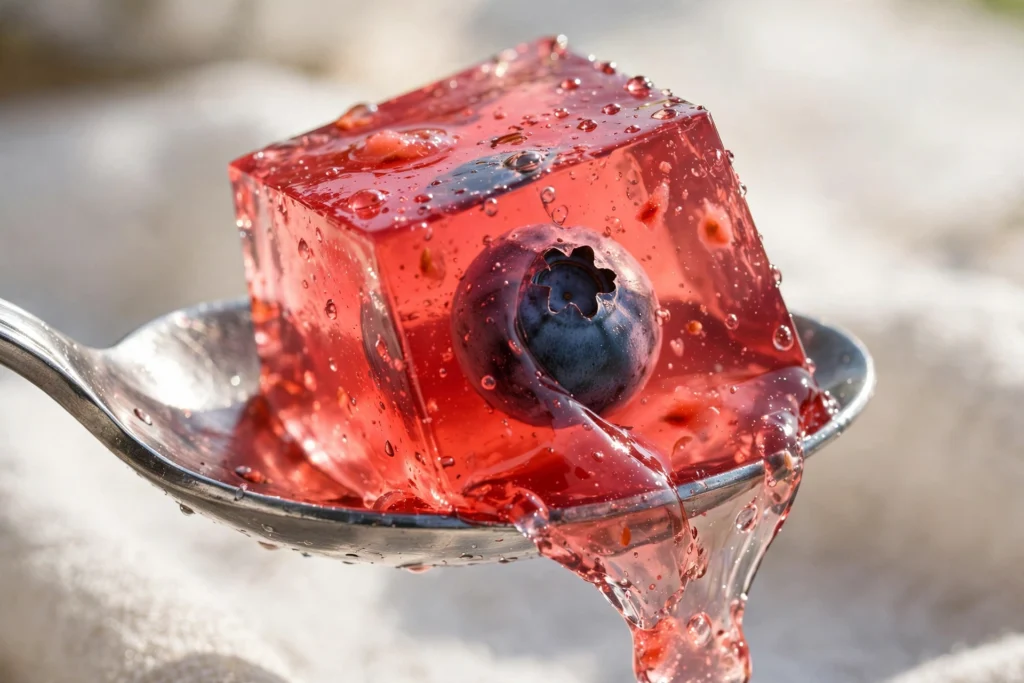
First, it actually satisfies a sweet tooth — and I mean really satisfies, not the “well, it’s better than nothing” kind of satisfaction. The combination of fruity gelatin, real berries bursting with juice, and creamy tangy yogurt hits all the dessert notes: sweet, cold, creamy, fruity, with interesting texture. It doesn’t taste like diet food because it isn’t trying to imitate something else; it’s just good on its own terms. The wobble is fun, the colors are gorgeous, and the flavor is genuinely bright.
Second, it’s ridiculously low in calories without being tiny. Around 60 calories per generous serving, with a meaningful amount of protein from the Greek yogurt (about 6 grams). Compare that to ice cream (250+ calories), cake (350+), or even a “healthy” granola bar (200+). The math is very friendly, and the portion doesn’t feel punishing — it’s a full dessert cup, not a thimble.
Third, it’s the ultimate meal-prep dessert. Make a batch on Sunday afternoon — it takes 15 minutes of actual work — and you have grab-and-go desserts all week. It keeps 5 days in the fridge, and the individual cups make portion control completely automatic. No scooping, no “just a little more,” no decisions at 9 PM when your judgment is at its weakest.
Finally, kids love it too. The wobbly texture, the bright jewel colors, the hidden berries — it’s fun food. If you’re trying to get the whole family eating a little lighter without a mutiny, this is a Trojan horse of the best kind. They’ll ask for it by name.
Understanding Gelatin: How It Works (And Why It Sometimes Doesn’t)
It helps to understand what gelatin actually is, because it explains both the magic and the occasional frustration. Gelatin is a protein derived from collagen. When you dissolve it in hot liquid and then cool it, the protein strands form a loose three-dimensional network that traps water — that’s what creates the wobbly, jiggly texture. It’s the same principle behind panna cotta, aspic, and gummy candies.
For the network to form properly, three things must happen. First, the gelatin must dissolve completely — undissolved granules can’t participate in the network, which is why boiling water and thorough whisking are non-negotiable. Second, the ratio of gelatin to liquid must be right — too much liquid and the network is too weak to hold (soupy jello); too little and it’s rubbery. Third, it needs consistent cold — the network firms up as the temperature drops, which is why rushing the chill time gives you jello soup.
Certain fresh fruits — pineapple, kiwi, mango, papaya, and figs — contain enzymes called proteases that literally digest protein. Since gelatin IS protein, these enzymes break down the network before it can form. That’s why fresh pineapple in jello is a classic disaster. Canned versions of these fruits work fine because the canning heat destroys the enzymes. It’s chemistry, not personal failure.
Must Read: Banana Nut Muffin Recipe: Bakery-Style, Moist and Fluffy in 40 Minutes
Ingredients for Light Jello Dessert (And Smart Swaps)
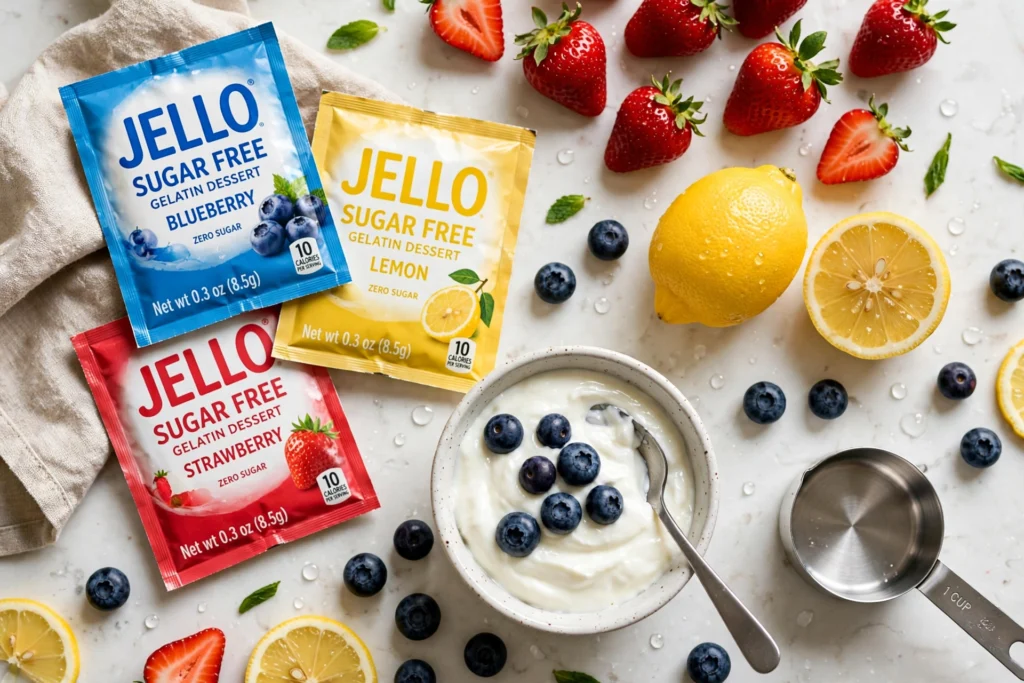
Sugar-free gelatin, strawberry or raspberry (2 boxes, 0.3 oz each) — Sugar-free keeps the calories minimal (about 10 calories per box versus 80 for regular). Strawberry and raspberry taste the most like “real” dessert; the berry flavors complement actual berries rather than competing with them. Cherry and orange work too. If you prefer to avoid sugar substitutes, regular gelatin plus fresh fruit works identically — just count on about 80 calories per serving instead of 60. Both are still very light.
Boiling water (2 cups) — For dissolving the gelatin. It must be at a full, rolling boil — not just hot, not steaming, but actively bubbling. Lukewarm water leaves grainy undissolved gelatin that ruins the texture. If you’re using a kettle, let it come to a complete boil. If microwaving, heat until it bubbles vigorously.
Cold water (2 cups) — Added after dissolving to bring the temperature down quickly and start the setting process. Using cold (not room temperature) water gives the gelatin a head start on firming up. Some people use ice cubes for part of this — that works too, just make sure they melt completely.
Fresh mixed berries (2 cups) — Strawberries (hulled and quartered), blueberries, raspberries — whatever looks good at the store. Fresh is strongly preferred: frozen berries release water as they thaw, which dilutes the gelatin and can prevent proper setting. This is where the real fruit flavor, fiber, vitamins, and visual appeal come from. Buy the best berries you can; they’re the star.
Plain Greek yogurt, nonfat (1 cup) — For the creamy layer that transforms this from “jello with fruit” into an actual dessert experience. Nonfat keeps the calories down; the tangy flavor contrasts beautifully with the sweet jello. If plain is too tart for you, vanilla light Greek yogurt works and adds a little sweetness. Full-fat Greek yogurt is richer and creamier — use it if calories aren’t the primary concern. It’s the same thick, tangy yogurt I use in my easy tzatziki sauce.
Lemon juice (1 tablespoon) — Fresh, not bottled. It brightens everything — the acidity makes the fruit flavors taste more vivid and cuts through the sweetness. Don’t skip this; it’s the difference between flat and vibrant. One tablespoon is enough to brighten without making it taste lemony.
Fresh mint (for garnish, optional) — A small sprig on each cup looks beautiful and adds a fresh aroma. Completely optional, but it elevates the presentation from “snack” to “dessert” with zero calories.
Equipment You’ll Need
A large heatproof mixing bowl or a 4-cup glass measuring cup (the spout makes pouring easier), a whisk (a fork works in a pinch, but a whisk dissolves faster), and 6 small glass cups, ramekins, or mason jars in the 6–8 oz range. Clear glass shows off the beautiful layers and colors — it’s worth using glass over opaque cups for the visual appeal. That’s the entire equipment list. No baking, no cooking skills, no special tools required. If you can boil water, you can make this.
How to Make Light Jello Dessert (Step by Step)

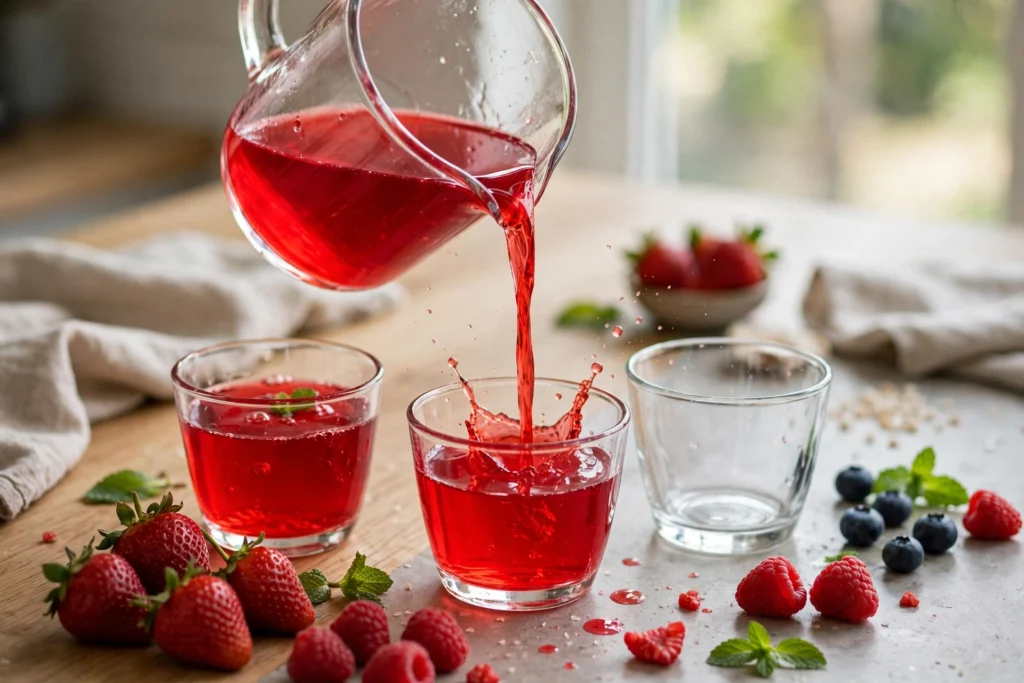
Step 1 — Dissolve the gelatin completely. Bring 2 cups of water to a full, rolling boil. Place both boxes of gelatin powder in your large heatproof bowl. Pour the boiling water over the powder and whisk for a full 2 minutes — set a timer, because most people under-whisk. You’re looking for complete dissolution: run a clean finger along the inside of the bowl; it should feel perfectly smooth, not gritty or grainy. Any undissolved granules will create unpleasant texture in the finished dessert. If you’re unsure, whisk 30 seconds longer.
Step 2 — Add cold water and lemon juice. Stir in 2 cups of cold water and the tablespoon of lemon juice. This serves two purposes: it brings the temperature down so the mixture won’t cook the fresh berries (hot liquid would make them mushy and dull), and it starts the clock on the setting process. Stir well to combine everything evenly.
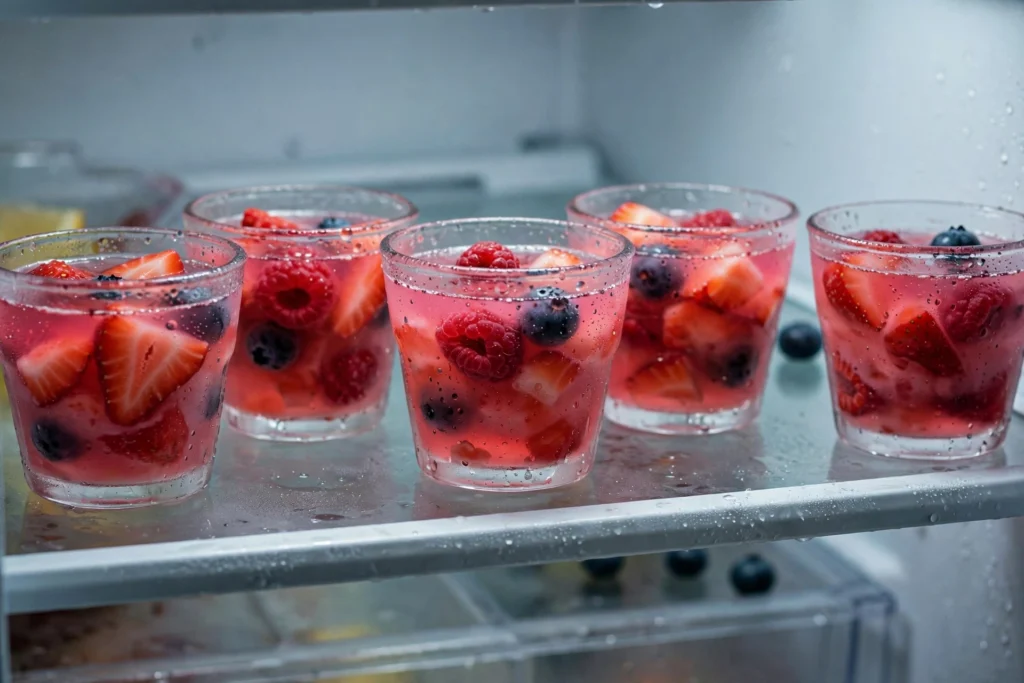
Step 3 — Portion into cups and add berries. Divide the liquid among your 6 cups — about ⅔ cup each. An easy way to portion evenly: pour into a large measuring cup first, then divide. Drop a generous handful of mixed berries into each cup. They’ll distribute naturally as the jello sets — some will sink, some will float, some will suspend in the middle. That randomness is part of the charm; every cup looks a little different.
Step 4 — Chill until fully set. Refrigerate for at least 4 hours, though overnight is ideal and gives the firmest set. The jello needs to be completely firm — when you tilt a cup, the contents should jiggle as one cohesive unit, not slosh or ripple in the center. Don’t rush this step; impatience is genuinely the only way to ruin jello. If your refrigerator runs warm (above 40°F), allow extra time.
Step 5 — Add the yogurt cloud. Just before serving — and I mean just before, within 30 minutes — spoon 2–3 tablespoons of Greek yogurt over the top of each set jello cup. Don’t stir it in or swirl it; let it sit on top like a cloud. The visual contrast (white cream over jewel-toned jello) is beautiful, and the flavor contrast (tangy cream against sweet fruit jelly) is the entire point of the dessert. Use the back of the spoon to spread it gently to the edges.
Step 6 — Garnish and serve immediately. Top each cup with a few extra fresh berries and a small mint leaf if using. Serve cold, ideally within 30 minutes of adding the yogurt. The yogurt will gradually start to weep liquid if left too long, so timing matters for the prettiest presentation.
My Best Tips for the Perfect Light Jello Dessert

Boiling water is truly non-negotiable. I can’t stress this enough: gelatin must dissolve completely or the texture turns grainy and unpleasant. Full rolling boil, 2 full minutes of whisking. When in doubt, whisk longer. This is the step that separates silky jello from sad jello.
Fresh berries only (or thawed-and-drained). Frozen berries release significant water as they thaw, diluting the gelatin and potentially preventing proper setting. If frozen is all you have, thaw them completely in a colander, then pat dry with paper towels before adding. Fresh is strongly preferred for both texture and flavor.
Yogurt goes on AFTER setting, never before. The yogurt layer is added to fully set jello, just before serving. Added too early, it sinks into the liquid and creates a murky, unappetizing mess. Added to warm jello, it can curdle. Patience: set first, yogurt last.
Layer for stunning visual impact. For a fancier version that looks like it came from a restaurant: pour a thin layer of jello, chill 90 minutes until thick but not fully firm, spoon on a yogurt layer, then carefully pour more liquid jello over the back of a spoon (to avoid breaking through). Repeat. It sets into gorgeous distinct stripes.
Chill your serving cups first. Ten minutes in the freezer while you prepare the gelatin helps the jello start setting faster and more evenly once poured. Cold glass draws heat out of the liquid efficiently.
Learn the jiggle test. Fully set jello moves as a single wobbly unit when you gently tilt the cup. If the center still ripples or flows like liquid, it needs more time — give it another hour. There’s no shortcut; gelatin sets on its own schedule.
Don’t double the recipe in one bowl. Large volumes of jello set unevenly — the outside firms while the center stays liquid. If you need more than 6 servings, make two separate batches rather than doubling in one container.
Delicious Variations to Try
Tropical paradise: Use sugar-free pineapple or mango gelatin with diced mango and kiwi. Important note: use CANNED pineapple, not fresh — fresh pineapple contains bromelain, an enzyme that prevents gelatin from setting. Canned is heat-treated, which destroys the enzyme.
Creamsicle: Orange sugar-free gelatin with a vanilla Greek yogurt layer. Tastes remarkably like the ice cream truck classic, minus about 200 calories. Kids go crazy for this one.
Berry cheesecake cups: Soften 2 ounces of light cream cheese and whisk it into the Greek yogurt layer until smooth. Richer and more dessert-like, still very reasonable on calories. Top with a sprinkle of graham cracker crumbs for the full cheesecake effect.
Mojito style: Lime sugar-free gelatin with torn fresh mint leaves stirred in and a generous squeeze of lime juice. Refreshing, sophisticated, and completely different from the berry version. Great for summer entertaining.
Coffee jelly (grown-up version): Dissolve unflavored gelatin in strong, sweetened coffee (with sugar substitute), chill until set, and top with lightly sweetened Greek yogurt or a dollop of whipped cream. Elegant, unexpected, and wonderful after dinner.
Rainbow layers for parties: Make three different colors in sequence, letting each set for 90 minutes before carefully adding the next. Red, orange, yellow — or berry, lime, blue raspberry. Stunning on a party table, same minimal calories. Kids will lose their minds.
Chocolate raspberry: Use raspberry gelatin, and stir 1 tablespoon of cocoa powder into the yogurt layer. The chocolate-raspberry combination is classic for a reason.
Also Read: Authentic Greek Salad Recipe (Horiatiki)
The Honest Nutrition Picture
Let’s talk numbers, because “light” should mean something specific. Each serving (one ⅔-cup jello cup with yogurt topping) contains approximately 60 calories, 6 grams of protein (from the Greek yogurt), 9 grams of carbohydrates (mostly from the berries), and less than 1 gram of fat. There’s also meaningful vitamin C from the berries and lemon juice, plus probiotics from the yogurt.
For comparison: a typical serving of ice cream runs 250-300 calories with 15+ grams of fat. A slice of cake is 350+ calories. Even a “healthy” granola bar is usually 180-200 calories with significant added sugar. This dessert gives you a genuine sweet experience for a fraction of those numbers.
But — and this matters — low calorie doesn’t automatically mean healthy in every context. Sugar-free gelatin contains artificial sweeteners, which are safe in normal amounts but shouldn’t be anyone’s primary food group. The real nutritional value here comes from the berries (fiber, vitamins, antioxidants) and the Greek yogurt (protein, probiotics, calcium). Think of the jello as the fun delivery vehicle for those genuinely nutritious ingredients.
Storing & Make-Ahead (Complete Guide)
Refrigerator: The plain jello cups (before adding yogurt) keep 5 days covered in the refrigerator. Cover each cup with plastic wrap or a small plate to prevent them from absorbing fridge odors. The texture is at its absolute best in the first 3 days; after that, they may start to weep a little liquid (harmless, just less pretty).
Freezer: Don’t freeze jello desserts. Freezing destroys gelatin’s protein network — when thawed, the texture turns spongy and rubbery, and it weeps significant liquid. It’s one of the few desserts that simply doesn’t survive freezing. Make only what you’ll eat within 5 days.
Make-ahead strategy: This is ideal meal-prep food. Make the jello cups on Sunday (15 minutes of work), store covered in the fridge, and add the yogurt topping just before serving each evening. The whole week of desserts is handled in one short session. Keep a tub of Greek yogurt and fresh berries on hand for the toppings.
Transporting: If bringing to a potluck or party, transport the set jello cups in a tray with a damp towel underneath to prevent sliding. Add the yogurt topping on-site just before serving. Bring extra berries and mint for a finishing touch that makes them look professionally made.
Jello for Entertaining: Impressive Without Effort
Here’s something nobody tells you: jello desserts are secretly fantastic party food. They look stunning (those jewel colors in clear glass are naturally photogenic), they’re make-ahead by nature, they’re portion-controlled, and they cost almost nothing to make. A tray of colorful layered jello cups on a party table gets more attention than you’d expect for something that took 15 minutes of work.
For dinner parties, serve the coffee jelly or mojito variations in small elegant glasses — they read as sophisticated, not childish. For kids’ birthdays, the rainbow layers are unbeatable. For potlucks, the berry cheesecake cups travel well and serve a crowd. The key to making jello look grown-up is all in the presentation: real glass (not plastic), fresh garnishes, and thoughtful layering. Nobody needs to know how easy it was. For a matching grown-up drink, shake up a classic paloma cocktail to serve alongside.
A practical tip for entertaining: make 2-3 extra cups beyond your guest count. Jello cups are the kind of dessert where people ask for seconds, and having extras makes you look like a generous host rather than someone doing math at the dessert table.
Making It a Habit: The Psychology of Smart Swaps
The reason this recipe works as a long-term strategy — not just a one-time novelty — comes down to how habits actually form. Willpower is a depleting resource; it runs out. Systems don’t. When you have jello cups ready in the fridge, you’re not relying on willpower at 9 PM — you’re just following the path of least resistance, which happens to lead to a 60-calorie dessert instead of a 400-calorie one.
This is the same principle behind all successful food swaps: make the better choice the easier choice. Keep the ingredients on hand (gelatin boxes last for months in the pantry). Make it a Sunday ritual alongside any other meal prep. After two or three weeks, reaching for the jello cup instead of the cookie package becomes automatic — not because you’re disciplined, but because it’s just what’s there.
And here’s the part people miss: the goal isn’t perfection. If you have the jello cup five nights a week and the ice cream twice, that’s still an enormous improvement over ice cream seven nights. Progress, not perfection, is what changes outcomes over months and years. This dessert isn’t about restriction — it’s about having a genuinely enjoyable option that makes the better choice feel like no sacrifice at all.
What to Serve with Light Jello Dessert
It’s a complete standalone dessert, but it fits beautifully into larger spreads. At brunch, pair it with yogurt parfaits, fresh fruit salad, and granola for a light, colorful table. After a heavier dinner — say, after lasagna or a holiday roast — it’s the perfect sweet ending that doesn’t add to the food coma. At brunch, I love serving it with slices of simple banana bread. For a savoury contrast on the table, add an authentic Greek salad.
For kids’ parties, make them in small clear plastic cups with bright layered colors. They’ll disappear faster than the cake. For adult gatherings, the coffee jelly or mojito variations feel sophisticated enough for a dinner party. And for everyday life, it’s the 9 PM answer that keeps you on track without feeling deprived.
Gelatin Science Deep Dive (For the Curious)
Gelatin is fascinating stuff — it’s what makes this dessert possible, and understanding it helps you troubleshoot and innovate.
What gelatin actually is: Gelatin is hydrolyzed collagen, extracted from animal bones and connective tissue. When dissolved in hot liquid and cooled, gelatin proteins form a three-dimensional network that traps water — that’s what creates the gel. The strength of the gel depends on gelatin concentration (more gelatin = firmer set), temperature (colder = firmer), and time (longer chilling = firmer, up to a point). This is why the recipe specifies exact measurements and chilling times — they’re calibrated for the ideal texture.
Bloom strength: Gelatin is graded by “bloom” — a measure of gel strength. Knox unflavored gelatin (the standard in US recipes) is about 225 bloom. Professional sheet gelatin ranges from 125 (bronze) to 250+ (platinum). Higher bloom means firmer set with less gelatin. For this recipe, standard Knox works perfectly. If you’re using sheet gelatin, the conversion is: 1 packet Knox (2.5 tsp) = about 4 sheets of bronze gelatin. Soak sheets in cold water for 5 minutes, squeeze out water, then dissolve in hot liquid.
Why fresh pineapple ruins jello: Fresh pineapple, kiwi, mango, papaya, and guava contain protease enzymes (bromelain in pineapple, actinidin in kiwi) that break down gelatin proteins, preventing gelling. Canned versions are fine — the canning heat destroys the enzymes. If you must use fresh, briefly boil the fruit for 2 minutes to deactivate enzymes, then cool before adding. This is the most common jello failure, and it’s entirely preventable once you know the cause.
Temperature windows: Gelatin dissolves at 140°F+ but degrades above 212°F (boiling). The ideal is to dissolve in hot (not boiling) liquid, then cool to room temperature before refrigerating. Adding gelatin to boiling liquid can weaken the set. Conversely, adding cold liquid to dissolved gelatin can cause premature, lumpy gelling. The recipe’s method — dissolve in hot, then add cold — is designed to hit the sweet spot.
Sugar’s effect on gelling: Sugar competes with gelatin for water, slightly weakening the gel. This is why sugar-free jello sets firmer than regular at the same gelatin concentration. In this lightened recipe, we’re using less sugar, which actually helps the gelatin set more firmly — a happy accident that improves texture. If you increase sugar significantly, you may need slightly more gelatin to compensate.
Building Better Habits (The Behavioral Science)
This dessert works for weight management not just because it’s low-calorie, but because of how it fits into eating psychology:
The volume principle: Research by Dr. Barbara Rolls (Penn State) shows that people eat a consistent VOLUME of food, not a consistent number of calories. A large bowl of jello dessert (mostly water) satisfies the desire for a substantial dessert with minimal calories. Compare: 1 cup of ice cream (~270 cal) vs. 1 cup of this jello dessert (~60 cal). Same volume, 78% fewer calories. Your stomach’s stretch receptors register fullness based on volume, making this genuinely satisfying.
The “permission” effect: Many diets fail because they create deprivation — you can’t have dessert, so you obsess about dessert, then binge. This dessert gives you permission: you CAN have a sweet, satisfying treat every night. Removing the forbidden-fruit aspect reduces cravings. It’s not cheating; it’s the plan. This psychological shift is more important than the calorie math.
Ritual and routine: The most successful weight-management strategies involve sustainable rituals, not willpower. Making this dessert part of your evening routine (after dinner, while watching TV) creates a healthy habit loop: cue (dinner ends) → routine (enjoy jello dessert) → reward (sweet satisfaction, no guilt). After 2-3 weeks, it becomes automatic. Willpower depletes; habits persist.
Pre-portioning beats willpower: Make the dessert in individual cups or jars rather than one large bowl. Pre-portioned servings eliminate the “just one more spoonful” problem. Behavioral economics research shows that people eat less from smaller containers even when they can get refills — the act of getting up for more creates a decision point where you can choose to stop. A large bowl on the table invites mindless eating; individual cups create natural stopping points.
Sugar Alternatives Compared (Honest Assessment)
This recipe is designed to be light, but you have options for sweetening. Here’s an honest comparison:
Sugar-free jello mix: The easiest option — 10 calories per serving, sweetened with aspartame or sucralose. The taste is close to regular, though some people detect a slight aftertaste. The texture sets identically to regular. If you’re comfortable with artificial sweeteners, this is the most convenient choice. Store brands work just as well as Jell-O brand.
Regular jello + fresh fruit: Using regular jello (80 cal/serving) but bulking it with fresh fruit gives you real sugar with added fiber and nutrients. A cup with half jello, half berries is about 100 calories — still very reasonable. The fruit adds texture, flavor complexity, and visual appeal. This is my recommendation for people who prefer to avoid artificial sweeteners.
Unflavored gelatin + fruit juice: Maximum control. Dissolve unflavored gelatin in 100% fruit juice (no added sugar). You control sweetness by choosing juice — white grape is mild, pomegranate is tart. Add a tablespoon of honey if needed. This avoids both artificial sweeteners and the additives in flavored mixes. The flavor is cleaner and more natural, though less intensely “jello-like.”
Stevia/monk fruit: If using unflavored gelatin, you can sweeten with natural zero-calorie sweeteners. Start with less than you think — they’re sweeter than sugar. Dissolve the sweetener in the hot liquid with the gelatin. Note: some people find stevia has a bitter aftertaste in cold desserts; monk fruit tends to be cleaner. Experiment with small batches.
What I don’t recommend: Don’t try to make this with no sweetener at all — plain gelatin with fruit is bland and won’t satisfy a sweet craving, defeating the purpose. The goal is a treat that replaces higher-calorie desserts, not a punishment. A small amount of sweetener (even real sugar) is better than a “virtuous” dessert you won’t actually eat.
Weekly Prep System (Always Have Dessert Ready)
The key to making this a sustainable habit is never being without it. Here’s a system:
Sunday batch (15 minutes): Make a double batch in a large bowl or 8-10 individual cups. While it chills (4 hours), you’re done for the week. Individual cups are better for portion control; a large bowl is faster. Choose based on your priorities.
Flavor rotation: Make two different flavors each week to prevent boredom. Week 1: strawberry + lime. Week 2: orange + raspberry. The variety keeps it interesting. Buy jello mix in bulk when on sale — it keeps indefinitely in the pantry.
Fruit prep: Wash and cut fruit on Sunday, store in containers. During the week, you can top each serving with fresh fruit for variety. Frozen berries (thawed) work well too and are cheaper. A bag of frozen mixed berries thaws in 10 minutes and makes an excellent topping.
Emergency stash: Keep 2-3 boxes of jello mix and a can of fruit in the pantry always. If you run out of prepped dessert, you can make a quick batch — it needs 4 hours to set, so make it after lunch for evening dessert. The emergency stash prevents the “no healthy dessert available, I’ll just have ice cream” trap.
Reader Success Stories (What Actually Works)
I’ve heard from many readers who’ve made this dessert part of their routine. Here are the patterns that separate those who stick with it from those who don’t:
What works: People who succeed treat this as a permanent dessert replacement, not a temporary diet food. They find 2-3 flavor combinations they genuinely enjoy and rotate them. They prep on Sundays without fail. They keep the emergency stash. Most importantly, they don’t try to be perfect — if they have real ice cream at a birthday party, they enjoy it without guilt and return to the jello the next day. Sustainability beats perfection.
What doesn’t work: Trying to eat the same flavor every day (boredom leads to quitting). Making it only “when I feel like it” (without the routine, it doesn’t become a habit). Using it as punishment (“I was bad today, so I only get jello”) — this creates negative associations. The dessert should feel like a treat, not a penalty. If you resent eating it, try a different flavor or preparation method rather than forcing it.
The 30-day test: Commit to having this dessert (or a similar light option) every evening for 30 days. Track how you feel — not just weight, but energy, cravings, and satisfaction. Most people report that by day 14, they stop missing heavier desserts. By day 30, it’s just what they eat. That’s when you know it’s sustainable. If after 30 days you still feel deprived, this approach may not be right for you and that’s okay. The best diet is the one you can maintain.
Read Also: Simple Banana Bread Recipe (Moist, Tender & One Bowl)
Final Thoughts
I want to be completely real with you: no dessert, however light, is a magic solution to anything. But you know what IS powerful? Having a plan for the hard moments. Having something cold and sweet and genuinely enjoyable waiting in the fridge at 9 PM, so the craving gets a good answer instead of turning into a willpower battle you’re too tired to win. That’s not a diet trick that’s just smart, compassionate planning.
This little jello cup has saved me from more late-night bad decisions than I can count. It’s proof that “eating lighter” doesn’t have to mean “eating joylessly” or “never having dessert.” Sweet, fruity, creamy, fun, beautiful — and 60 calories. That’s not a compromise or a punishment. That’s just a genuinely good dessert that happens to be light.
Make a batch this weekend. Your future 9 PM self will thank you.

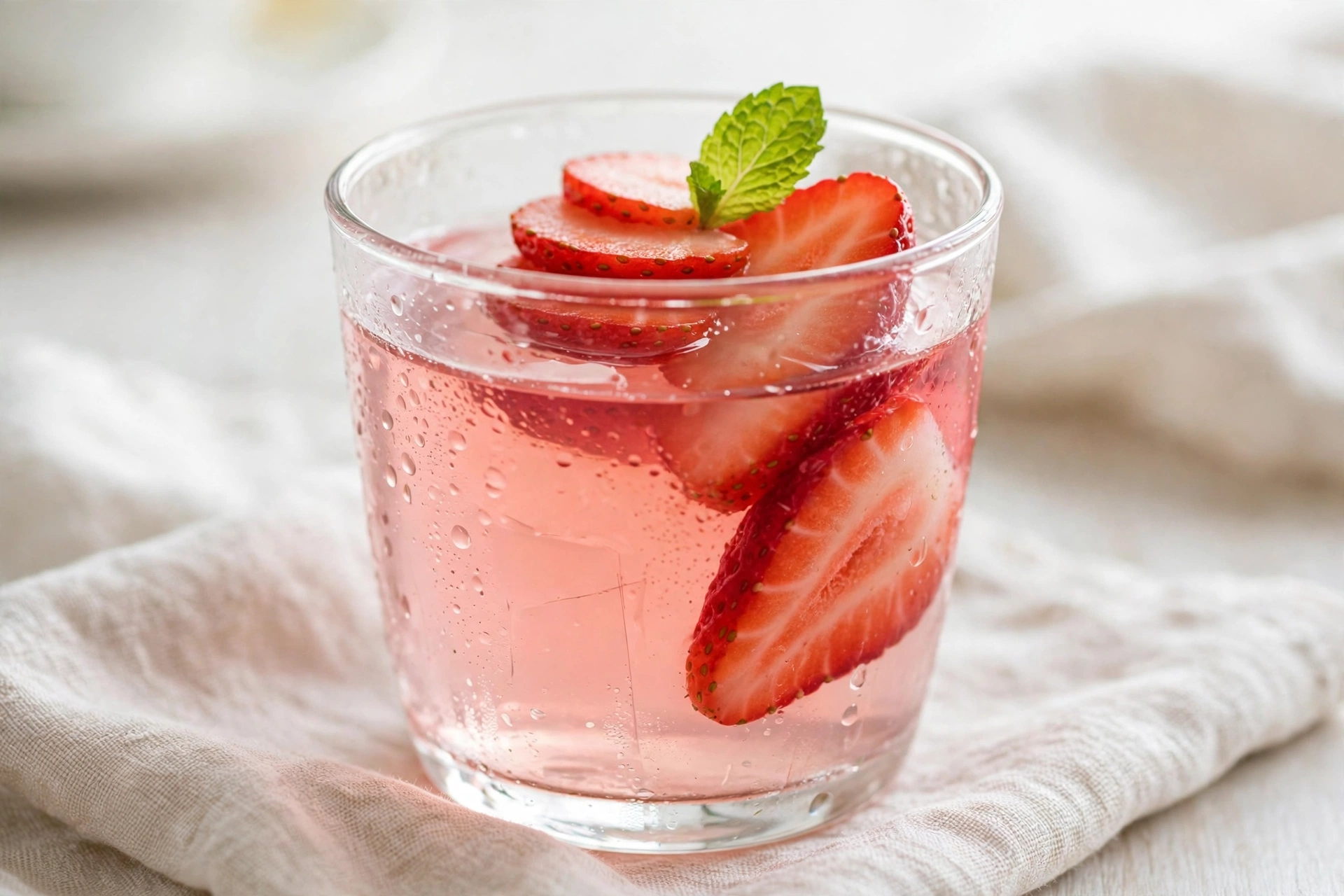
Light Berry Jello Dessert Cups
Ingredients
Equipment
Method
- Dissolve the gelatin: Place both boxes of gelatin powder in a large heatproof mixing bowl. Pour in 2 cups of boiling water and whisk for about 2 minutes until completely dissolved, with no granules remaining.
- Add cold water and lemon juice: Stir in 2 cups of cold water and the tablespoon of fresh lemon juice until combined.
- Portion and add berries: Divide the liquid among 6 small glasses, about two-thirds of a cup each. Drop a few fresh berries into each cup.
- Chill until set: Refrigerate for at least 4 hours, or overnight, until the jello is fully set and wobbles as a single unit when tilted.
- Add the yogurt cloud: Just before serving, spoon 2 to 3 tablespoons of Greek yogurt over each set jello cup.
- Garnish and serve: Top with extra fresh berries and a small mint leaf. Serve cold.
Notes
Light Jello Dessert FAQs
How many calories are in this light jello dessert?
Each serving of this light jello dessert comes to around 60 calories — roughly 10 from the sugar-free gelatin, 30 from the berries and 20 from the nonfat Greek yogurt. That makes it one of the lightest desserts you can make at home, and far lighter than ice cream or cake, which typically run 250–300 calories a serving.
Can I use regular jello instead of sugar-free?
Yes, it works exactly the same way — just dissolve, chill and serve as the recipe directs. The only difference is the calorie count: regular jello adds about 70 calories per serving, bringing each cup to roughly 130 calories. If you are watching your sugar intake, stick with the sugar-free version.
Why didn’t my jello set?
The most common cause is gelatin that never fully dissolved — the water must be at a full, rolling boil, and you should stir for a full two minutes until no granules remain. Other culprits include adding fresh pineapple, kiwi, mango, papaya or figs (their enzymes stop the gelatin setting), using too much fruit, or simply not chilling it long enough — give it at least 4 hours in the refrigerator.
Can I put fresh pineapple in jello?
No — fresh (and frozen) pineapple contains bromelain, an enzyme that breaks down gelatin’s protein network, so the jello will stay liquid no matter how long you chill it. Tinned pineapple is perfectly fine because the canning heat destroys the enzyme. The same rule applies to fresh kiwi, mango, papaya, guava and figs.
How long does jello take to set?
Plan for at least 4 hours in the refrigerator for individual cups, though chilling overnight gives the firmest, cleanest set. A single large bowl can take 6 hours or more. You can tell it is ready with the jiggle test: tilt the cup gently and the jello should move as one wobbly unit rather than rippling in the centre.
Can you freeze jello dessert?
I don’t recommend it. Freezing destroys gelatin’s protein network, so thawed jello turns watery and rubbery instead of smooth and wobbly. If you want to make it ahead, the plain set jello keeps for up to 5 days covered in the refrigerator — no freezing needed.
How long does jello dessert last in the fridge?
The plain jello cups (before you add the yogurt) keep well for up to 5 days in the refrigerator, covered with cling film or lids. Add the Greek yogurt layer just before serving so it stays thick and fluffy rather than soaking into the jello and thinning out.
Can I make this dairy-free?
Easily. Swap the Greek yogurt for a thick coconut yogurt or whipped coconut cream — both give you that creamy contrast against the fruity jello. Just check the label first, as some dairy-free yogurts contain added sugar that will raise the calorie count.
What fruit works best in jello dessert?
Berries are the classic choice — strawberries, blueberries and raspberries hold their shape, add jewel-bright colour and will not interfere with setting. Sliced peaches, tinned pineapple and mandarin segments also work well. Avoid fresh pineapple, kiwi, mango, papaya and figs, whose enzymes prevent the gelatin from setting.
How do I make neat layered jello cups?
The secret is patience: pour in your first thin layer and chill it for 60–90 minutes until just set but still slightly tacky, then gently pour the next layer over the back of a spoon so it doesn’t break through. Repeat until the cup is full. Each layer needs to be firm enough to support the next one without the colours bleeding together.
Is this dessert suitable for diabetics?
Made with sugar-free gelatin and plain nonfat Greek yogurt, each serving is very low in sugar and carbohydrates, which many people managing diabetes find fits their meal plan. That said, everyone’s needs differ — check the nutrition labels and speak to your doctor or dietitian if you are unsure.
Can I double the recipe for a party?
Yes, but make it as two separate batches rather than one giant bowl — large volumes of jello set unevenly, with the outside firming while the centre stays liquid. Individual cups are ideal for parties anyway: they look impressive, need no serving utensils and guests can grab one easily. Make two or three extra — they always disappear.

Hi, I’m Angela. I cook the way busy people actually cook — simple, tasty food with ingredients you already have. On CookBookBite I share easy recipes, honest kitchen tips, and dishes my family asks for again and again.
Pingback: Mummy Brownies: 16 Easy Halloween Brownie Treats
Pingback: Paloma Recipe: The Best 5-Ingredient Classic Paloma Cocktail
Pingback: Lemon Cheesecake Yoghurt Bars - Creamy & Easy