
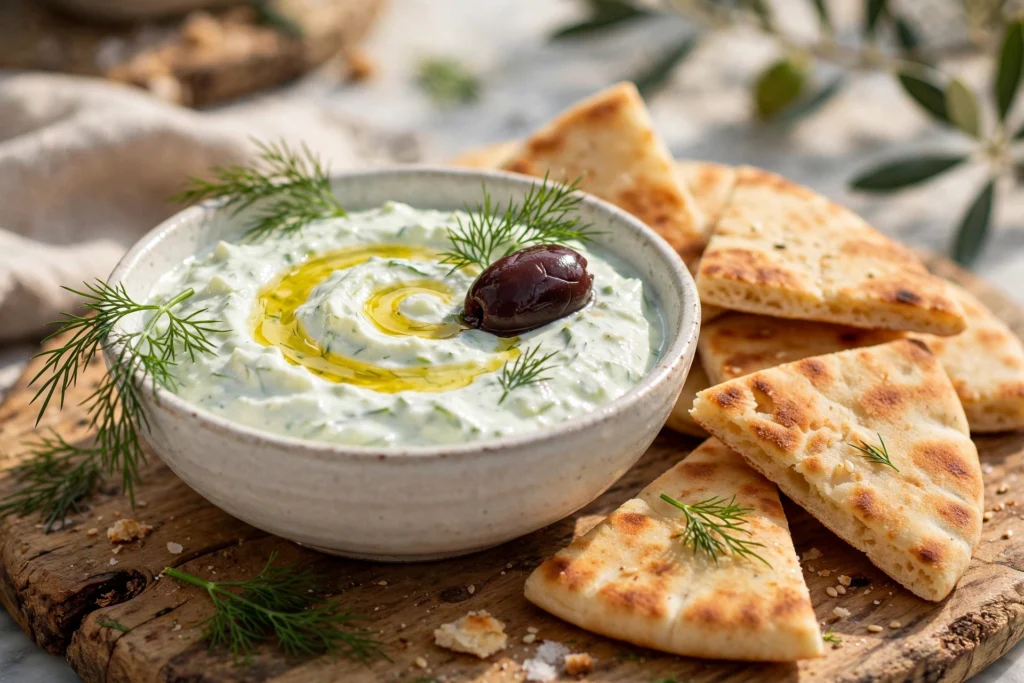
Tzatziki the dip gets all the glory — the mezze platter photos, the recipe cards, the glory. But let me introduce you to its scrappier, harder-working sibling: tzatziki sauce. Thinner, pourable, designed to be drizzled and slathered rather than scooped, this is the version that goes ON things. It’s the cool white ribbon running through a gyro, the sauce that turns a dry falafel wrap into something you dream about, the dip that makes roasted potatoes taste like a Greek taverna side dish.
Here’s the thing most people don’t realize: tzatziki sauce isn’t just watered-down tzatziki. It’s its own thing, with its own ratios and its own job to do. Where the classic dip is thick enough to stand a spoon in, the sauce needs to flow — to coat, to drizzle, to soak into warm pita. Get the balance right and it clings to food instead of running off the plate. Get it wrong and you have sad, thin yogurt water. I’ve made both, more times than I’d like to admit, which is why I can now tell you exactly where the line is.
This recipe takes ten minutes and lives in my fridge all summer. Once you have it, you’ll find excuses to use it: grain bowls, grilled chicken, roasted vegetables, burgers (trust me), even as a dressing for Greek salad with a little extra lemon. Let’s make it.
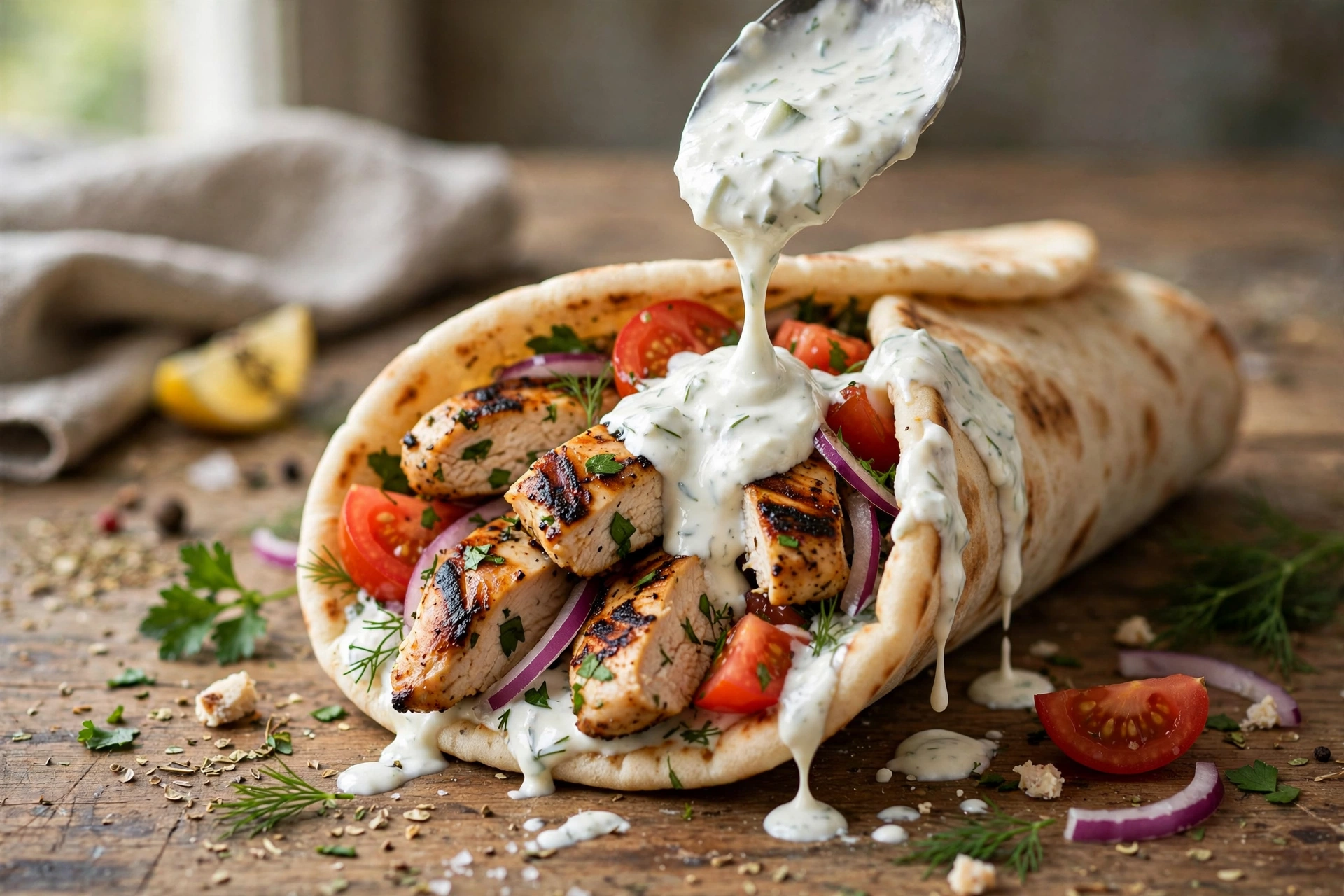
To understand why the sauce version matters, think about how you actually eat a gyro. You’re holding a warm pita wrapped around meat, tomatoes, onions, maybe fries — and you need a sauce that integrates with every bite, not a thick dollop that sits in one spot. The sauce version distributes. It seeps into the pita, coats the meat, cools the palate between bites of seasoned lamb or chicken. It’s engineered for the job in a way the dip simply isn’t. That’s not a criticism of the dip — it’s excellent at what it does. But when the application is drizzling, you need a drizzler.
Why You’ll Love This Tzatziki Sauce Recipe
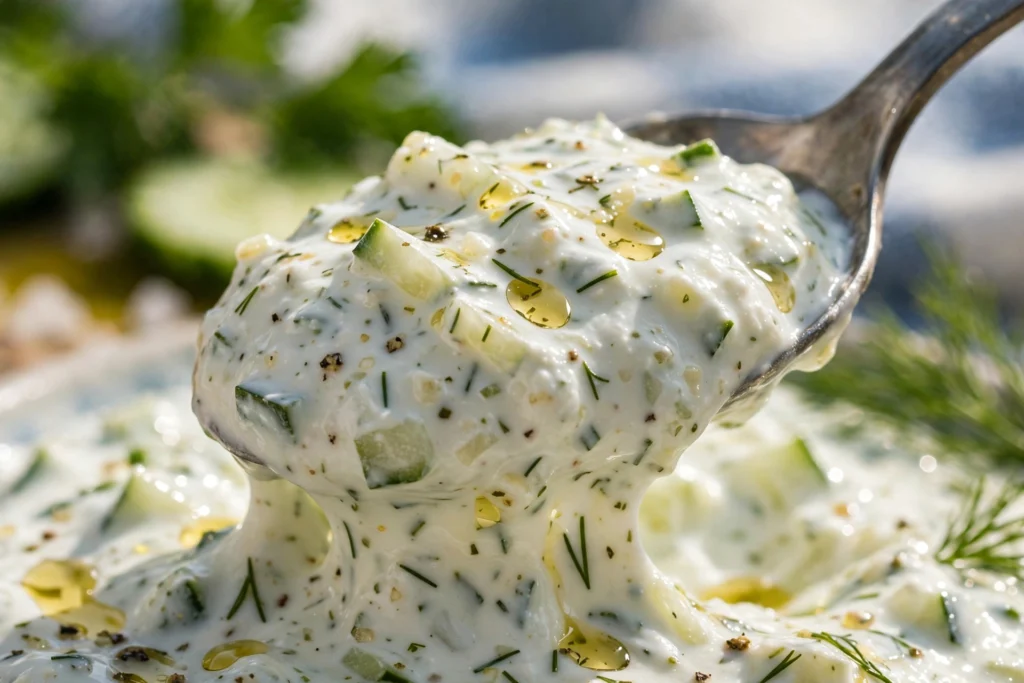
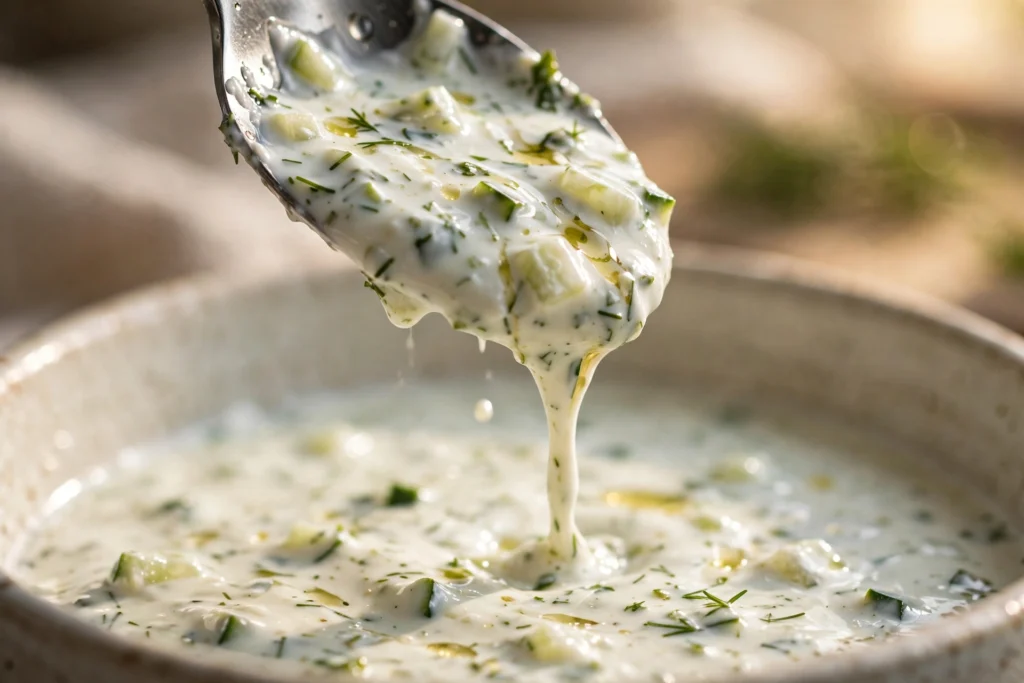
First, it’s the perfect consistency — and consistency is everything in a sauce. Through testing, I landed on a ratio that pours in a slow ribbon but still coats the back of a spoon. It won’t turn your gyro into a soggy mess, and it won’t sit on top of food like a stubborn dollop. It behaves.
Second, it’s brighter than the dip version. A little more lemon, a little more olive oil, and the garlic is grated finer so it melts completely into the sauce. The result tastes fresher and more vibrant — the kind of sauce that makes everything it touches taste more alive.
Third, it keeps beautifully. Unlike the thick dip, which can weep a little as it sits, this sauce stays smooth and emulsified for days. Make a jar on Sunday and drizzle it over lunches all week. It might be the highest-ROI ten minutes in your kitchen.
Finally, it’s ridiculously versatile. I’ve used it as a gyro sauce (obviously), a falafel wrap sauce, a dip for fries, a dressing for chopped salads, a sauce for grilled salmon, and — in a moment of inspiration I stand by — a burger sauce. It has never once let me down.
Beyond versatility, there’s the health angle, which matters more than people admit when choosing a sauce. This is yogurt-based, which means it’s high in protein, lower in fat than mayo-based sauces, and contains live cultures. You’re getting flavor AND nutrition, which is rare in the condiment world. A tablespoon of this sauce has roughly 15 calories; the equivalent of ranch dressing has around 75. That’s not why you’ll make it — you’ll make it because it tastes incredible — but it’s a nice bonus when you’re drizzling generously.
Also Read : Simple Banana Bread Recipe (Moist, Tender & One Bowl)
The Science of Sauce Consistency
Let’s get technical for a moment, because understanding the physics here will make you better at all sauces, not just this one. What we’re managing is viscosity — the sauce’s resistance to flow. Too viscous (thick) and it won’t distribute; too thin and it runs off food and pools on the plate. The target is what chefs call “nappe” consistency — thick enough to coat the back of a spoon, thin enough to pour.
Three ingredients control viscosity here. The yogurt provides the base thickness — full-fat strained Greek yogurt is naturally thick because the whey has been removed. The lemon juice and olive oil thin it slightly while adding flavor. The cold water is your precision instrument — it adjusts viscosity without adding competing flavors. This is why the recipe specifies adding water last, a tablespoon at a time. You’re calibrating, not just mixing.
Temperature matters too. Cold sauce is thicker than room-temperature sauce (fats firm up when cold). That’s why the recipe says to judge consistency after chilling, and why a sauce that’s perfect at room temp might need a splash of water after refrigeration. Understanding this prevents the common mistake of over-thinning at the mixing stage.
Ingredients for Tzatziki Sauce
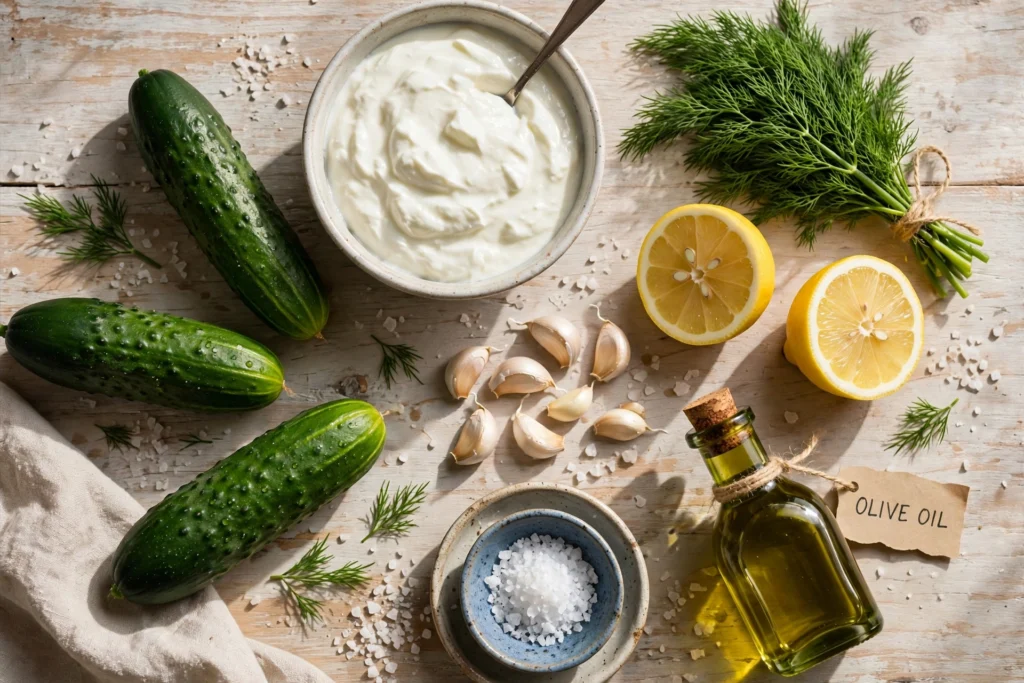
The ingredient list looks almost identical to classic tzatziki, but the ratios shift — and in a sauce, ratios are the recipe.
Plain Greek yogurt (1½ cups) — Full-fat, strained, thick. The yogurt is still the body of the sauce, so start with the good stuff. Because we’re thinning it deliberately, beginning with thick yogurt gives you control — you decide exactly how pourable it gets, rather than starting thin and having nowhere to go. Look for yogurt with just two ingredients: milk and live cultures. Avoid “Greek-style” yogurts that achieve thickness with starches and gums — they behave unpredictably when thinned and can taste chalky. The fat content matters too; full-fat (5% or higher) gives a richer mouthfeel and better emulsification than nonfat. If you’re watching calories, 2% works, but nonfat will give you a thinner, less luxurious result.
Cucumber (½ English cucumber, finely grated and squeezed) — Notice: half the cucumber of the dip version, and grated finer. You want the fresh cucumber flavor and those tiny green flecks, but not the chunky texture. Squeeze it just as ruthlessly — watery sauce is the enemy. After squeezing, I like to chop the shreds once more with a knife so they practically disappear into the sauce. English (hothouse) cucumbers are essential here — they have thinner skin, fewer seeds, and less bitterness than standard slicing cucumbers. If you only have regular cucumbers, peel them and scoop out the seeds before grating. The squeezing step is non-negotiable; cucumber is 96% water, and unsqueezed cucumber will turn your sauce into soup within hours.
Garlic (2 cloves, grated to a paste) — Slightly less than the dip, and grated on a microplane until it’s a true paste. In a sauce, even small garlic bits feel wrong. The paste melts in completely. Fresh garlic is essential — the pre-minced jarred stuff has an acrid, harsh flavor that will dominate the sauce. The grating technique matters: a microplane creates a fine paste that distributes evenly, while mincing leaves chunks. If you don’t have a microplane, smash the clove with the flat of a knife, sprinkle with salt, and mash it into a paste with the knife blade — the salt acts as an abrasive.
Fresh lemon juice (2 tablespoons) — More than the dip version. Lemon does two jobs here: brightness and thinning. That extra tablespoon is doing real structural work. Always use fresh lemons — bottled juice has a flat, slightly metallic taste from preservatives. Roll the lemon firmly on the counter before cutting to maximize juice extraction. One medium lemon yields about 2-3 tablespoons, so you’ll need roughly one lemon.
Extra-virgin olive oil (3 tablespoons) — Also more than the dip. The oil enriches the sauce and helps it coat food luxuriously. Use fruity, fresh oil — you’ll taste it. This is a place where oil quality matters because it’s a foreground flavor, not a background cooking fat. A peppery, grassy olive oil adds complexity; a mild one lets the yogurt and herbs shine. Avoid “light” olive oil — it’s refined and flavorless.
Fresh dill (1 tablespoon, finely chopped) — Chopped finer than for the dip, so it distributes through the sauce rather than sitting in clumps. Mint works as an alternative. Fresh herbs are essential — dried dill has a completely different, almost dusty flavor that doesn’t work here. If you can’t find fresh dill, fresh mint is actually the more traditional Greek pairing for some regional tzatziki variations. Chop just before adding; herbs begin losing volatile aromatics the moment they’re cut.
Fine sea salt (¾ teaspoon) and black pepper (¼ teaspoon) — Season assertively. Cold sauces need more salt than you think, and you’ll likely add a touch more after thinning. Fine salt dissolves more readily than coarse in a cold sauce. Freshly cracked black pepper has more aroma than pre-ground; if you only have pre-ground, it’s fine, but use a light hand.
Cold water (2–4 tablespoons, as needed) — This is the secret weapon. A splash of ice-cold water thins the sauce to perfect drizzling consistency without diluting flavor the way extra lemon or oil would. Add it a tablespoon at a time. The temperature matters — cold water incorporates more smoothly into the cold yogurt base than room-temperature water, which can cause slight separation.
Equipment You’ll Need
A box grater, a clean kitchen towel for squeezing, a mixing bowl, a microplane for the garlic, and a whisk. A jar with a lid for storage — I use a 16-ounce mason jar, which is also perfect for shaking the sauce before serving.
The box grater deserves a note: use the fine holes, not the large shredding side. The difference in cucumber texture is significant — fine shreds nearly dissolve into the sauce, while large shreds remain distinct and chunky. If your grater only has large holes, grate the cucumber, then run a knife through the shreds to mince them finer. The kitchen towel for squeezing should be clean and lint-free — a flour sack towel is ideal. Paper towels work but can leave fibers; cheesecloth is the professional choice if you have it.
How to Make Tzatziki Sauce (Step by Step)

Step 1 — Prep the cucumber. Grate half an English cucumber on the fine holes of your box grater (not the large ones — finer shreds disappear into a sauce). Pile into a kitchen towel, twist, and squeeze hard over the sink. You should extract a surprising amount of liquid — a quarter cup or more. Chop the squeezed shreds once more so they’re almost minced. This double-processing (grate, squeeze, chop) is what gives the sauce its smooth texture with just a hint of cucumber presence. Don’t skip the chop; it’s the difference between a sauce and a chunky dip.
Step 2 — Make the garlic paste. Grate the garlic cloves on a microplane directly into your mixing bowl. Add the salt and mash the garlic into it with the back of a spoon — the salt’s abrasion helps break it into a true paste. You want no visible garlic pieces at all, just a smooth, pungent paste. This step also tames the garlic slightly — the salt draws out moisture and mellows the harshest raw bite. Let it sit for 2 minutes while you get the yogurt; this brief rest further mellows the flavor.
Step 3 — Whisk the base. Add the Greek yogurt to the bowl and whisk until completely smooth. Whisk in the lemon juice and olive oil. The mixture should already look glossy and inviting. Whisk thoroughly — you want the oil fully incorporated, not sitting on top. If you see oil droplets, keep whisking; the yogurt’s proteins will eventually emulsify it. This takes about 30 seconds of vigorous whisking.
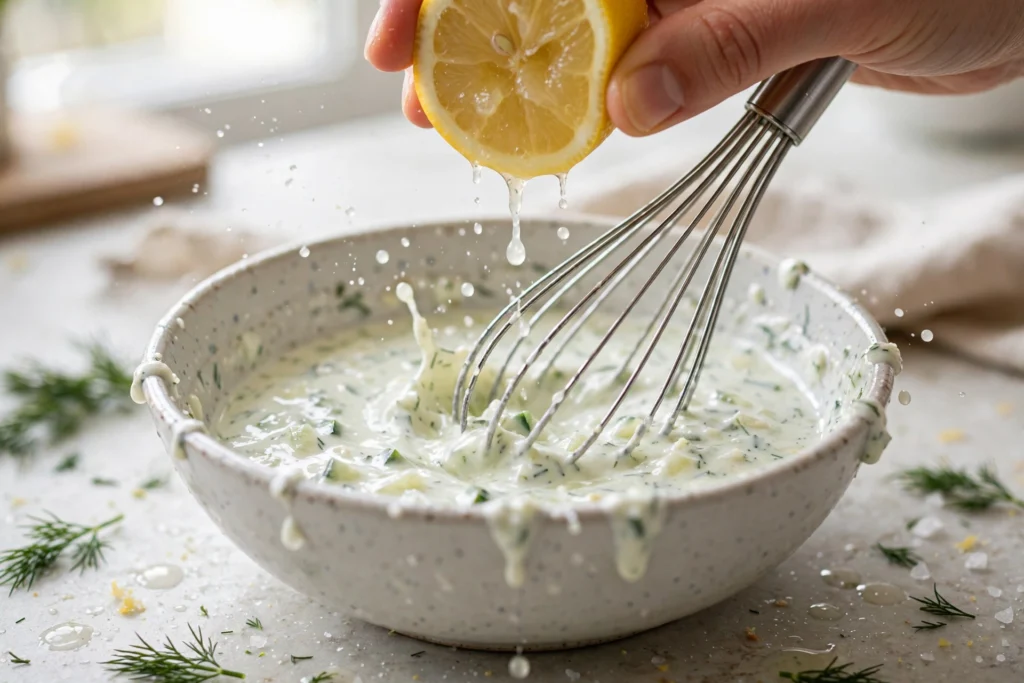
Step 4 — Add cucumber and herbs. Stir in the minced cucumber, dill, and black pepper. Switch from whisk to spoon here — you want to fold, not whip air in. Air bubbles in a sauce create an unpleasant foamy texture and can cause separation during storage. Gentle folding distributes everything evenly without aerating.
Step 5 — Thin to sauce consistency. Now the crucial part: add cold water one tablespoon at a time, stirring after each, until the sauce pours in a slow, thick ribbon off the spoon. For me that’s usually 3 tablespoons, but yogurt thickness varies — trust the ribbon test, not the measurement. The ribbon test: lift your spoon and let the sauce fall back into the bowl. It should flow in a continuous, lazy ribbon that holds its shape briefly before melting back in. If it plops off in blobs, add more water. If it runs like milk, you’ve gone too far (fix by whisking in more yogurt). Taste and adjust salt, lemon, and garlic. Remember that cold dulls flavor, so season slightly more aggressively than you think necessary — it’ll taste perfect after chilling.
Step 6 — Rest and serve. Cover and chill at least 20 minutes (an hour is better). The garlic will bloom and the flavors will settle — this resting period is when the sauce transforms from a collection of ingredients into a unified whole. The garlic mellows, the dill infuses, the salt distributes. Stir or shake before serving — and drizzle generously. This sauce is not for timid portions.
Also Read : Tacos Al Pastor Recipe (Smoky, Juicy & Better Than Takeout)
Troubleshooting Common Issues
Sauce too thick: Add cold water, one teaspoon at a time. It’s easier to thin than to thicken, so always err on the thick side initially. Sauce too thin: Whisk in more thick Greek yogurt, one tablespoon at a time. If you’ve added too much water, the yogurt will rescue it. Sauce tastes flat: Needs salt, lemon, or both. Cold mutes flavor, so be bold. Add salt in small increments, tasting after each. Garlic too strong: The garlic will mellow with resting time. If it’s still too intense after an hour, stir in an extra spoonful of yogurt to dilute. Next time, use one clove or blanch the garlic first. Sauce separated: This happens if the yogurt was low-quality or if water was added too quickly. Whisk vigorously to re-emulsify; a squeeze of lemon helps stabilize. Cucumber pieces too prominent: You didn’t grate fine enough or chop after squeezing. Next time, use the finest grater holes and mince after squeezing.
My Best Tips for Perfect Tzatziki Sauce
The ribbon test never lies. Forget measurements for the water — different yogurts have different starting thicknesses. You’re looking for a sauce that falls off a spoon in a slow, continuous ribbon. Too thick and it dollops; too thin and it runs. Ribbon is the zone.
Grate cucumber fine, not coarse. The dip uses large shreds for texture. The sauce wants near-invisible cucumber — fine holes, then a chop. You should taste cucumber, not chew it.
Cold water, not room temperature. Ice-cold water incorporates more smoothly and keeps the sauce fresh-tasting. I keep a small glass of ice water next to me when making it.
Salt in two stages. Salt the garlic paste at the start (it tames the raw bite), then salt again after thinning. Thinning dulls seasoning, so that second adjustment is essential.
Shake, don’t just stir, before serving. If you’ve stored it in a jar, a good shake re-emulsifies everything beautifully. This is why the mason jar matters.
Double it. I know the recipe makes about 2 cups, and I know you’ll wish you’d made 4. It keeps 5 days. Just double it.
Taste at serving temperature. Always do your final seasoning adjustment after the sauce has chilled, not before. What tastes perfectly seasoned at room temperature will taste under-seasoned cold.
Use the sauce within 5 days for best flavor. It’s safe beyond that, but the garlic intensifies and the fresh flavors fade. Make smaller batches more often rather than one giant batch.
Delicious Variations to Try
Spicy tzatziki sauce: Whisk in 1 teaspoon of harissa paste or a pinch of cayenne. Incredible on falafel and grilled chicken. The heat builds slowly against the cool yogurt — it’s addictive. Start with less; you can always add more.
Mint tzatziki sauce: Swap dill for fresh mint — brighter, more cooling, amazing with lamb. Mint is actually the more traditional herb in some parts of Greece. Use the same amount, chopped just as fine.
Herby green sauce: Add 2 tablespoons each of chopped parsley and mint plus the dill. It turns a deeper green and tastes like a Greek garden. This version is particularly good as a salad dressing.
Feta-whipped version: Blend ¼ cup of crumbled feta into the yogurt before adding anything else. Saltier, tangier, utterly addictive on burgers. Reduce the added salt to ½ teaspoon since the feta brings its own. Use a blender or food processor for the smoothest result.
Dairy-free: Thick coconut yogurt works — the sauce will be slightly sweeter, so add an extra squeeze of lemon to balance. Look for coconut yogurt with minimal additives. Soy-based Greek-style yogurt is another option with a more neutral flavor.
Tahini twist: Whisk in 1 tablespoon of tahini for a nuttier, richer sauce that’s phenomenal on roasted cauliflower. The tahini adds body, so you may need an extra tablespoon of water. This bridges Greek and Middle Eastern flavors beautifully.
Avocado tzatziki: Blend in half a ripe avocado for an extra-creamy, richer sauce with a beautiful pale green color. Best eaten the same day — avocado oxidizes. A squeeze of extra lemon helps preserve the color.
Storing & Make-Ahead
Refrigerator: Keeps 5 days in a sealed jar. It may thicken slightly as it sits — a splash of cold water and a shake brings it right back. Store in the coldest part of your fridge (usually the back), not the door where temperatures fluctuate.
Freezer: Don’t freeze it. Yogurt sauces separate and turn grainy. It’s a 10-minute recipe — just make it fresh. If you’re tempted to batch-cook, the refrigerator life is generous enough that freezing is unnecessary.
Make-ahead: Ideal. Make it the night before; the flavor is better on day two as the garlic mellows and the herbs infuse. This is my standard move before any gathering involving grills or wraps. Just remember to shake well before serving and adjust seasoning if needed.
What to Serve with Tzatziki Sauce
Gyros and souvlaki wraps are the obvious home run — drizzle inside the wrap AND serve extra on the side. Beyond that: falafel (pita or plate), grilled chicken thighs, lamb kebabs, roasted potatoes, french fries (life-changing), grain bowls, burgers, grilled salmon, and chopped salads where it doubles as dressing.

Let’s expand on some less obvious pairings. Roasted vegetables: Cauliflower, Brussels sprouts, and sweet potatoes all benefit from the cool, tangy contrast. Grilled fish: Salmon, sea bass, or swordfish with tzatziki sauce is a Mediterranean classic. Spicy foods: Use it as a cooling element alongside anything with heat — it’s the Greek answer to raita. Breakfast: Drizzle over shakshuka or a vegetable frittata. Sandwiches: Replace mayo with tzatziki sauce on turkey, chicken, or veggie sandwiches. The protein boost is a bonus.
Yogurt Science: Why Strained Matters So Much
The single biggest variable in tzatziki sauce is your yogurt, and understanding why will improve not just this recipe but every yogurt-based sauce you ever make. It comes down to one thing: whey.
Regular yogurt is about 80% water (whey), with milk solids suspended in it. Greek yogurt is regular yogurt that has been strained — the whey is drained away, leaving a much higher concentration of milk solids. That’s why Greek yogurt is thick, high in protein, and tangy: you’re tasting concentrated yogurt, not diluted yogurt. For a sauce that needs to coat and cling, that concentration is everything.
What to buy: Look for “strained” on the label, and check the protein content — good Greek yogurt has 15-20g of protein per serving. That protein number is actually a proxy for how thoroughly it’s been strained. Avoid anything labeled “Greek-style,” which usually means thickeners (starch, gelatin, pectin) were added to regular yogurt instead of actually straining it. Those thickeners break down when you add lemon juice and water, giving you a sauce that thins unpredictably.
Full-fat vs. nonfat: Full-fat (5% or higher) makes a noticeably better sauce. The fat does three jobs: it carries flavor (many aromatic compounds are fat-soluble), it creates a richer mouthfeel, and it stabilizes the emulsion so the sauce doesn’t separate. Nonfat Greek yogurt works, but the sauce will taste sharper, feel thinner, and separate faster. If you’re watching fat, 2% is the best compromise.
The DIY strain: If you only have regular plain yogurt, you can strain it yourself. Line a fine-mesh sieve with cheesecloth or a clean kitchen towel, set it over a bowl, add the yogurt, cover, and refrigerate for 4-8 hours. You’ll lose about half the volume as whey (save it — it’s great in smoothies or bread dough). What remains is thick, tangy, and perfect for this sauce. This is also the traditional way — commercial Greek yogurt is just doing at scale what home cooks have done for centuries.
Why it matters for consistency: Starting with properly strained yogurt means you control the thinning. You add water deliberately, a tablespoon at a time, until you hit the ribbon stage. Starting with thin yogurt means you’re guessing — and you’ll almost always overshoot, ending up with a sauce that’s watery no matter what you do. The 10 minutes you spend choosing the right yogurt saves you from a disappointing sauce.
Also Read : Classic Paloma Recipe (Mexico’s Favorite Tequila Cocktail)
The 10-Minute Mezze Spread: Entertaining with Tzatziki Sauce
This sauce is the anchor of the easiest impressive spread you’ll ever put together. A mezze table looks abundant and generous, but it’s mostly assembly — no real cooking required beyond this sauce. Here’s the blueprint for 6-8 people.
The sauce (10 min): Make a double batch of tzatziki sauce. Put half in a wide, shallow bowl (wide shows off the drizzle-ability; drizzle with olive oil and dust with paprika for visual appeal). Keep the other half in a jar for refills — the bowl will empty faster than you expect.
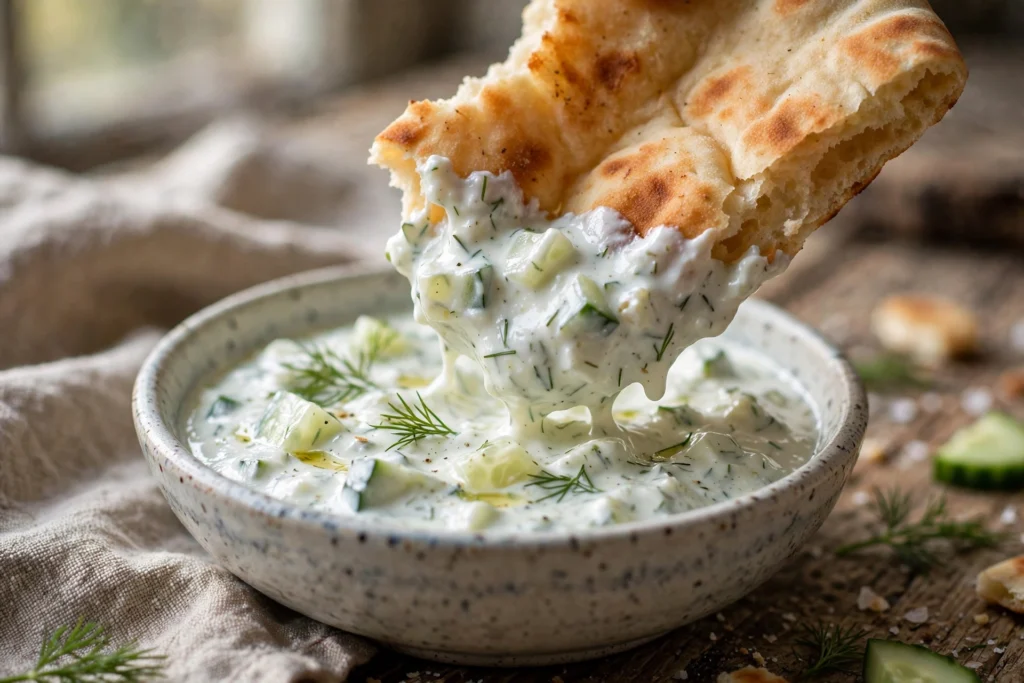
The breads (0 min, store-bought): Warm pita (the pocket kind, not the flat kind) — wrap in a clean towel and warm in a 300°F oven for 10 minutes. Add a bag of pita chips for crunch. The warm/cold contrast between the pita and the sauce is part of the pleasure.
The vegetables (10 min chopping): Cucumber spears, cherry tomatoes, bell pepper strips, radishes, and carrots. Cut them into dippable shapes — spears and thick strips, not fiddly little pieces. Arrange by color on a platter; it takes 2 minutes and looks like you tried much harder than you did.
The proteins (15 min or store-bought): This is where you choose your effort level. Easiest: good store-bought hummus, a wedge of feta, and some cured olives. One step up: quickly sear some halloumi (2 min per side in a hot dry pan until golden). Full effort: make the chicken souvlaki skewers — but honestly, the spread works beautifully without them.
The extras: A small bowl of good olive oil for drizzling, lemon wedges, a dish of mixed olives, and some pickled turnips or peppers if you can find them. Fresh dill sprigs scattered over everything make it look like a Greek taverna table.
Timing: Make the sauce first (it benefits from the rest). While it chills, chop vegetables and warm the pita. Assemble everything at the last minute. Total active time: 25 minutes. Perceived effort by your guests: enormous. That’s the magic of mezze — maximum hospitality, minimum stress.
Sauce Troubleshooting Lab: Diagnosing Texture Problems
Even with a good recipe, sauces can misbehave. Here’s a systematic guide to diagnosing and fixing the most common tzatziki sauce problems, so you can rescue a batch instead of starting over.
Problem: Grainy or curdled texture. This happens when the yogurt’s proteins tighten up — usually from too much acid added too quickly, or from using a yogurt with stabilizers that break under acid. Fix: whisk in a tablespoon of cold water vigorously; the mechanical action can sometimes smooth it out. Prevention: add lemon juice gradually, and use real strained yogurt without added thickeners. If it’s severely curdled, the batch is a loss — but it’s still fine as a marinade for chicken, where texture doesn’t matter.
Problem: Sauce separates after a day in the fridge. Some separation is normal — the whey that remains in even good Greek yogurt will weep out slowly. A quick shake or stir re-emulsifies it. But if it’s separating badly, your yogurt wasn’t strained enough, or you over-thinned it. Fix: whisk in a spoonful of thick Greek yogurt to re-thicken. Prevention: start with the thickest yogurt you can find, and thin conservatively — you can always add more water, but you can’t take it away.
Problem: Tastes flat despite correct seasoning. Cold mutes flavor — this is a physiological fact, not a recipe failure. A sauce that tastes perfectly seasoned at room temperature will taste under-seasoned straight from the fridge. Always do your final taste adjustment after chilling, not before. And when adjusting, remember the hierarchy: salt first (it amplifies everything), then lemon (brightness), then garlic (punch). Adjust one at a time, tasting between each.
Problem: Garlic flavor is harsh or bitter. This usually means the garlic was minced rather than grated to a paste, leaving chunks that release harsh compounds, or that the garlic is old (sprouted garlic turns bitter). Fix: for the current batch, stir in an extra spoonful of yogurt to dilute, and let it rest — time mellows raw garlic significantly. Prevention: always grate on a microplane to a true paste, use fresh firm cloves, and remove any green sprout from the center.
Problem: Cucumber makes the sauce watery over time. Even squeezed cucumber continues to release water slowly. If you’re making the sauce more than a few hours ahead, this can be an issue. Fix: salt the grated cucumber and let it drain in a sieve for 15 minutes before squeezing — the salt draws out water through osmosis much more effectively than squeezing alone. For maximum insurance, you can also pat the squeezed cucumber dry with paper towels.
Scaling for Parties: How Much Sauce Do You Actually Need?
One of the most common questions about this sauce is how much to make for a gathering. Here’s the practical math, based on real party experience.
The base recipe makes about 2 cups, which serves 8-10 people as part of a spread (where it’s one of several dips), or 4-6 people if it’s the primary sauce for gyros or wraps. People consistently underestimate how fast tzatziki sauce disappears — it’s the thing guests keep going back to.
For a party of 15-20: Triple the recipe (6 cups). This sounds like a lot, but between dipping, drizzling, and people “just having a little more,” it goes fast. Make it the day before — the flavor is better on day two, and it’s one less thing to do on party day. Store in two separate jars so you can put out a fresh one when the first runs low (a half-empty jar looks sad; a full fresh jar looks generous).
For gyros night (6-8 people): Double the recipe. Each gyro takes about 3-4 tablespoons of sauce (one generous drizzle inside, plus extra on the side for dipping). That’s roughly 1/4 cup per person, so 8 people need 2 cups minimum — and you’ll want extra because someone always wants more.
Don’t scale the salt linearly. When doubling or tripling, add about 75% of the scaled salt first, then taste and adjust. Salt perception doesn’t scale perfectly, and it’s easy to overshoot in a large batch. You can always add more; you can’t take it away.
Must Read : Chicken Tinga Recipe (Smoky, Saucy & Weeknight-Fast)
Final Thoughts
There’s a special satisfaction in a sauce that does exactly what it’s supposed to do. Not too thick, not too thin. Bright but not sharp. Present in every bite but never overwhelming. That’s what this tzatziki sauce is the quiet overachiever of the condiment world.
I think of it as the difference between a good gyro and a great one. The meat matters, the pita matters, but the sauce is what ties it all together the cool, creamy, garlicky ribbon that makes you close the takeout container and immediately start planning when you’ll have it again.
Make a jar. Keep it in the fridge. Put it on everything. You have my blessing.
Easy Tzatziki Sauce for Gyros & Wraps
Ingredients
Equipment
Method
- Grate the cucumber on the fine holes of a box grater; pile into a clean kitchen towel, twist and squeeze very dry, then chop the shreds until almost minced.
- Grate the garlic into a mixing bowl; add 1/4 tsp of the salt and mash into a smooth paste.
- Whisk the Greek yogurt until completely smooth, then whisk in the lemon juice and olive oil.
- Fold in the minced cucumber, dill, remaining salt and black pepper.
- Thin with ice-cold water, 1 tbsp at a time, until the sauce falls in a slow ribbon; adjust the seasoning.
- Cover and chill for at least 20 minutes; stir or shake well before serving.
Notes
Frequently Asked Questions
What is the difference between tzatziki dip and tzatziki sauce?
It comes down to thickness and intent. The classic dip is thick enough to stand a spoon in — made for scooping with pitta. This sauce is deliberately thinner and pourable, designed to drizzle over gyros, wraps and grilled meats so it coats every bite rather than sitting in a dollop.
My tzatziki sauce is too thin — how do I fix it?
It usually means too much water went in or the yogurt was too thin to start with. Whisk in more thick Greek yogurt, a spoonful at a time, until it falls in a slow ribbon again. Next time, add the ice-cold water one tablespoon at a time and stop as soon as it drizzles.
Can I make tzatziki sauce without cucumber?
You can, but it becomes a garlic-yogurt sauce rather than a true tzatziki — the cucumber’s fresh, cooling flavour is central to the recipe. If you must skip it, add an extra squeeze of lemon and a little more dill to keep it bright.
How long does homemade tzatziki sauce keep in the fridge?
Up to 5 days in a sealed jar. It may thicken slightly as it sits — just stir or shake well before serving and thin with a splash of ice-cold water if needed. The garlic flavour intensifies over time, so it is at its best in the first 2–3 days.
Can I use regular yogurt instead of Greek yogurt?
Only if you strain it first. Regular yogurt is about 80% water and will give you a watery sauce. Line a fine-mesh sieve with cheesecloth, strain the yogurt for at least 4 hours (or overnight), and you will get the thick base this recipe needs.
Is tzatziki sauce gluten-free?
Yes — this tzatziki sauce is naturally gluten-free, made from yogurt, cucumber, garlic, lemon, olive oil and herbs. Just check that your yogurt has no added thickeners or flavourings containing gluten.
How do I make vegan tzatziki sauce?
Swap the Greek yogurt for a thick, unsweetened coconut or soy yogurt. Coconut yogurt runs slightly sweeter, so add an extra squeeze of lemon to balance it. Everything else in the recipe stays the same.
My tzatziki sauce tastes too garlicky — how do I fix it?
Raw garlic intensifies over time, so this is common on day two. Next time, use just 1 clove, or blanch the grated garlic in boiling water for 30 seconds before adding it. To rescue the current batch, stir in extra yogurt and a squeeze of lemon.
Can I freeze tzatziki sauce?
I don’t recommend it. Yogurt sauces separate and turn grainy when frozen, even when thawed slowly. Since this recipe takes only 10 minutes, make it fresh — it keeps 5 days in the fridge.
What can I serve tzatziki sauce with besides gyros?
Lots. It’s wonderful on burgers, grilled fish, roasted vegetables, grain bowls and salads, drizzled into sandwiches, or simply as a cooling dip alongside spicy food.
Why is my tzatziki sauce lumpy?
Either the yogurt wasn’t whisked smooth before the other ingredients went in, or the cucumber wasn’t minced fine enough. Whisk the yogurt first until completely smooth, then fold in finely minced cucumber.
Can I skip the dill in tzatziki sauce?
Yes — the sauce works without it. For the closest traditional alternative, use fresh mint, which is the classic herb in some Greek regions; chopped parsley also works well.

Hi, I’m Angela. I cook the way busy people actually cook — simple, tasty food with ingredients you already have. On CookBookBite I share easy recipes, honest kitchen tips, and dishes my family asks for again and again.
Pingback: Grilled Flatbread Recipe (Soft, Charred & Easy)