
There was a restaurant in my old neighborhood — nothing fancy, just a little place with a chopped salad I thought about at weird hours. It wasn’t the vegetables I craved. It was the dressing: creamy, herby, tangy, with fresh dill and garlic that made every bite sing. I asked for the recipe approximately four times. They never gave it to me. So I spent two months reverse-engineering it in my kitchen, and this is the result.
This creamy herb salad dressing is the ranch-style dressing you wish the bottle was: real buttermilk tang, fresh herbs (not dried dust), actual garlic, and a lemony brightness that wakes everything up. It takes five minutes, keeps two weeks, and works on everything — salads, wings, veggie platters, sandwiches, pizza crusts (don’t judge).
Also Read : Easy No-Yeast Flatbread Recipe (Soft, Fluffy & 30 Minutes)
If you only make one creamy dressing from scratch, make it this one. It’s the bottle-killer.

Table of Contents
Why You’ll Love This Salad Dressing
First, it tastes fresh in a way bottled dressing can’t. Fresh dill, fresh chives, fresh parsley, real garlic — the flavors are vibrant and alive, not muted and preserved. One taste and the bottle tastes like a memory.
Second, it’s ridiculously easy. Whisk everything in one bowl, five minutes, done. No cooking, no blender required (though you can), no special skills.
Third, it’s versatile beyond salad. This is a dip, a sandwich spread, a wing sauce, a baked-potato topper, a burger sauce. One jar, a dozen uses. It earns its fridge space.
Finally, you control the ingredients. No MSG, no “natural flavors,” no preservatives, no ingredients list that reads like a chemistry exam. Just real food.
What Makes a Great Creamy Dressing?
Before we get into the recipe, it helps to understand what you’re building. A great creamy dressing is a balancing act between four things: richness (from the mayo and sour cream), tang (from the buttermilk and lemon), savoriness (from the garlic, salt, and Worcestershire), and freshness (from the herbs). When all four are in balance, you get that craveable quality — the reason you keep going back for “just one more bite” of salad.
Bottled dressings nail richness and shelf stability, but they sacrifice freshness and brightness. That’s the gap this recipe fills. Fresh herbs bring volatile aromatic compounds that start fading the moment they’re cut — which is exactly why a dressing made an hour ago tastes dramatically better than one made six months ago in a factory.
The other secret is salt. Creamy dressings need more salt than you’d expect, because fat mutes salt perception. If your homemade dressing tastes flat, it’s almost always under-salted. Season boldly, taste, and season again.
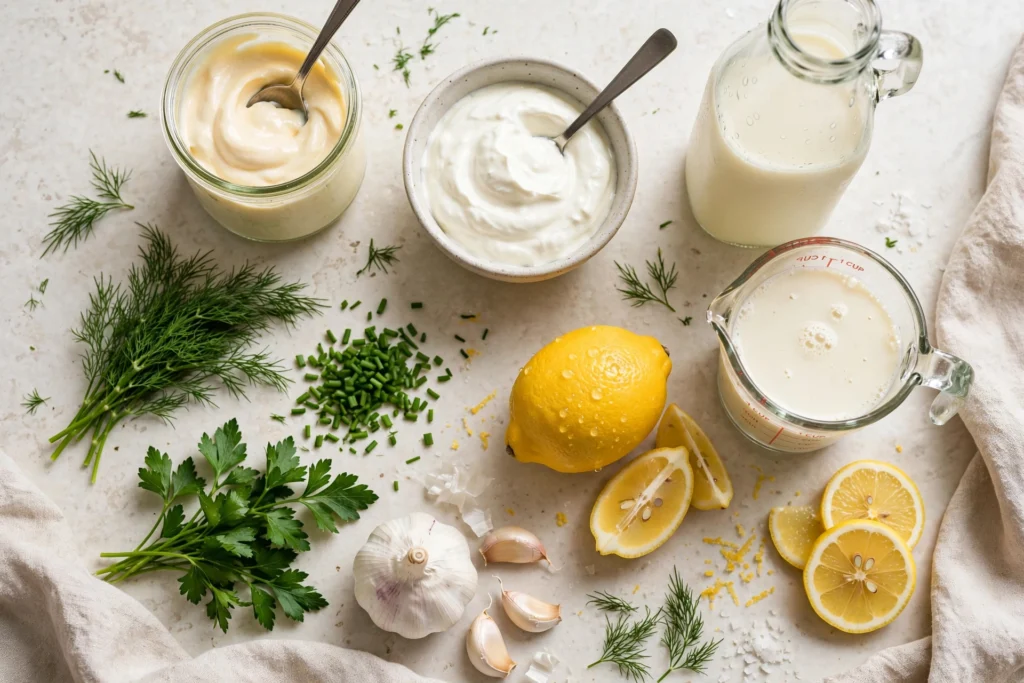
Ingredients for Creamy Herb Salad Dressing
Mayonnaise (¾ cup) — The creamy base. Use a good one (Duke’s or Hellmann’s) — it’s the backbone of the texture and flavor.
The mayo choice matters more than you’d think. Duke’s has no added sugar and a tangier profile; Hellmann’s (Best Foods west of the Rockies) is a touch sweeter and richer. Either works beautifully. What you want to avoid is “light” mayo or Miracle Whip here — light mayo has stabilizers that can make the dressing gummy, and Miracle Whip’s sweetness throws off the balance. Full-fat, real mayonnaise. This is not the place to cut corners.
Sour cream (¼ cup) — Adds tang and lightness. Full-fat for the best texture. The sour cream lightens the mayo’s richness and adds a cultured tang that plays beautifully with the buttermilk. If you’re out of sour cream, plain full-fat Greek yogurt is a fine substitute — slightly tangier, slightly less rich.
Buttermilk (½ cup, plus more to thin) — The signature tang and pourable consistency. Shake it well. No buttermilk? Milk + 1 tablespoon of lemon juice, rested 5 minutes.
Real cultured buttermilk is worth buying — it’s thicker and tangier than the quick substitute, and it makes a noticeable difference. That said, the milk-and-lemon trick works fine in a pinch. And here’s a pro tip: buttermilk freezes beautifully. Pour leftovers into ice cube trays, freeze, and bag the cubes. You’ll always have buttermilk for dressings, pancakes, and marinades.
Fresh dill (3 tablespoons, chopped) — The star herb. Fresh dill’s flavor is irreplaceable — feathery, bright, slightly anise. This is not the place for dried.
Dill is the soul of this dressing. Look for bunches with vibrant green, feathery fronds — avoid any that’s yellowing or slimy. To prep it, hold the bunch by the stems and snip the fronds with scissors directly into your measuring spoon. Don’t bother picking through for stems; the tender upper stems are fine to include. And use it fast — fresh dill wilts within days, even refrigerated. If your dill is looking tired, it’s better to make the dressing another day.
Fresh chives (3 tablespoons, chopped) — Gentle onion flavor without harshness. Snip with scissors for perfect pieces. Chives bring a delicate allium note that bridges the garlic and the herbs. If you can’t find chives, the green tops of scallions are a decent substitute — same snipping technique, slightly stronger flavor.
Fresh parsley (2 tablespoons, chopped) — Flat-leaf, for fresh green flavor and color. Always flat-leaf (Italian) parsley for this — curly parsley is tougher and less flavorful. Parsley is the background herb here; it adds fresh green notes and beautiful color without competing with the dill.
Garlic (2 cloves, grated) — Grated on a microplane so it melts into the dressing. Raw garlic is pungent — 2 cloves is the sweet spot.
Read Must: Crispy Potato Skins Recipe (Better Than the Restaurant)
Grating versus mincing matters enormously with raw garlic. Minced garlic leaves little chunks that hit you with harsh, raw bites. Grated garlic (use a microplane or the fine side of a box grater) turns into a paste that dissolves evenly throughout the dressing. You get garlic flavor in every bite without any unpleasant surprises. Two cloves is the sweet spot for most people — enough to be present, not enough to overwhelm. Garlic lovers can go to three.
Lemon juice (1 tablespoon, fresh) — Brightens everything and keeps the herbs’ color vivid. Always fresh-squeezed here — bottled lemon juice has a cooked, flat taste that has no place in a fresh-herb dressing. One tablespoon is about half a lemon. Roll the lemon firmly on the counter before cutting to maximize juice.
Worcestershire sauce (1 teaspoon) — The stealth umami. You won’t taste it directly, but you’ll miss it if it’s gone. This is the ingredient people can’t identify but always notice when it’s missing. It adds a savory depth that makes the dressing taste more complex than it is.
Salt (¾ teaspoon) + black pepper (½ teaspoon) — Season assertively. Creamy dressings need more salt than you think. Use fine sea salt or kosher salt (if using kosher, go with a full teaspoon — the crystals are larger). Freshly cracked black pepper beats pre-ground every time.
Onion powder (½ teaspoon) — Rounds out the allium flavor without raw-onion harshness. It fills in the background onion notes that the chives start, creating a fuller allium profile.
Equipment You’ll Need
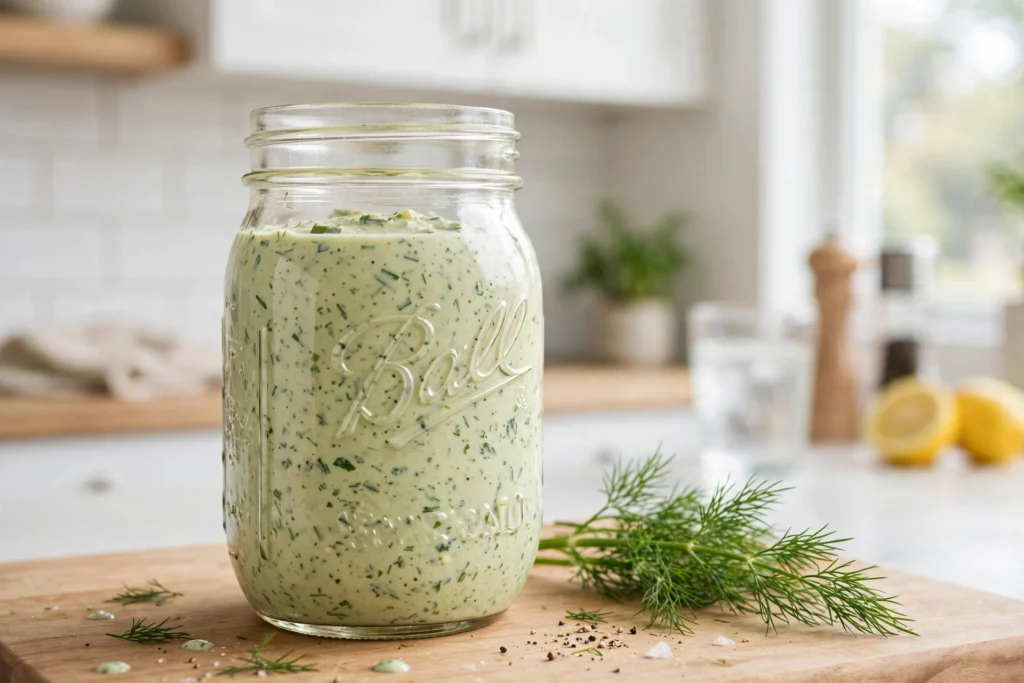
A medium bowl and a whisk. That’s it. (A mason jar works too — shake instead of whisk, store in the same jar.)
If you’re using the mason jar method (which I recommend — fewer dishes), use a wide-mouth pint jar. Add all ingredients, seal tightly, and shake vigorously for 30 seconds. The jar then goes straight into the fridge for storage. It’s the ultimate low-effort method.
How to Make Creamy Herb Salad Dressing (Step by Step)
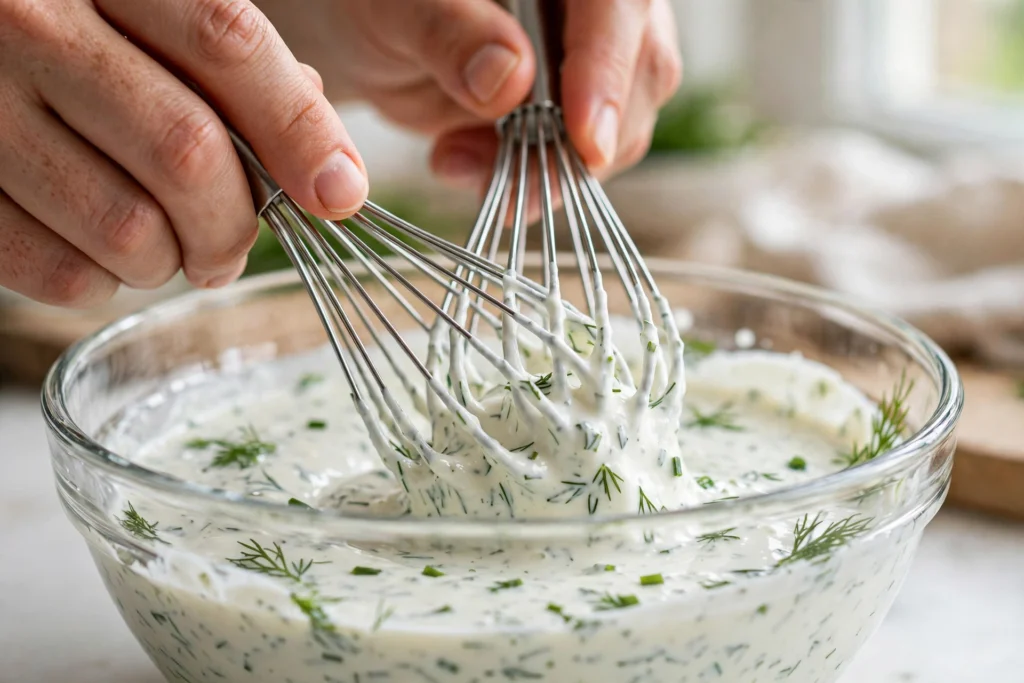
Step 1 — Whisk the creamy base. In your bowl, whisk together the mayonnaise, sour cream, and buttermilk until completely smooth. No lumps — take 30 seconds to get it silky.
This step sets the texture foundation. Take your time here — any lumps now will persist through the finished dressing. Whisk in a figure-eight motion rather than circles; it incorporates more efficiently. You’re looking for a completely smooth, pourable base with no streaks.
Step 2 — Add flavorings. Whisk in the grated garlic, lemon juice, Worcestershire, salt, pepper, and onion powder. Taste it now — it should be tangy, savory, and well-seasoned before the herbs go in.
Tasting at this stage is important. The base should taste bold and well-seasoned on its own — almost too salty, almost too tangy. The herbs will mellow it slightly, and chilling will mute flavors further. If it tastes perfectly balanced now, it’ll taste under-seasoned tomorrow. Push it a little.
Step 3 — Fold in the fresh herbs. Stir in the dill, chives, and parsley. Don’t whisk aggressively — you want to keep the herbs’ texture and color bright.
Switch from whisk to spoon or spatula here. Vigorous whisking bruises the herbs, turning them dark and releasing bitter compounds. Gentle folding keeps them vibrant green and fresh-tasting. You want to see distinct pieces of herb throughout — that’s the visual cue of a fresh dressing.
Step 4 — Adjust consistency. Want it thinner for drizzling? Add buttermilk a tablespoon at a time. Thicker for dipping? Leave it as-is or add a spoonful more mayo.
Think about how you’ll use it. Salad dressing should coat leaves lightly — it should drizzle off a spoon in a steady stream. Dip should be thick enough to cling to a carrot stick without dripping. Sandwich spread should be spreadable but not runny. Adjust to your primary use; you can always thin individual portions later.
Step 5 — Rest and chill. Refrigerate at least 30 minutes (2 hours is better). This rest is crucial — the garlic mellows, the herbs infuse, and the flavors marry. It tastes dramatically better after resting.
Don’t skip this. Freshly mixed, the raw garlic is sharp and aggressive, the flavors sit in separate layers. After resting, the garlic mellows into the background, the herbs release their oils into the creamy base, and everything becomes harmonious. Two hours is the sweet spot; overnight is even better.
Step 6 — Taste and serve. Give it a final stir and taste. More salt? More lemon? Adjust now. Then drizzle generously — this dressing deserves a heavy hand.
Cold mutes flavor, so always taste after chilling and adjust. This is also when you’ll notice if it needs more brightness (lemon) or more depth (salt). Trust your palate — if it makes you want to lick the spoon, it’s ready.
My Best Tips for the Best Dressing
Fresh herbs are the whole point. Dried herbs make a fine seasoning; they do not make this dressing. The fresh dill-chive-parsley trio is what separates homemade from bottled. Don’t substitute. If you can’t get fresh dill, wait until you can — it’s that important.
Grate the garlic. Minced garlic leaves harsh chunks; grated garlic (microplane) dissolves into the dressing for smooth, even flavor without biting into a raw piece. This single technique upgrade transforms the dressing.
Rest it — seriously. Freshly mixed, the garlic is sharp and the flavors are separate. After 2 hours chilled, it’s harmonious. This is the difference between good and great. Plan ahead — make it in the morning for dinner, or the night before for lunch.
Season in stages. Salt before the herbs, then taste after resting and adjust. Cold dulls flavor, so chilled dressing needs a touch more salt than you think. The two-stage approach ensures it’s right.
Thin with buttermilk, not water. Water dilutes flavor; buttermilk thins while adding tang. Always adjust consistency with buttermilk. This keeps the flavor intensity even as you adjust texture.
Make it your own. This is a template — once you know the base, riff freely (see variations). The mayo-sour cream-buttermilk foundation works with any herb and flavor direction. Learn the ratio, then play.
Chop herbs just before using. Cut herbs start losing their volatile aromatics immediately. Chop them right before they go into the bowl, not an hour ahead. The difference is noticeable.
Use a light hand with the lemon at first. You can always add more brightness, but too much lemon will curdle the dairy and make the dressing taste sour rather than fresh. Start with the tablespoon, taste after resting, then adjust.
The Herb Guide: Know Your Players
Dill is the lead singer — bright, slightly sweet, with an anise note that’s unmistakable. It’s what makes people say “what IS that flavor?” in the best way. There’s no substitute; dried dill is a different ingredient entirely.
Chives are the harmony — gentle onion flavor that adds depth without harshness. They bridge the gap between the sharp garlic and the fresh herbs. In a pinch, scallion greens work, but chives are milder and more refined.
Parsley is the rhythm section — not flashy, but the whole thing falls apart without it. Flat-leaf parsley adds fresh, green, slightly peppery notes and keeps the color vibrant. It’s the workhorse that lets the dill shine.
The ratio matters: more dill than the others (it’s the star), equal chives and parsley for support. If you love dill, push it to 4 tablespoons. If you’re dill-cautious, drop to 2 and bump the parsley. But don’t eliminate any of them — the trio is the formula.
Also Read : Braised Short Ribs Recipe (Fall-Off-the-Bone Tender)
Delicious Variations to Try
Classic ranch: Add 1 teaspoon of dried dill + ½ teaspoon each of dried parsley and garlic powder alongside the fresh herbs. The diner classic. The dried herbs add that familiar ranch depth while the fresh herbs keep it vibrant — best of both worlds.
Blue cheese: Stir in ½ cup of crumbled blue cheese. Chunky, pungent, perfect for wedge salads and wings. Use a creamy blue (like Gorgonzola dolce) for a milder version, or Roquefort for maximum punch.
Avocado ranch: Blend in 1 ripe avocado. Creamier, greener, richer — amazing as a dip. Use within 3 days (avocado oxidizes). A squeeze of extra lime helps slow the browning.
Chipotle ranch: Blend in 2 chipotles in adobo. Smoky, spicy, incredible on tacos and burrito bowls. Start with 1 chipotle and taste — they vary in heat.
Caesar-ish: Add 2 anchovy fillets (mashed), extra lemon, and ¼ cup of Parmesan. Not traditional Caesar, but delicious. The anchovies dissolve completely — no fishiness, just deep savory flavor.
Greek yogurt (lighter): Swap the mayo and sour cream for 1 cup of full-fat Greek yogurt. Tangier, lighter, still creamy. You’ll save significant calories without sacrificing much texture.
Honey mustard creamy: Add 3 tablespoons of Dijon and 2 tablespoons of honey. Sweet-tangy, kid-approved. Great on chicken sandwiches and as a pretzel dip.
Green goddess: Add a handful of fresh tarragon and a mashed anchovy fillet. The classic San Francisco dressing — herbal, complex, unforgettable on butter lettuce.

Troubleshooting: When Dressing Goes Wrong
Too thick? Thin with buttermilk, a tablespoon at a time. Different mayo brands have different consistencies, so this is normal. Don’t use water — it dilutes flavor.
Too thin? Whisk in more mayo, a tablespoon at a time. Or let it chill longer — it thickens slightly as it rests. If it’s still too thin, you may have added too much buttermilk; the mayo fix works.
Tastes flat? Almost always needs more salt. Add a quarter teaspoon, stir, taste. Repeat. Cold mutes flavor, so be bold. If salt doesn’t fix it, try more lemon juice for brightness.
Garlic too harsh? It needs more rest time. The harshness mellows significantly after 2 hours. If you’re in a hurry, a pinch of sugar helps tame raw garlic bite. Next time, use slightly less garlic or grate it finer.
Herbs turned dark? You whisked too aggressively or chopped them too far ahead. Next time, fold gently and chop just before using. The dressing still tastes fine — it’s just cosmetic.
Separated or curdled? Too much acid (lemon) added at once, or the dairy was too cold when mixed. Whisk in a spoonful of mayo to re-emulsify. To prevent: add lemon gradually and let dairy come to cool room temperature first.
Storing & Make-Ahead
Refrigerator: 2 weeks in a sealed jar. The flavor is best in the first week (fresh herbs fade gradually). After a week, it’s still good — just less vibrant. The garlic flavor actually intensifies slightly over time, so taste before serving leftovers.
Freezer: Don’t — dairy-based dressings separate when frozen and thawed. The emulsion breaks and you get a grainy, watery mess. This is a fresh-only dressing.
Make-ahead: Ideal — make it the night before you need it. The mandatory rest means it’s literally designed to be made ahead. In fact, it’s better on day 2 than day 1.
Food safety note: Because this contains fresh garlic in an oil-containing mixture stored in the fridge, use it within 2 weeks. Don’t leave it at room temperature for more than 2 hours. Standard homemade dressing rules.
What to Serve with This Dressing
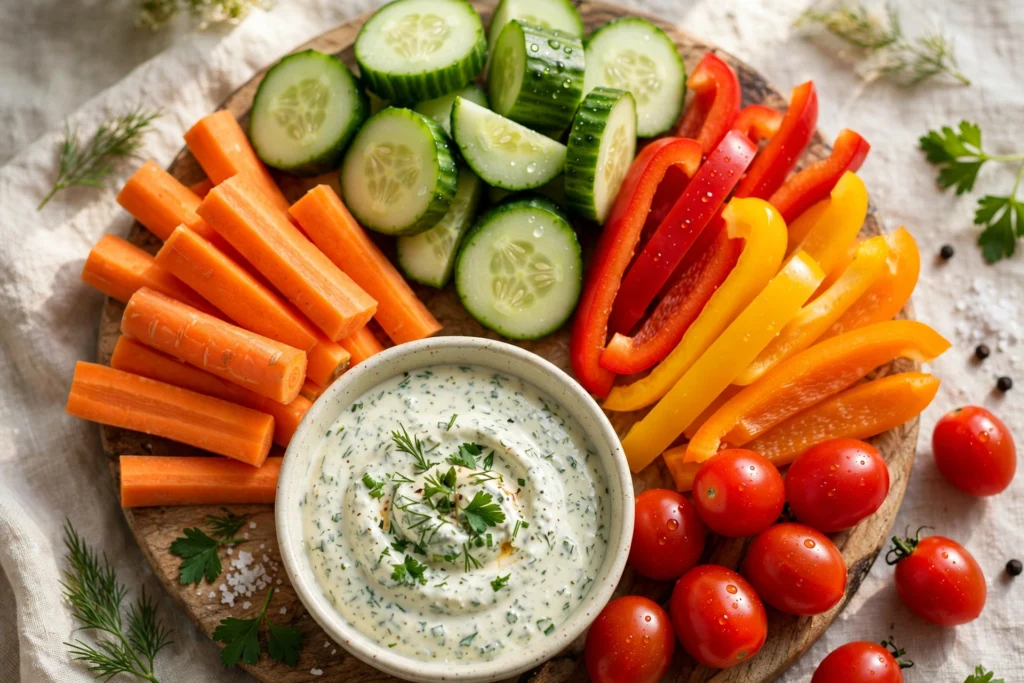
The obvious: green salads, chopped salads, wedge salads, Cobb salads. Beyond: buffalo wings (mandatory), crudité platters, baked potatoes, turkey sandwiches, burger sauce, pizza crust dip, grain bowls. My personal favorite: drizzled over a crispy chicken sandwich. Life-changing.
Let’s get specific about pairings. For a classic chopped salad, use it generously — the dressing is the star. For buffalo wings, serve it thick (don’t thin it) in a ramekin alongside celery and carrots. For sandwiches, spread it on both pieces of bread — it acts as a moisture barrier that keeps bread from getting soggy. For baked potatoes, a big dollop with extra chives on top beats sour cream alone.
Dressing Ratios: The Formula to Memorize
Once you understand the underlying ratio, you can create endless variations without a recipe. Here’s the master formula:
Also Read: Bechamel Sauce Recipe (Silky, Lump-Free & Foolproof)
3 parts creamy base : 2 parts buttermilk : 1 part fresh herbs
The creamy base is your mayo + sour cream (or Greek yogurt). The buttermilk provides tang and pourability. The fresh herbs provide the signature flavor. Within that framework, you can swap freely:
Want it richer? Shift to 4 parts creamy base. Want it lighter and tangier? Push the buttermilk to 3 parts. Want it herb-forward? Bump the herbs to 1.5 parts. The acid (lemon), salt, and aromatics (garlic) stay roughly constant — they’re the seasoning layer, not the structural layer.
Memorize this ratio and you’ll never need to look up a creamy dressing recipe again. It’s the kind of kitchen knowledge that compounds — every future dressing you invent will be better because you understand the architecture.
The Science of Emulsions: Why Creamy Dressings Work
Understanding what’s happening in that bowl will make you better at all creamy dressings, not just this one.
Mayonnaise is itself an emulsion — oil droplets suspended in water (from the egg yolk and vinegar), stabilized by lecithin from the egg yolk. When you whisk mayo with sour cream and buttermilk, you’re essentially diluting and extending that emulsion. The key is that all the components are already emulsified or water-compatible, so they combine smoothly.
The reason this dressing doesn’t separate (unlike vinaigrettes, which do) is the high proportion of emulsifiers to oil. Mayo brings lecithin; sour cream brings milk proteins; together they keep everything in a stable, creamy suspension. That’s why you can whisk it casually rather than drizzling oil drop by drop like you would for a from-scratch mayo.
Temperature affects emulsion stability. Cold ingredients emulsify more readily than warm ones (the fats are more solid and less likely to coalesce). That’s another reason to chill the dressing — it’s not just about flavor melding, it’s about texture setting. A dressing whisked with room-temperature ingredients may seem fine initially but can weep or separate after a day in the fridge.
If your dressing ever does break (looks curdled or separated), the fix is simple: whisk in a tablespoon of fresh mayo. The new emulsifiers will grab the separated components and pull everything back together. It’s the same rescue technique used for broken hollandaise.
Dressing for Every Salad: A Pairing Guide
Not all salads want the same dressing treatment. Here’s how to deploy this one.
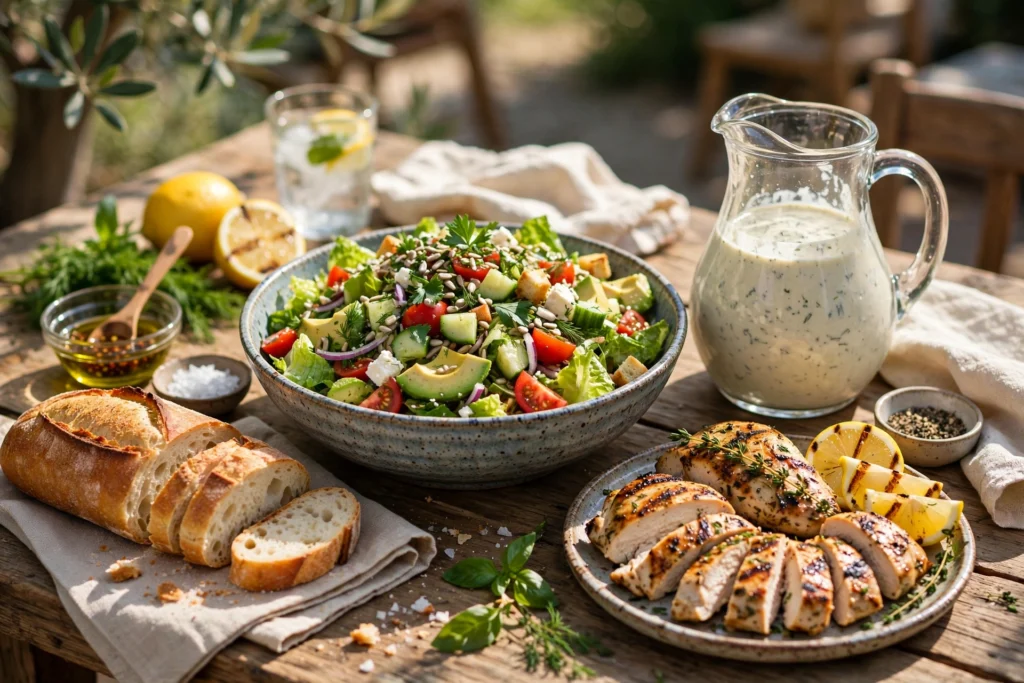
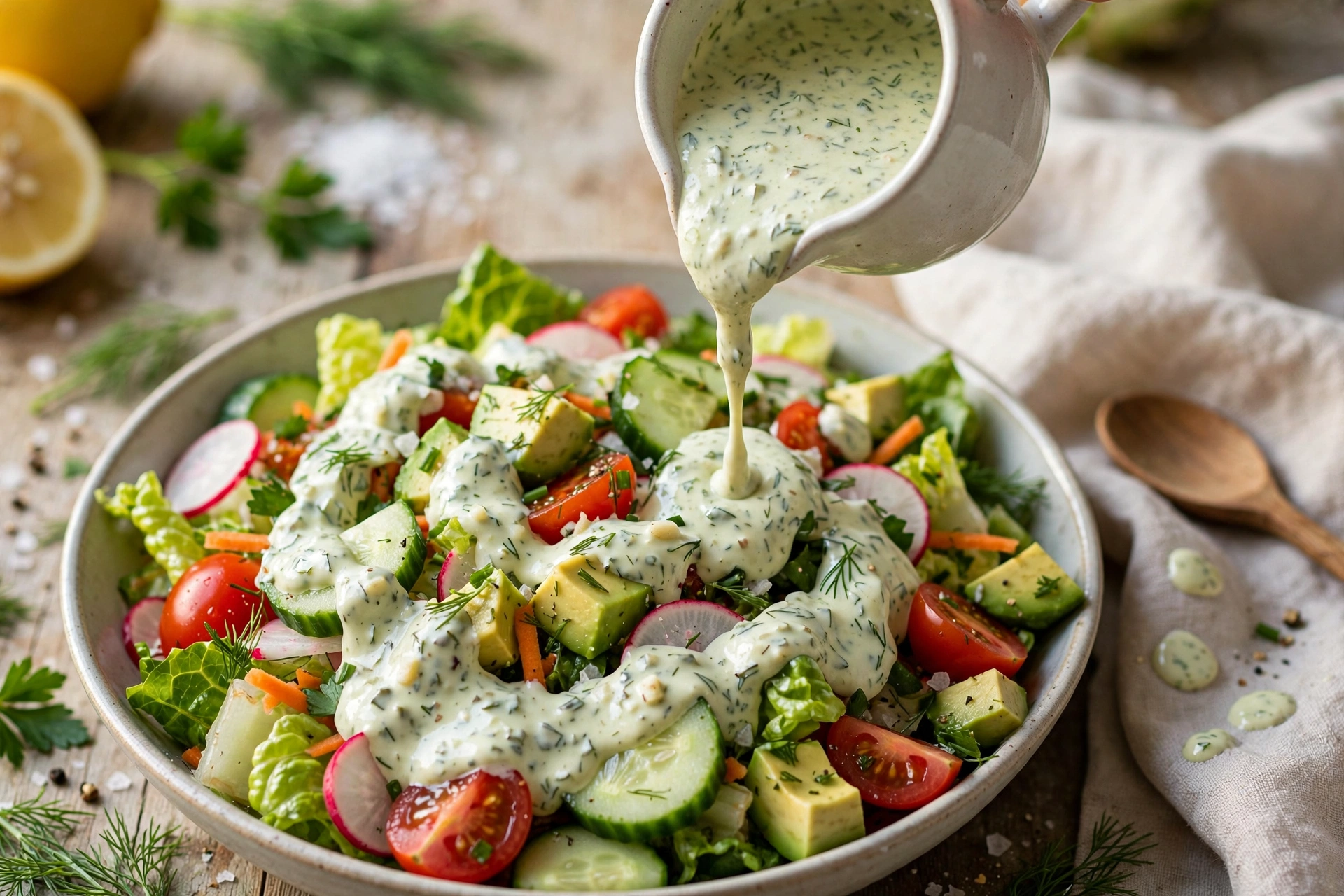
Chopped salads: This is the dressing’s natural habitat. The creamy, herby profile coats every piece evenly. Use generously — chopped salads can handle (and need) a heavy hand. The small pieces mean more surface area, which means more dressing required.
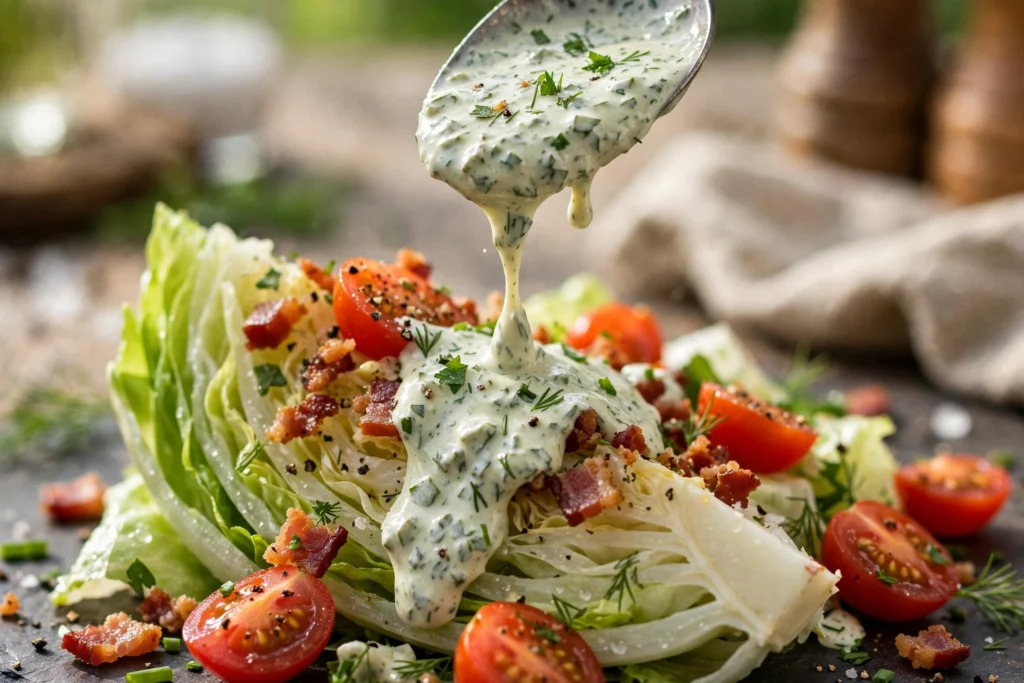
Wedge salads: The classic pairing. Drizzle over a cold iceberg wedge with bacon crumbles, cherry tomatoes, and blue cheese crumbles (or keep it simple). The cool crunch of iceberg against the creamy dressing is textural perfection.
Cobb salads: Works beautifully, though traditional Cobb uses vinaigrette. The creamy version is richer and more indulgent — try it once and you may never go back.
Green salads (mixed greens, romaine, butter lettuce): Use a lighter hand. Delicate greens get weighed down by too much creamy dressing. Drizzle, don’t drown. Toss gently to coat without bruising.
Grain bowls: Excellent as a finishing drizzle. The creamy-tangy profile brightens hearty grains (farro, quinoa, brown rice) and ties together disparate bowl components.
Pasta salad: Toss cold cooked pasta with this dressing instead of the usual mayo-only version. The herbs and tang elevate it significantly. Add extra dressing — pasta absorbs it as it sits.
Potato salad: Use as a partial mayo replacement. The buttermilk tang and fresh herbs transform standard potato salad into something memorable.
Scaling Up: Dressing for Crowds and Meal Prep
Doubling: This recipe doubles perfectly — just double everything. Use a large bowl or a half-gallon mason jar for mixing. The ratios scale linearly; no adjustments needed.
For a party (20+ servings): Triple the recipe. You’ll need a very large bowl. Mix the creamy base first (mayo, sour cream, buttermilk), then add seasonings, then fold in herbs. A triple batch fills about 6 cups — perfect for a big salad bar or wing platter.
Meal prep: Make a double batch on Sunday. Portion into small 2-ounce containers for lunch salads throughout the week. The dressing keeps 2 weeks, so Sunday prep covers two full work weeks of lunches.
What doesn’t scale: The garlic. When scaling up 3x or more, increase garlic slightly less than proportionally (2.5x instead of 3x). Raw garlic’s pungency compounds, and a triple batch with triple garlic can be overwhelming. Taste and adjust.
Dairy-Free and Lighter Variations in Depth
Fully dairy-free: Replace mayo with vegan mayo (same amount), sour cream with unsweetened coconut yogurt or cashew cream, and buttermilk with unsweetened oat milk + 1 tablespoon lemon juice. The result is surprisingly good — the herbs carry the flavor, and the creamy base is just a vehicle. Use full-fat coconut yogurt, not the thin kind.
Lighter (reduced calorie): Replace the mayo with ½ cup mayo + ¼ cup Greek yogurt, and use light sour cream. You’ll save about 30% of the calories with minimal flavor impact. Don’t go fully nonfat — the texture suffers too much.
High-protein: Replace both mayo and sour cream with 1 cup of full-fat Greek yogurt + 2 tablespoons of olive oil (for richness). The protein content roughly triples. The flavor is tangier and less rich, but still delicious — especially as a veggie dip.
Keto-friendly: The standard recipe is already keto-friendly (high fat, very low carb). Just ensure your mayo has no added sugar (Duke’s is ideal). The buttermilk has some carbs (about 12g per cup), so for strict keto, reduce buttermilk to ¼ cup and thin with water instead.
Dressing as Ingredient: Cooking With It
Beyond drizzling and dipping, this dressing works as a cooking ingredient.
Marinade: The buttermilk and acid tenderize chicken beautifully. Coat chicken breasts or thighs in the dressing, refrigerate 4–8 hours, then grill or bake. The herbs create a flavorful crust. Wipe off excess before cooking to prevent burning.
Casserole binder: Use in place of canned cream soup in casseroles. It adds flavor that condensed soup can’t match. Mix with shredded chicken, cooked pasta, and vegetables, top with breadcrumbs, bake.
Burger topping: Beyond a simple spread, mix it with caramelized onions for an next-level burger sauce. The sweetness of the onions against the tangy dressing is exceptional.
Deviled eggs: Replace half the mayo in your deviled egg filling with this dressing. The herbs add complexity that plain mayo can’t.
Read Also : Authentic Greek Salad Recipe (Horiatiki)
Herb Growing Guide for Dressing Makers
If you make this dressing regularly, growing your own herbs is a game-changer — fresher than store-bought, cheaper over time, and always available.
Dill: Grows easily from seed. Sow directly in a pot (it doesn’t transplant well). It likes full sun and consistent moisture. Harvest by snipping the feathery fronds; the plant will keep producing if you don’t take more than a third at once. Dill bolts (goes to seed) in heat — plant successive batches two weeks apart for continuous supply. One packet of seeds ($2) yields months of dill.
Chives: The easiest herb to grow. Buy a small plant (not seeds — they’re slow). It comes back year after year, even in cold climates. Snip with scissors; it regrows from the base. Divide the clump every 2–3 years. Practically indestructible.
Parsley: Biennial (lives two years). Start from plants, not seeds (seeds are painfully slow). Likes partial shade in hot climates. Harvest outer stems first. Flat-leaf is more cold-hardy than curly.
A small windowsill herb garden with these three plants costs under $15 to set up and provides fresh herbs for dressing all season. The flavor difference between just-picked and store-bought (which may be a week old) is noticeable.
Storing Fresh Herbs: Make Them Last
Fresh herbs are the soul of this dressing, so keeping them fresh matters. Dill is the most perishable — wrap the bunch loosely in a damp paper towel, place in a plastic bag, and refrigerate. Use within 3–4 days. Chives last longer — up to a week using the same method. Parsley is the hardiest — trim the stems, place in a jar of water like flowers, cover loosely with a plastic bag, and refrigerate. It’ll stay fresh for 1–2 weeks. Never store herbs in the crisper drawer loose — they’ll wilt faster. And don’t wash them until you’re ready to use them; moisture accelerates decay.
Quick Reference: Dressing at a Glance
Prep: 5 minutes active, 30 minutes minimum chilling (2 hours ideal). Yield: About 2 cups. Storage: 2 weeks refrigerated in sealed jar. Best uses: Salads, wings, veggie dip, sandwich spread, burger sauce. Key technique: Grate garlic, fold herbs gently, rest before serving. Remember: Fresh herbs are non-negotiable — they’re the entire point of this recipe.
Dressing Bottles: Decanting for Easy Use
Transfer your dressing to a squeeze bottle for easy drizzling. The kind with a narrow tip gives you control — thin lines for elegant plating, generous squeezes for hearty salads. Squeeze bottles also prevent the “glug” problem of pouring from a jar (too much at once). Keep one in the fridge door for daily use and the mason jar for storage. Label the squeeze bottle with the date. It’s a small upgrade that makes the dressing feel professional.
Final Thoughts
I never did get that restaurant’s recipe. But honestly? I don’t need it anymore. Two months of tinkering gave me something better — a dressing I understand completely, that I can adjust on the fly, that tastes like fresh herbs and real ingredients because that’s what’s in it.
That’s the real lesson of homemade dressing: it’s not just about taste (though the taste is the point). It’s about knowing. Knowing what’s in your food, knowing you can make it again anytime, knowing the bottle in your fridge door is obsolete.
So whisk up a jar. Put it on everything. And the next time a restaurant won’t share their dressing recipe — smile, go home, and make a better one.
Creamy Herb Salad Dressing
Ingredients
Equipment
Method
- In a medium bowl, whisk the mayonnaise, sour cream and buttermilk together until completely smooth and no lumps remain.
- Whisk in the grated garlic, lemon juice, Worcestershire sauce, salt, black pepper and onion powder until evenly combined. Taste and adjust the seasoning.
- Fold in the chopped dill, chives and parsley, stirring gently so the herbs stay bright and intact.
- Thin with a little more buttermilk, a tablespoon at a time, until it drizzles the way you like.
- Refrigerate for at least 30 minutes — 2 hours is better — so the garlic mellows and the flavours meld. Stir once more before serving.
Notes
Frequently Asked Questions
How long does homemade creamy herb salad dressing last?
Up to 2 weeks in a sealed jar in the fridge. The fresh garlic in an oil-containing mixture sets the limit, so do not keep it any longer. The flavour is best in the first week, as fresh herbs fade gradually.
Can I use dried herbs instead of fresh?
You can in a pinch — use 1 teaspoon of dried herbs for each tablespoon of fresh — but this dressing is built around fresh dill, chives and parsley, and dried herbs will not taste anywhere near as good.
Can I make this dressing without mayonnaise?
Yes. Swap the mayonnaise and sour cream for 1 cup of full-fat Greek yoghurt plus 2 tablespoons of olive oil for richness. It will be tangier and lighter, but still creamy.
What is the best way to thin the dressing?
Buttermilk, a tablespoon at a time. Water dilutes the flavour, while buttermilk thins the dressing and adds tang at the same time.
Do I need a blender or food processor?
No. This is a whisk-only recipe — five minutes in one bowl. Over-blending bruises the herbs and turns them dark, so a whisk (or a shaken mason jar) is actually better.
How is this different from ranch dressing?
Classic ranch relies on dried herbs and packet flavour. This dressing uses fresh dill, chives and parsley with real grated garlic and lemon juice, so it tastes brighter and fresher.
How can I make a lighter version?
Replace half the mayonnaise with Greek yoghurt and use light sour cream. For a high-protein version, replace the mayonnaise and sour cream with 1 cup of Greek yoghurt plus 2 tablespoons of olive oil.
Why grate the garlic instead of mincing it?
Garlic grated on a microplane dissolves into the dressing, giving smooth garlic flavour in every spoonful. Minced garlic leaves harsh little chunks that hit all at once.
Can I add more herbs?
Yes. This recipe uses about ½ cup of chopped herbs in total, and up to ¾ cup works if you like it really herby. Keep dill as the star and the others in support.
What can I use instead of buttermilk?
Stir 1½ teaspoons of lemon juice or white vinegar into ½ cup of milk and leave it for 5 minutes. Real cultured buttermilk is thicker and tangier, so it is worth buying if you can.
Does the dressing taste better the next day?
Yes. It needs at least 30 minutes of chilling, and after a few hours or overnight the garlic mellows and the flavours meld. It is designed to be made the night before you need it.
Can I use this dressing as a chicken marinade?
Yes. The buttermilk and acid tenderise chicken beautifully. Coat chicken breasts or thighs, marinate for 4–8 hours in the fridge, then discard the used marinade.

Hi, I’m Angela. I cook the way busy people actually cook — simple, tasty food with ingredients you already have. On CookBookBite I share easy recipes, honest kitchen tips, and dishes my family asks for again and again.