
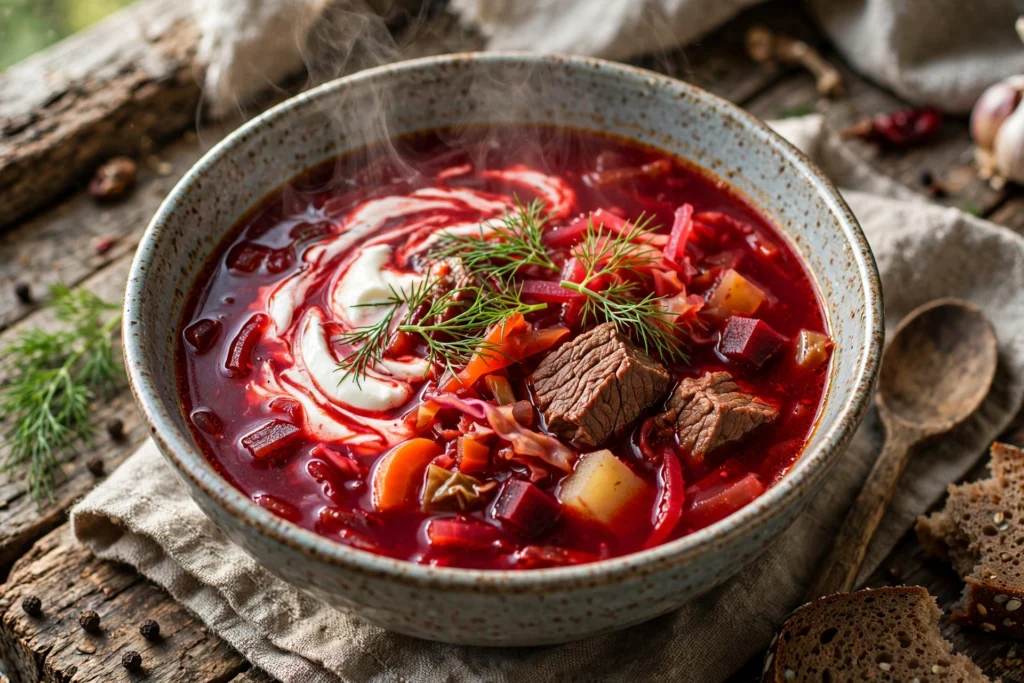
In Ukraine, they say every family has its own borscht recipe — and every family insists theirs is the right one. Real borscht isn’t thin, pink cafeteria soup. It’s a hearty, complex, soul-warming meal tender beef, sweet beets, cabbage, potatoes, and a broth so rich it coats your spoon.
The color alone stops you: that deep, jewel-like ruby that no other soup on earth has. Then the flavor sweet from the beets, tangy from a touch of vinegar, savory from slow-simmered beef, brightened with fresh dill and a swirl of sour cream. It’s sweet and sour and rich all at once, in perfect balance.
Also Read: Perfect Vinaigrette Recipe (The 3:1 Ratio That Never Fails)
Yes, it takes some time. But most of that is the pot doing the work while you do something else. And the reward is a soup that tastes like history — because it is. Let’s make it properly.
Why You’ll Love This Classic Borscht
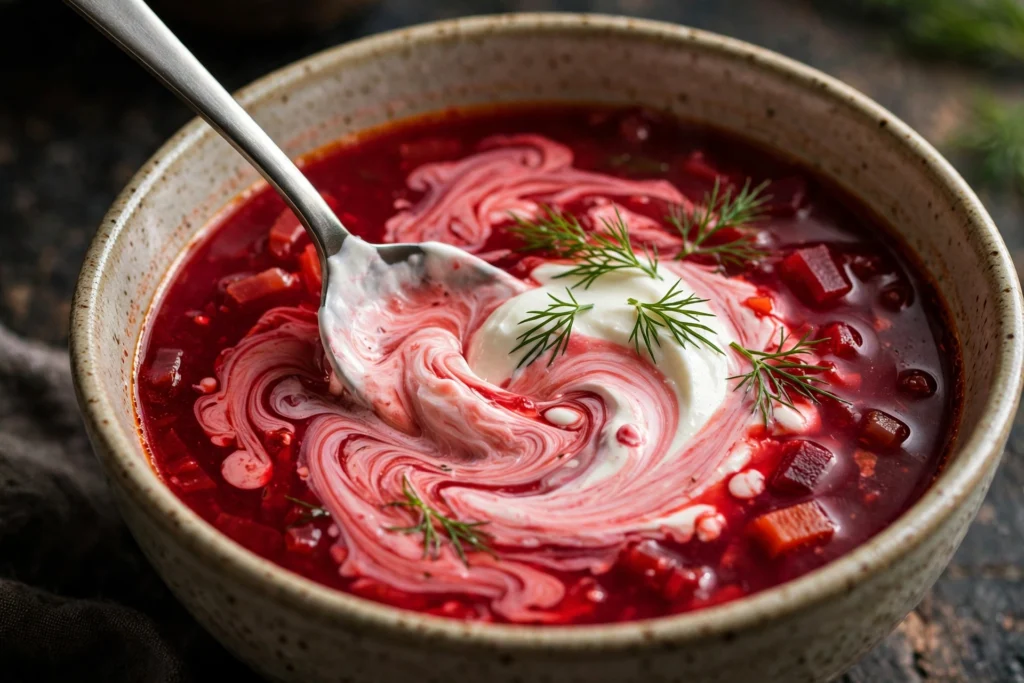
First, the flavor is extraordinary. This isn’t “beet soup” — it’s a layered, complex dish where sweet beets, savory beef, tangy vinegar, and fresh herbs create something greater than the sum of its parts. One spoonful and you’ll understand why it’s been beloved for centuries.
Second, it’s a complete meal in a bowl. Beef, potatoes, cabbage, carrots — protein, starch, vegetables, all in one pot. Serve with rye bread and dinner is done.
Third, it’s even better the next day. Like all great slow-simmered soups, borscht’s flavors meld and deepen overnight. Smart cooks always make extra on purpose.
Finally, it’s naturally nutritious. Beets, cabbage, carrots, potatoes — this is honest vegetable-forward cooking (with beef for richness). It’s the kind of food that makes you feel good after eating it.
Understanding Borscht: What Makes It Authentic
Before we cook, it helps to understand what borscht actually is — because the word gets thrown around for a lot of soups that aren’t really borscht. At its core, authentic Ukrainian borscht is defined by three things: beets (which give it the signature color and sweetness), a sour element (traditionally vinegar, sometimes fermented beet kvass or lemon), and a rich broth base. Everything else — the specific meat, the vegetables, the seasoning — varies by region and family.
The sour note is what separates borscht from just “beet soup.” Without that tang, you have a sweet vegetable soup. With it, you have the complex sweet-sour balance that makes borscht so distinctive. Traditional Ukrainian cooks often use a fermented beet kvass for this, but red wine vinegar is the practical home-kitchen substitute and works beautifully.
There’s also a long-running friendly debate about whether borscht should be thick or brothy. The honest answer: both are authentic. Some families make a hearty, almost stew-like borscht loaded with vegetables; others prefer a clearer broth where you can see the ingredients. This recipe lands in the middle — substantial enough to be a meal, brothy enough to appreciate the beautiful liquid. Adjust the vegetable quantities to push it in either direction.
One more thing worth knowing: borscht was recognized by UNESCO as part of Ukraine’s intangible cultural heritage. This isn’t just soup — it’s a dish people have strong feelings about, and those feelings are earned. When you make it well, you’re participating in something much older and bigger than a weeknight dinner.
Ingredients for Classic Borscht
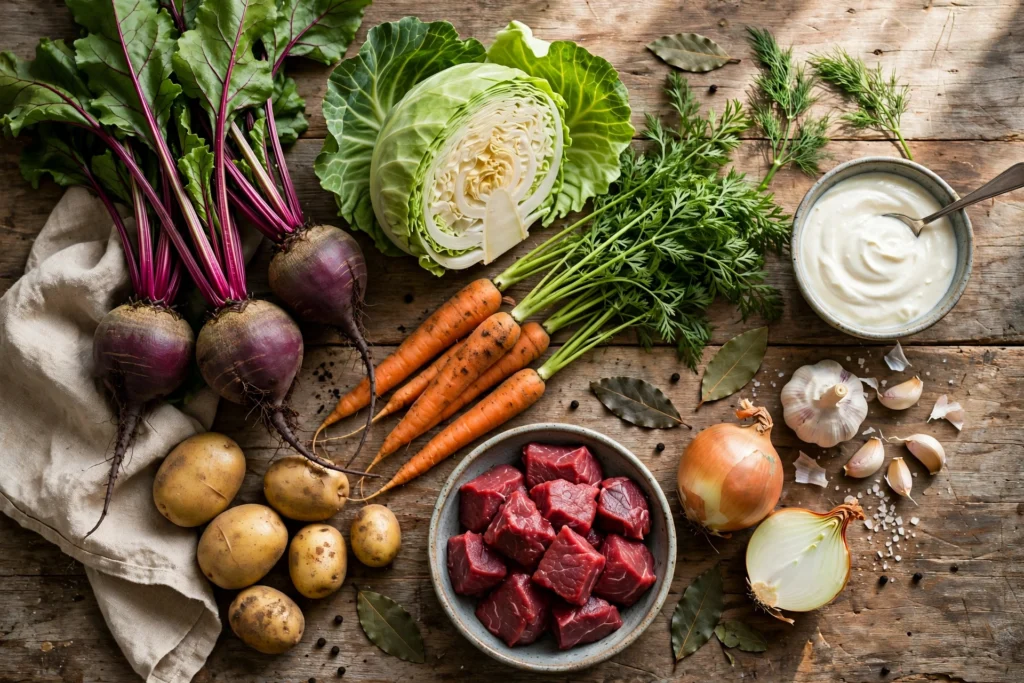
Beef (1½ lbs chuck or short ribs, bone-in preferred) — Bone-in gives the richest broth. The bones release gelatin and minerals during the long simmer, creating a broth with body that you simply can’t get from boneless meat. Chuck works beautifully and is usually more affordable than short ribs. If you can only find boneless chuck, that’s fine — just know the broth will be slightly less rich. The long simmer makes even tough cuts fork-tender, so don’t splurge on expensive steaks here; this is what chuck was born for.
Beets (3 large, about 1 lb) — The soul of borscht. Fresh, firm beets — not canned, not pre-cooked. Look for beets that feel heavy for their size with smooth, unblemished skin. Smaller beets tend to be sweeter and more tender than enormous ones. Their sweetness and that incredible color are irreplaceable. When you cut into a fresh beet, the flesh should be deeply colored throughout — pale rings or woody texture mean it’s past its prime. Store fresh beets in the fridge with the greens removed (the greens pull moisture from the root) and they’ll keep for weeks.
Cabbage (½ medium head, shredded) — Adds body and a gentle sweetness. Green cabbage is traditional. Shred it fairly thin — about ¼-inch strips — so it cooks through quickly and integrates into the soup rather than sitting in chunky pieces. The cabbage should be added late enough that it retains a slight bite; mushy cabbage is one of the most common borscht mistakes.
Potatoes (3 medium, diced) — Yukon Gold or russet. Yukon Golds hold their shape better and have a buttery flavor; russets break down more and thicken the broth slightly. Either works — it’s a texture preference. Dice them into roughly ¾-inch cubes so they cook through in the time given without disintegrating.
Carrots (2 large) + onion (1 large) — Grated carrot and diced onion, sautéed as the flavor base (the “zazharka”). The zazharka is a foundational technique in Ukrainian cooking — a sautéed mixture of vegetables (usually onion, carrot, and in this case beets) that forms the flavor backbone of the soup. Don’t rush this step; the caramelization that happens here adds depth you can’t get any other way.
Tomato paste (2 tablespoons) — Adds depth and a touch of acidity. Traditional in Ukrainian borscht. Cook it until it darkens from bright red to a deeper brick color — this caramelizes the sugars in the paste and removes the raw, tinny flavor. This one step makes a noticeable difference.
Garlic (4 cloves, minced) — Added near the end for fresh pungency. Garlic added early in a long simmer mellows into background sweetness; garlic added at the end keeps its sharp, fresh bite. Borscht wants that fresh bite, so it goes in during the last few minutes.
Beef broth (8 cups) + water — The cooking liquid. Homemade is ideal; good store-bought works. If using store-bought, choose low-sodium so you can control the salt level yourself. The broth from simmering the beef will also contribute, so you’re essentially making an enriched broth during step one.
Red wine vinegar (2 tablespoons) — The tang that balances the beets’ sweetness. Also helps preserve that gorgeous red color — acid stabilizes the betalain pigments that give beets their color. This is why vinegar goes in at two stages: once in the zazharka (to set the color early) and once at the end (for fresh brightness).
Sugar (1 teaspoon) — Just a touch to round out the flavors. This isn’t about making the soup sweet — the beets already do that. The sugar smooths the edges of the vinegar’s sharpness. Trust the balance.
Bay leaves (2) + black peppercorns (1 teaspoon) — Classic aromatics. The bay leaves infuse the broth during the long beef simmer; fish them out before serving (they’re unpleasant to bite into). Whole peppercorns give a rounder, less harsh pepper flavor than pre-ground.
Fresh dill (½ cup, chopped) — Non-negotiable. Dill is to borscht what basil is to tomato sauce. It needs to be fresh — dried dill is a completely different ingredient and won’t work here. Add half at the end of cooking (for depth) and half fresh at serving (for brightness). If your grocery store only has sad, wilted dill, it’s worth a trip to another store.
Sour cream (for serving) — The cool, tangy swirl that completes every bowl. Full-fat, please — low-fat sour cream is thinner and can curdle when it hits hot soup. Let it come to room temperature for a few minutes before serving so it swirls beautifully instead of seizing.
Salt — Season in layers, tasting as you go. This is critical for borscht because the beets’ sweetness can mask under-seasoning. If your borscht tastes flat or “just like beets,” it almost certainly needs more salt, not more of anything else.
Must Read : Chimichurri Sauce Recipe (Bright, Bold & 10 Minutes)
Equipment You’ll Need
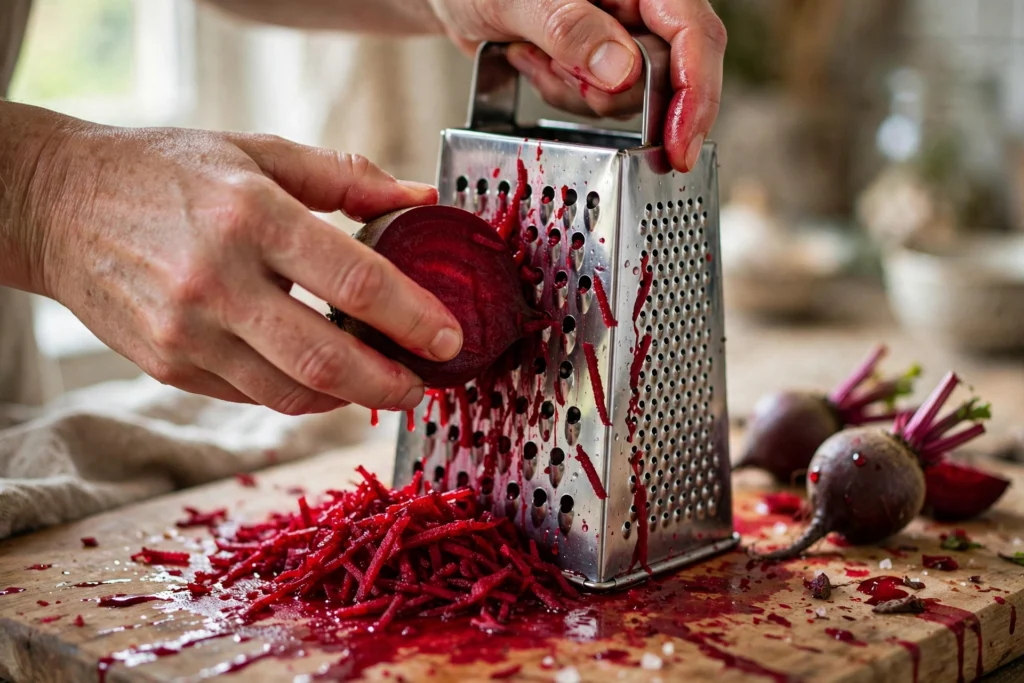
A large stockpot or Dutch oven (6–8 quart), a box grater for the beets and carrots, a skillet for the zazharka (vegetable sauté), and a ladle. An apron is strongly advised — beet juice stains everything it touches. A pair of disposable gloves will save your hands from looking like you’ve committed a crime for the next two days. If you don’t have a box grater, a food processor with the grating disc works, though hand-grating gives you better control over the texture.
How to Make This Classic Borscht Recipe (Step by Step)
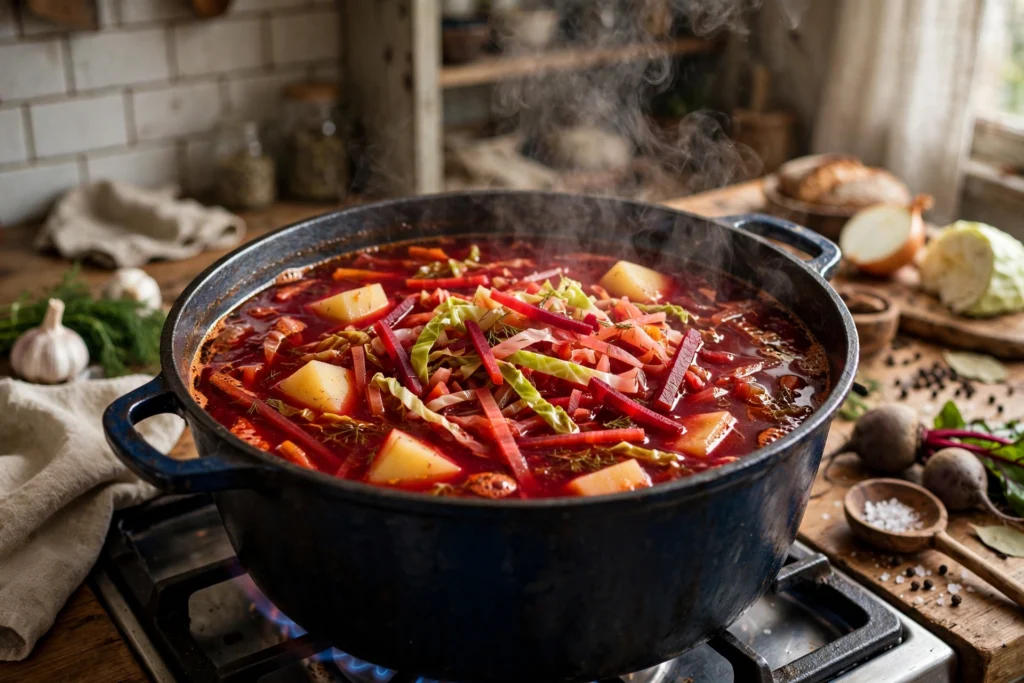
Step 1 — Simmer the beef. Place the beef in your stockpot with 8 cups of broth (add water to cover if needed), bay leaves, and peppercorns. Bring to a boil, then immediately reduce to a gentle simmer — you want lazy bubbles breaking the surface, not a rolling boil. A hard boil makes the broth cloudy and the meat tough. Skim the foam that rises in the first 10–15 minutes; this is coagulated protein, and removing it gives you a cleaner-tasting, clearer broth. Cook 1–1½ hours until the beef is tender enough to shred with a fork. Remove the beef to a plate; shred or cube it once it’s cool enough to handle. Strain the broth through a fine-mesh strainer if you like it clear (I do — it makes for a more elegant soup).
Step 2 — Prep the vegetables. While the beef simmers, peel and grate the beets and carrots on the large holes of a box grater. Grating (rather than dicing) is traditional and functional — it maximizes surface area so the beets release their color and sweetness quickly. Dice the onion, cut the potatoes into ¾-inch cubes, and shred the cabbage into thin strips. Mince the garlic. (Wear gloves for the beets unless you want pink hands for two days.) Having everything prepped before you start cooking — mise en place — makes the whole process smooth and stress-free.
Step 3 — Make the zazharka. In a skillet over medium heat with a generous glug of oil, sauté the onion until soft and translucent (about 5 minutes). Add the grated carrots and beets; cook 8–10 minutes, stirring occasionally, until softened and the beets have released their juices. The mixture should look jammy and deeply colored. Stir in the tomato paste and cook 2 minutes more, until it darkens. Splash in 1 tablespoon of the vinegar — it will sizzle dramatically and the color will intensify beautifully. This is the flavor heart of your borscht; don’t rush it.
Step 4 — Build the soup. Return the strained broth to a boil. Add the potatoes; cook 10 minutes until they’re just starting to soften. Add the cabbage; cook 5 minutes — you want it tender but not mushy. Stir in the zazharka and the shredded beef. The soup should now be that stunning ruby color. If it looks brownish, don’t panic — the vinegar and resting time will help, but this is also a sign the beets may have overcooked slightly.
Step 5 — Season and finish. Add the remaining tablespoon of vinegar, the sugar, and salt to taste. Start with 1½ teaspoons of salt, stir, wait a minute, and taste. Keep adding in small increments — you’d be surprised how much salt a big pot of borscht needs. Simmer 10 more minutes — no longer, or the beets lose their vibrant color and the soup turns muddy. Stir in half the dill and the minced garlic. Remove from heat immediately.
Step 6 — Rest and serve. Let the borscht rest at least 15 minutes off the heat (or longer — it’s genuinely better after an hour, and better still the next day). The resting allows the flavors to marry and the color to deepen. Ladle into warmed bowls, add a generous swirl of sour cream, and shower with the remaining fresh dill. Serve with dark rye bread on the side.
Troubleshooting: Common Borscht Problems and Fixes
Even experienced cooks run into borscht issues. Here’s how to fix the most common ones:
Problem: My borscht turned brown instead of red. This is the most common complaint, and it’s almost always about heat and timing. Beet pigment (betalain) breaks down with prolonged high heat. The fix is preventive: add the beet mixture late in the process, keep the final simmer gentle and brief (10 minutes max after the zazharka goes in), and make sure you’re using vinegar (acid protects the color). If it’s already brown, there’s no way to restore the red — but the flavor will still be good. Serve it proudly and adjust next time.
Problem: It tastes flat or one-dimensionally “beety.” This is a seasoning issue, not a beet issue. Add salt in small increments until the flavors pop — borscht needs assertive seasoning. Then check the acid: a squeeze of lemon or another teaspoon of vinegar can wake everything up. The sweet-sour-salty balance is the whole game.
Problem: Too sweet. Beets vary enormously in sugar content depending on variety, season, and freshness. If your borscht is cloyingly sweet, balance it with more vinegar (a teaspoon at a time) and salt. A dollop of extra sour cream at serving also helps cut sweetness.
Problem: Too sour. You may have been heavy-handed with the vinegar. Add a pinch more sugar and a bit more salt — salt suppresses sourness perception. A splash of broth to dilute can also help.
Problem: The beef is tough. It simply needs more time. Tough braised meat is always undercooked, never overcooked (within reason). Give it another 30–45 minutes at a gentle simmer. The collagen needs time to convert to gelatin — there’s no shortcut.
Problem: Greasy surface. Especially common with fattier cuts. Skim with a spoon, or chill the soup and lift off the solidified fat. A slice of bread dragged across the surface also absorbs surface fat effectively.
My Best Tips for Perfect Borscht
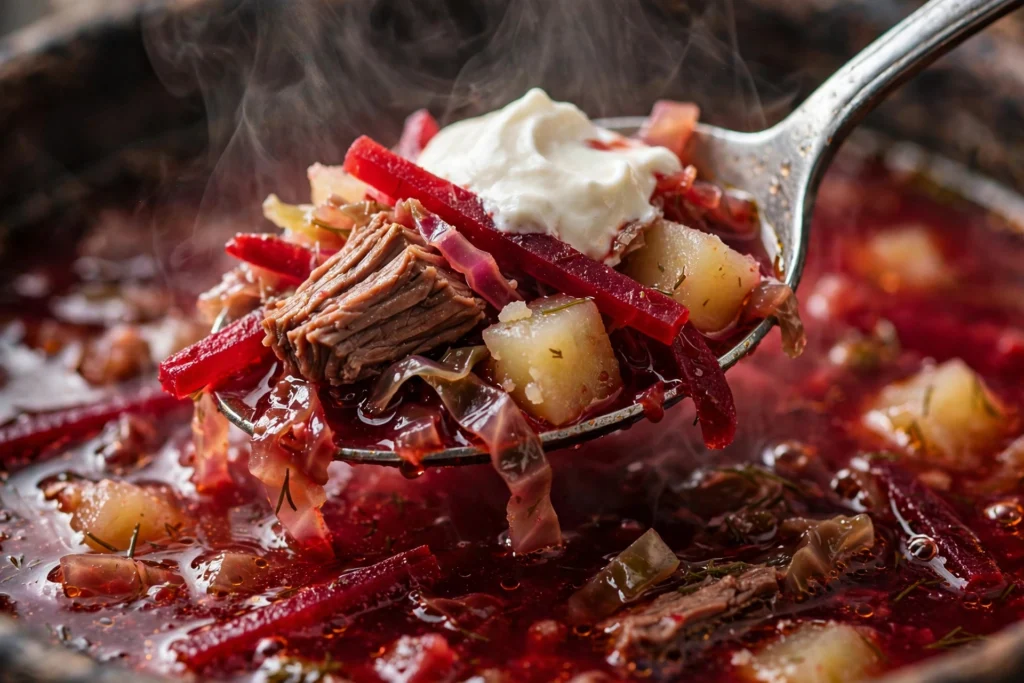
Don’t overcook the beets. This is the #1 rule. Beets added too early or simmered too long turn brown and muddy. The zazharka method (sautéing separately, adding late) preserves their jewel-red color and fresh sweetness. Once the beet mixture goes into the pot, you’re on a 10-minute clock.
Vinegar is your friend. Acid does two jobs: it balances the beets’ sweetness and locks in the red color. Add it in two stages (in the zazharka and at the end) for the brightest result. If you only remember one thing about borscht chemistry, make it this.
Skim the broth. That foam in step 1 is coagulated protein — skim it for a cleaner-tasting, clearer broth. It takes 2 minutes and makes a real difference. A cloudy broth isn’t a disaster, but a clear one is more refined.
Taste in layers. Salt at the beef stage, after the vegetables go in, and at the end. Borscht needs assertive seasoning — under-salted borscht tastes flat and beety instead of rich and complex. When you think you’ve added enough salt, taste again and you’ll probably add more.
Rest before serving. Borscht is genuinely better after resting — 30 minutes minimum, overnight ideally. The flavors marry, the color deepens, everything improves. If you can, make it a day ahead. Plan for it; it’s worth it.
Dill timing matters. Half the dill goes in at the end of cooking (for depth); the other half goes on fresh at serving (for brightness). Cooked dill and raw dill taste completely different, and borscht wants both dimensions.
Warm your bowls. A small detail that matters: ladling hot soup into cold bowls drops the temperature significantly. Run your bowls under hot water for a minute, dry them, then serve. Your borscht stays hot longer and the sour cream doesn’t seize.
Also Read : Sourdough Pizza Crust Recipe: Chewy, Blistered and Easy to Make at Home
Delicious Variations to Try
Vegetarian borscht: Skip the beef; use a rich mushroom or vegetable broth and add 8 oz of sliced mushrooms (browned first for depth). Add a can of white beans for protein and heartiness. Still deeply satisfying — the beets and zazharka carry the flavor.
Ukrainian green borscht: A spring version made with sorrel instead of beets — tangy, bright green, traditionally served with hard-boiled eggs and sour cream. Completely different soup, same soul. Sorrel can be hard to find; spinach with extra lemon is an approximation.
Cold borscht (šaltibarščiai): The Lithuanian chilled version — cooked beets, cucumbers, dill, scallions, and kefir or buttermilk. A completely different (and wonderful) summer soup. Shockingly pink, incredibly refreshing.
With white beans: Add a can of drained white beans with the potatoes for extra heartiness and protein. They absorb the broth beautifully.
Smoky version: Use smoked pork ribs or add a smoked ham hock instead of beef. The smoke against the sweet beets is incredible. Reduce the simmering time slightly since smoked meats are often already partially cooked.
Polish barszcz: The Polish cousin — typically clearer, often strained, sometimes served as a clear broth with uszka (tiny mushroom dumplings) on Christmas Eve. If you prefer an elegant clear soup, strain this recipe after cooking.
Meatless Monday: Make it with just the vegetables in vegetable broth, finished with a knob of butter stirred in at the end for richness. Simple, sweet, perfect.
Storing, Freezing & Reheating
Refrigerator: 5 days in sealed containers — and it improves every day. The flavor on day 2–3 is the peak borscht experience. The color may deepen to an even richer ruby. Store the sour cream separately and add fresh at serving.
Freezer: 3 months in freezer-safe containers, leaving headspace for expansion. Freeze without the sour cream and fresh dill (add both fresh when serving). The texture of the potatoes may soften slightly after freezing — still delicious, just slightly less firm. Thaw overnight in the fridge, never on the counter.
Reheating: Gently on the stovetop over medium-low heat. Don’t boil hard — you’ll dull the color and overcook the vegetables. Add fresh dill and a new swirl of sour cream after reheating. If reheating from frozen, thaw first for the best texture.
Meal prep strategy: Borscht is ideal for batch cooking. Make a double batch on Sunday; portion into containers for lunches all week. It reheats beautifully and the flavor keeps improving. This is one of the best soups for weekly meal prep.
What to Serve with Borscht
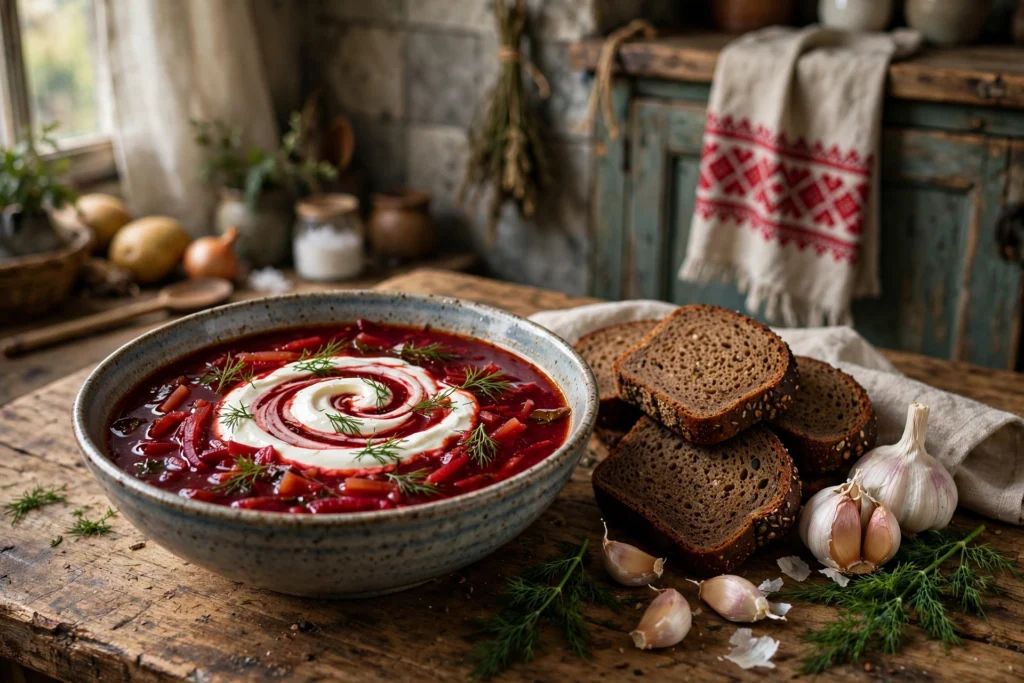
Dark rye bread is traditional and essential — for dunking, for scooping, for catching the sour cream that drips off your spoon. The slight sourness of rye echoes the soup’s tang perfectly. Also classic: boiled baby potatoes on the side (tossed with dill and butter), a plate of pickles (cucumbers, tomatoes, or sauerkraut), a slice of salo (cured pork fat) if you’re feeling authentic, or garlic rubbed on toasted bread. Pampushky — soft garlic bread rolls — are the ultimate pairing if you want to bake.
For a full Ukrainian dinner spread, start with a simple cucumber-dill salad, serve the borscht as the main, and finish with honey cake (medovik) or vareniki for dessert. A shot of horilka (Ukrainian vodka) alongside is traditional, though entirely optional.
Drinks: the richness of borscht pairs well with something crisp and acidic — a dry Riesling, a pilsner, or simply sparkling water with lemon. Avoid heavy red wines; they compete with the soup instead of complementing it.
A Brief History of Borscht: Why This Soup Matters
Borscht isn’t just a recipe — it’s one of the most culturally significant soups on earth, and understanding its history will change how you taste it. The word “borscht” comes from an ancient Slavic word for cow parsley (Heracleum), a wild plant whose sour stems were originally used to make the soup’s characteristic tang. The earliest borschts contained no beets at all.
Beets entered the picture gradually, and by the 18th century the ruby-red version we know today had become standard in Ukrainian cooking. The soup spread across Eastern Europe with shifting borders and migrations, and every region made it their own: Polish barszcz is often a clear, strained broth; Lithuanian šaltibarščiai is served cold with kefir; Russian versions tend to be meatier. But Ukraine is borscht’s spiritual home — in 2022, UNESCO inscribed Ukrainian borscht-making on its list of Intangible Cultural Heritage in Need of Urgent Safeguarding, recognizing it as a living cultural practice under threat.
What’s remarkable is how the soup encodes history in its ingredients. The zazharka technique (sautéing the vegetables separately) reflects a time when cooks maximized flavor from humble ingredients. The sour element — originally fermented beet kvass, now often vinegar — speaks to preservation traditions. The dill and sour cream are the flavors of the Ukrainian summer garden. When you make borscht, you’re not just following steps; you’re participating in a tradition that has fed families through wars, famines, and winters for centuries.
This doesn’t mean there’s one “correct” borscht. Ukrainian families debate endlessly about the right meat, the right sour, the right thickness — and they’re all right. The tradition is the debate itself, the passing down of a family’s version. So make this recipe, then make it yours. That’s how traditions stay alive.
Choosing Your Beets: A Buyer’s Guide
Since beets are the soul of borscht, choosing good ones matters more than any other shopping decision in this recipe. Here’s what to look for.
Size: Medium beets (about the size of a tennis ball) are ideal. Very large beets tend to be woody and less sweet — they’ve spent too long in the ground. Very small beets are fine but tedious to peel. If all you can find are large ones, they’ll still work; just taste for sweetness and adjust the sugar accordingly.
Firmness: Squeeze the beet gently. It should feel rock-hard, like a billiard ball. Any give or soft spots means it’s past its prime and may have an off, earthy-musty flavor. The skin should be smooth and taut, not wrinkled or shriveled.
Tops: If the greens are still attached, they should look fresh and vibrant, not wilted. Fresh tops are actually a great sign — they mean the beets were recently harvested. Bonus: beet greens are delicious sautéed with garlic, so don’t throw them away.
Color: Deep, even red-purple skin. Avoid beets with pale patches or excessive scarring, which can indicate inconsistent growing conditions.
What about golden or striped beets? They make delicious soup, but they won’t give you that signature ruby color — golden beets make a yellow-orange borscht, and Chioggia (striped) beets fade to a pale pink. If the color matters to you (and for borscht, it does), stick with classic red beets.
Storage: Cut off the greens (leaving an inch of stem), and store unwashed beets in the refrigerator’s crisper drawer for up to 3 weeks. Don’t wash them until you’re ready to use them — moisture encourages rot. Once peeled and grated, use them within a day for the brightest color and flavor.
Borscht for a Crowd: Scaling and Entertaining
Borscht is naturally a crowd-pleaser — it’s one of those dishes that scales beautifully, tastes better made ahead, and feeds a lot of people for very little money. Here’s how to do it for a gathering.
Scaling the recipe: This recipe doubles and triples cleanly. The only thing to watch is pot size — you need enough room for everything to simmer without crowding. For a double batch, use a 12-quart stockpot. For a triple batch, consider making it in two pots rather than one enormous one; overcrowding leads to uneven cooking and a muddier color. Cooking times stay roughly the same, though the initial beef simmer may need an extra 15-20 minutes for a very large batch.
The make-ahead advantage: Borscht is genuinely better on day two or three, which makes it the rare party dish that’s less stressful, not more. Make it up to 3 days ahead, refrigerate, and reheat gently on the day. In fact, tell your guests it’s day-two borscht — it’s a flex, not an apology.
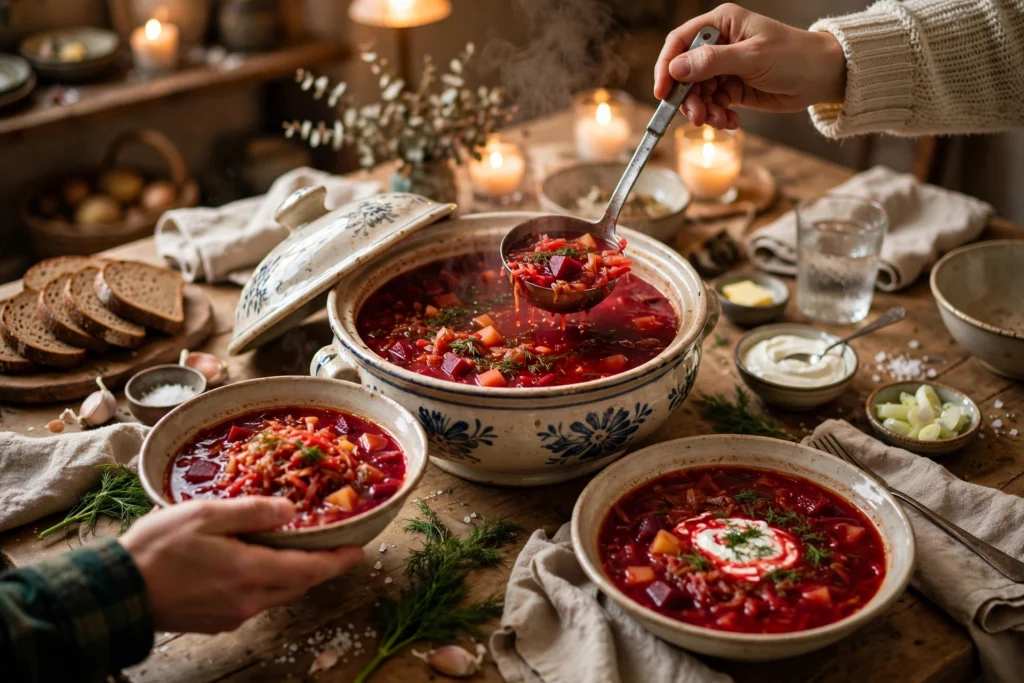
Serving setup: Set up a borscht bar. Keep the soup hot in the pot or a slow cooker on Warm, and put out the accompaniments separately: sour cream in a bowl with a spoon, fresh dill chopped in a small dish, extra vinegar for those who like it tangier, dark rye bread in a basket, and butter. Letting people customize their bowl is more fun and accommodates different tastes.
Portions: As a main course, plan on about 2 cups per person. This recipe (8 servings) needs roughly a gallon of soup for 8 hearty appetites. For a party of 12-16, double the recipe. The cost per serving is remarkably low — even with good beef, you’re looking at $3-4 per generous bowl.
What to serve before and after: Keep it simple and let the borscht shine. Start with a cucumber-dill salad or pickled vegetables. End with something sweet but not heavy — honey cake (medovik) is traditional, or a simple apple cake. The whole meal should feel rustic and generous, not fussy.
Also Read : Easy No-Yeast Flatbread Recipe (Soft, Fluffy & 30 Minutes)
Reader Questions Answered: Borscht Edition
After years of making borscht and answering questions about it, here are the things people ask most often — beyond the FAQ section — with the honest, detailed answers they deserve.
“Can I use the beet greens?” Absolutely, and you should. Beet greens are delicious — sauté them with garlic and olive oil as a side dish while the borscht simmers, or chop them finely and stir them into the soup during the last 5 minutes of cooking. They add a pleasant earthy bitterness that complements the sweet beets. Don’t waste them.
“My family doesn’t like beets. Can I still make this?” Honestly? The beets are non-negotiable for borscht — without them, it’s a different soup entirely. But here’s what I tell skeptics: borscht doesn’t taste like plain beets. The vinegar, the beef broth, the dill, and the sour cream transform the beet flavor into something much more complex. I’ve converted multiple beet-haters with this recipe. Serve a small bowl as a taste test before committing to the full batch.
“Is borscht healthy?” Genuinely, yes. Beets are rich in nitrates (which support cardiovascular health), folate, and antioxidants. Cabbage, carrots, and potatoes add fiber and vitamins. The beef provides protein and iron. It’s a balanced, nutrient-dense meal in a bowl — the kind of food that sustained people through harsh winters for good reason. The sour cream adds some saturated fat, but a tablespoon per bowl is reasonable.
Final Thoughts
Borscht is more than a recipe — it’s a heritage. UNESCO recognized Ukrainian borscht as intangible cultural heritage, and one taste tells you why. This is food that sustained people through hard winters, that anchors family tables, that carries memory in every spoonful.
But you don’t need heritage to love it. You just need a pot, some beets, and an afternoon. The process is meditative — grating, simmering, tasting, adjusting. And the result is a soup unlike anything else in your rotation: ruby-red, sweet-sour, hearty, beautiful.
My neighbor would tell you her borscht is better than mine. She’s probably right — forty years beats four. But this recipe is the real thing, made with respect, and I think she’d approve. Make it, let it rest, swirl that sour cream, and taste centuries of wisdom in a bowl.
Ingredients
Equipment
Method
- Simmer beef in broth with bay and peppercorns 1-1.5 hrs until tender. Remove beef; shred. Strain broth.
- Prep vegetables: grate beets and carrots, dice onion and potatoes, shred cabbage, mince garlic.
- Make zazharka: saute onion 5 min, add beets and carrots, cook 8-10 min. Stir in tomato paste 2 min; splash in 1 tbsp vinegar.
- Boil broth; add potatoes 10 min, then cabbage 5 min. Stir in zazharka and beef.
- Add remaining vinegar, sugar, salt. Simmer 10 min (no longer). Stir in half the dill and garlic. Rest 15+ min.
- Serve with sour cream swirl and fresh dill; rye bread on the side.
Frequently Asked Questions
Can I use canned or pre-cooked beets?
Fresh is strongly preferred — canned beets are already soft and their color and flavor are muted. If you must use them, add at the very end just to heat through, but expect a less vibrant color and milder flavor. The texture will also be softer than traditional.
Why did my borscht turn brown?
Overcooked beets are the culprit. Simmering beets too long or at too high heat destroys the red betalain pigment. Add the beet mixture late in the process, simmer gently and briefly (10 minutes max after adding), and use vinegar — acid helps protect the color.
Is borscht served hot or cold?
This Ukrainian-style borscht is served hot. Cold beet soups exist — Lithuanian šaltibarščiai and Polish chłodnik are chilled versions — but they’re entirely different recipes with different ingredients and techniques.
Can I make borscht vegetarian?
Absolutely. Use a rich vegetable or mushroom broth instead of beef broth, skip the meat, and add browned mushrooms or white beans for heartiness. The beets, zazharka, and seasonings carry the flavor beautifully.
Do I have to use beef, or can I use pork?
Pork ribs are also traditional in many Ukrainian families. The technique stays exactly the same; only the broth base changes. Some cooks prefer pork for a slightly sweeter broth.
How do I keep beet stains off everything?
Wear disposable gloves, use a dedicated cutting board (or cover yours in plastic wrap), and wipe spills immediately with cold water — hot water sets beet stains. Lemon juice or baking soda paste helps remove stains from skin. An apron isn’t optional; it’s survival gear.
Can I make borscht in a slow cooker?
Yes. Simmer the beef and broth on LOW for 7–8 hours, then add the potatoes, cabbage, and zazharka for the last 1–2 hours. Finish with vinegar, garlic, and dill as usual. The long slow cook actually suits borscht well.
What does borscht taste like?
Sweet from the beets, tangy from vinegar, savory from the beef broth, earthy from the root vegetables, and fresh from the dill — all at once. The sour cream adds cool richness. It’s complex but deeply comforting, unlike any other soup.
Why is my borscht too sweet?
Beets vary enormously in sugar content. Balance excess sweetness with more vinegar (a teaspoon at a time) and more salt — salt suppresses sweet perception. A squeeze of lemon at serving also helps brighten things up.
Can I use red cabbage instead of green?
You can, but it will darken the soup considerably and the color won’t be that bright ruby red. Green cabbage is traditional specifically because it keeps the beet color vivid.
How long does borscht keep?
Five days refrigerated, and it genuinely improves through day 2–3 as the flavors meld. It also freezes well for up to 3 months (without the sour cream — add that fresh when serving).
What’s the difference between Ukrainian borscht and Russian borscht?
There’s significant overlap, and the distinction is politically sensitive. Ukrainian borscht (recognized by UNESCO) typically features the zazharka technique, pork or beef, and is served with pampushky. Preparations vary widely by family rather than strictly by nationality.

Hi, I’m Angela. I cook the way busy people actually cook — simple, tasty food with ingredients you already have. On CookBookBite I share easy recipes, honest kitchen tips, and dishes my family asks for again and again.